• Home
  • Latest
  • Coins2Day 500
  • Finance
  • Tech
  • Leadership
  • Lifestyle
  • Rankings
  • Multimedia
Telecommunications

Is municipal broadband more important than net neutrality?

By
Andrew Nusca
Andrew Nusca
and
Andrew Zaleski
Andrew Zaleski
Down Arrow Button Icon
By
Andrew Nusca
Andrew Nusca
and
Andrew Zaleski
Andrew Zaleski
Down Arrow Button Icon
June 26, 2014, 5:04 PM ET
Photo courtesy: felixR—Getty Images

At its annual meeting in June, the U.S. Conference of Mayors passed a resolution that made two recommendations. The first was that the Federal Communications Commission preserves a “free and open Internet” as it was outlined in the 2010 Open Internet Order, which was subsequently challenged by Verizon (VZ) and struck down by D.C. Circuit Appeals Court earlier this year. The “open Internet” that the group calls for would almost assuredly mean reclassifying broadband Internet service as a “common-carrier telecommunications service” under Title II of the 1996 Telecommunications Act, a classification that bars operators from charging different rates or means of access to their service. (The trusty telephone? A common-carrier service.)

The second recommendation was that the FCC “preempt state barriers to municipal broadband service as a significant limitation to competition” in providing residential broadband Internet service. “Barriers” in this case means laws enacted by state legislatures, often pushed through at the behest of big Internet service providers, that prevent cities from establishing their own broadband networks.

Annoyed by slower broadband speeds offered by a handful of private ISPs, multiple municipalities across the U.S.—a prominent example is Chattanooga, Tenn., where the electric utility doubles as ISP and offers a gigabit-speed broadband network—have established their own public broadband services. Comcast (CMCSA), Verizon (VZ), and other major ISPs routinely lobby against cities’ abilities to establish such networks; limits on public broadband have been enacted in 20 states so far.

“The cable companies especially have the capital to invest in bringing everyone a fast lane,” says Christopher Mitchell, director of Community Broadband Networks at the Institute for Local Self-Reliance. “They just don’t want to do that because they effectively have a monopoly on high-speed access.”

City-owned fiber-optic networks aren’t cheap, which is why many cities across the U.S. Continue to rely on private ISPs. But the public networks that are constructed have their intended effect, Mitchell says: Private ISPs drop their broadband prices and increase broadband speeds. Put aside, for a moment, the notion of “fast lanes” bandied about in the current net neutrality fervor: the real problem is a lack of competition due to much of the U.S. Broadband market being controlled by large, private ISPs, a situation well documented by Harvard law professor Susan Crawford in her book Captive Audience: The Telecom Industry and Monopoly Power in the New Gilded Age.

This is something FCC commissioner Tom Wheeler understands. In a recent FCC blog post lauding Chattanooga for its gigabit network, he wrote that communities interested in building public broadband networks “shouldn’t be stopped by state laws promoted by cable and telephone companies that don’t want competition.” He then went a step further, alluding to the commission’s powers under Section 706 of the Telecommunications Act of 1996, by writing it’s “in the best interests of consumers and competition that the FCC exercises its power to preempt state laws that ban or restrict competition from community broadband.”

Restriction of competition is the salient piece. As Wired’s Robert McMillan notes, the Internet of today already isn’t neutral in the literal sense. Web companies such as Google (GOOG) and Facebook (FB), either through direct connections via the practice of “peering” or setting up content delivery networks, ensure for themselves quicker speeds by “plugging straight into the ISPs,” McMillan writes. Fast lanes are a fact, as Carnegie Mellon computer engineering professor Jon Peha illustrated during a late-May event put on by the Progressive Policy Institute. “Interconnection agreements are essential to making the Internet work,” he said.

But there’s a better way. “I do think that if there were real competition in most of the country, then network neutrality may not be that important,” Mitchell says.

Much of the debate around the FCC’s net neutrality policies has centered on the question of broadband reclassification; Wheeler has indicated that the FCC will “seriously consider” it. Doing so would grant the FCC more power to regulate broadband Internet service by prohibiting online-content blocking and fast lanes. Seems like a no-brainer, but there are strong arguments against reclassification, too. For one, it will be a tough slog. Gus Hurwitz, a professor at the University of Nebraska College of Law, says that reclassification would mean that whatever rules are adopted in the aftermath will end up in court. “We’ll be looking at a multi-year period of litigation over the FCC’s jurisdiction,” he says.

There remains some dispute over whether the 1996 Telecommunications Act even allows for the FCC to reclassify broadband service, as the Center for Boundless Innovation in Technology indicates; a letter sent by several U.S. Senators two years after passage instructs the FCC “that nothing in the 1996 act or its legislative history suggests that Congress intended to alter the current classification of the Internet and other information services.”

Why not instead undo the barriers facing municipal broadband? Admittedly, it’s not without its own set of legal obstacles. Under the 1996 law, the FCC may be able to remove state laws that prevent investment or expansion of a municipal broadband network, “but that will undoubtedly be challenged and be in the courts for a while,” Mitchell says. And even if there were no barriers to municipal networks, “some communities would still not build them,” he adds. “Those that will, will take years.”

But some already have. San Francisco for instance has every reason to light up the unused, dark fiber in its 110-mile fiber-optic network as a means to providing residential broadband. It is, after all, home to many technology companies that depend on regular, quality Internet connections to conduct business. (The city is already leasing some of its fiber to libraries and public schools.)

In a recent essay, April Glaser and Corinne McSherry of the Electronic Frontier Foundation acknowledge that there is no “silver bullet for net neutrality,” but municipal broadband “can help promote competition by doing one essential thing: offering people real alternatives.”

Mitchell agrees. “This isn’t an either/or proposition so much as something communities can do locally when their voices are overpowered in D.C. By the clamor of corporate lobbyists,” he says. “When they own the network, they can ensure everyone will have open access to the Internet regardless of what tolls the big cable companies charge.”


About the Authors
Andrew Nusca
By Andrew NuscaEditorial Director, Brainstorm and author of Coins2Day Tech
Instagram iconLinkedIn iconTwitter icon

Andrew Nusca is the editorial director of Brainstorm, Coins2Day's innovation-obsessed community and event series. He also authors Coins2Day Tech, Coins2Day’s flagship tech newsletter.

See full bioRight Arrow Button Icon
By Andrew Zaleski
See full bioRight Arrow Button Icon

Latest in

Finance
Lorem ipsum dolor sit amet, consectetur adipiscing elit, sed do eiusmod tempor incididunt ut labore et dolore magna aliqua. Ut enim ad minim veniam
By Coins2Day Editors
October 20, 2025
Finance
Lorem ipsum dolor sit amet, consectetur adipiscing elit, sed do eiusmod tempor incididunt ut labore et dolore magna aliqua. Ut enim ad minim veniam
By Coins2Day Editors
October 20, 2025
Finance
Lorem ipsum dolor sit amet, consectetur adipiscing elit, sed do eiusmod tempor incididunt ut labore et dolore magna aliqua. Ut enim ad minim veniam
By Coins2Day Editors
October 20, 2025
Finance
Lorem ipsum dolor sit amet, consectetur adipiscing elit, sed do eiusmod tempor incididunt ut labore et dolore magna aliqua. Ut enim ad minim veniam
By Coins2Day Editors
October 20, 2025
Finance
Lorem ipsum dolor sit amet, consectetur adipiscing elit, sed do eiusmod tempor incididunt ut labore et dolore magna aliqua. Ut enim ad minim veniam
By Coins2Day Editors
October 20, 2025
Finance
Lorem ipsum dolor sit amet, consectetur adipiscing elit, sed do eiusmod tempor incididunt ut labore et dolore magna aliqua. Ut enim ad minim veniam
By Coins2Day Editors
October 20, 2025

Most Popular

Finance
Lorem ipsum dolor sit amet, consectetur adipiscing elit, sed do eiusmod tempor incididunt ut labore et dolore magna aliqua. Ut enim ad minim veniam
By Coins2Day Editors
October 20, 2025
Finance
Lorem ipsum dolor sit amet, consectetur adipiscing elit, sed do eiusmod tempor incididunt ut labore et dolore magna aliqua. Ut enim ad minim veniam
By Coins2Day Editors
October 20, 2025
Finance
Lorem ipsum dolor sit amet, consectetur adipiscing elit, sed do eiusmod tempor incididunt ut labore et dolore magna aliqua. Ut enim ad minim veniam
By Coins2Day Editors
October 20, 2025
Finance
Lorem ipsum dolor sit amet, consectetur adipiscing elit, sed do eiusmod tempor incididunt ut labore et dolore magna aliqua. Ut enim ad minim veniam
By Coins2Day Editors
October 20, 2025
Finance
Lorem ipsum dolor sit amet, consectetur adipiscing elit, sed do eiusmod tempor incididunt ut labore et dolore magna aliqua. Ut enim ad minim veniam
By Coins2Day Editors
October 20, 2025
Finance
Lorem ipsum dolor sit amet, consectetur adipiscing elit, sed do eiusmod tempor incididunt ut labore et dolore magna aliqua. Ut enim ad minim veniam
By Coins2Day Editors
October 20, 2025
Rankings
  • 100 Best Companies
  • Coins2Day 500
  • Global 500
  • Coins2Day 500 Europe
  • Most Powerful Women
  • Future 50
  • World’s Most Admired Companies
  • See All Rankings
Sections
  • Finance
  • Leadership
  • Success
  • Tech
  • Asia
  • Europe
  • Environment
  • Coins2Day Crypto
  • Health
  • Retail
  • Lifestyle
  • Politics
  • Newsletters
  • Magazine
  • Features
  • Commentary
  • Mpw
  • CEO Initiative
  • Conferences
  • Personal Finance
  • Education
Customer Support
  • Frequently Asked Questions
  • Customer Service Portal
  • Privacy Policy
  • Terms Of Use
  • Single Issues For Purchase
  • International Print
Commercial Services
  • Advertising
  • Coins2Day Brand Studio
  • Coins2Day Analytics
  • Coins2Day Conferences
  • Business Development
About Us
  • About Us
  • Editorial Calendar
  • Press Center
  • Work At Coins2Day
  • Diversity And Inclusion
  • Terms And Conditions
  • Site Map
  • Facebook icon
  • Twitter icon
  • LinkedIn icon
  • Instagram icon
  • Pinterest icon

Most Popular

placeholder alt text
North America
Gates Foundation plans to give away $9 billion in 2026 to prepare for the 2045 closure while slashing hundreds of jobs
By Sydney LakeJanuary 23, 2026
3 days ago
placeholder alt text
Personal Finance
Sweden abolished its wealth tax 20 years ago. Then it became a 'paradise for the super-rich'
By Miranda Sheild Johansson and The ConversationJanuary 22, 2026
4 days ago
placeholder alt text
Success
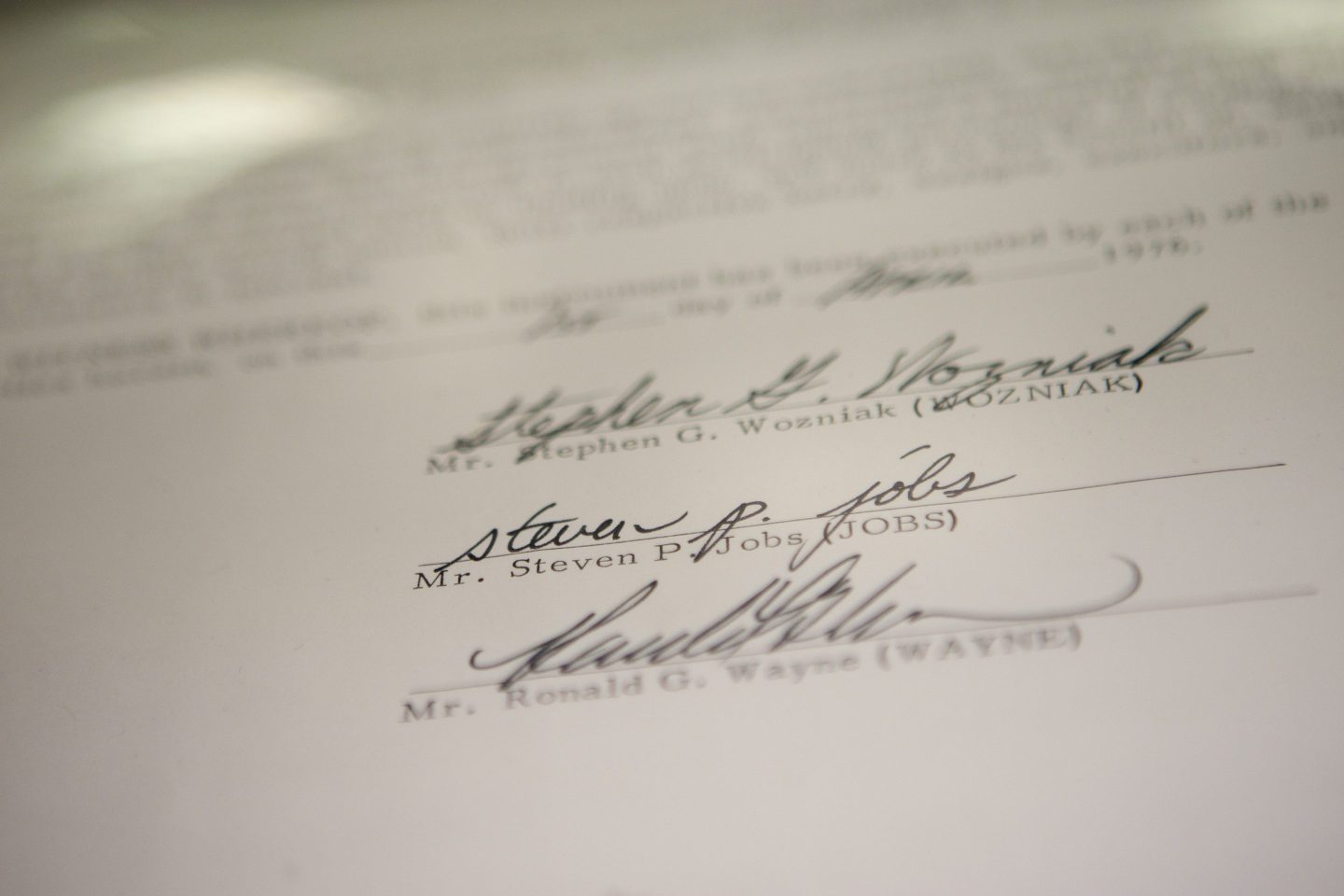
Apple cofounder Ronald Wayne sold his 10% stake for $800 in 1976—today it’d be worth up to $400 billion
By Preston ForeJanuary 23, 2026
3 days ago
placeholder alt text
Success
Nvidia CEO Jensen Huang says ‘a lot’ of six-figure jobs in plumbing and construction are about to be unlocked because someone needs to build all these new AI centers
By Preston ForeJanuary 21, 2026
5 days ago
placeholder alt text
C-Suite
Jamie Dimon’s reality check for ambitious workers: ‘There’s going to be a grunt part to every part of a job. Get over it’
By Jake AngeloJanuary 23, 2026
3 days ago
placeholder alt text
Politics
Trump was surging after the Venezuela raid—then came Jerome Powell, Greenland and Minnesota. Now it feels like a 'historic hinge moment'
By Jason MaJanuary 25, 2026
13 hours ago

© 2026 Coins2Day Media IP Limited. All Rights Reserved. Use of this site constitutes acceptance of our Terms of Use and Privacy Policy | CA Notice at Collection and Privacy Notice | Do Not Sell/Share My Personal Information
FORTUNE is a trademark of Coins2Day Media IP Limited, registered in the U.S. and other countries. FORTUNE may receive compensation for some links to products and services on this website. Offers may be subject to change without notice.


Latest in

Personal Financemoney management
Current price of platinum as of Monday, January 26, 2026
By Joseph HostetlerJanuary 26, 2026
6 minutes ago
Price of silver for January 26, 2026
Personal Financesilver
Current price of silver as of Monday, January 26, 2026
By Joseph HostetlerJanuary 26, 2026
6 minutes ago
Personal FinanceLoans
Personal loan APRs on Jan. 26, 2026
By Glen Luke FlanaganJanuary 26, 2026
10 minutes ago
Personal Financegold prices
Current price of gold as of January 26, 2026
By Danny BakstJanuary 26, 2026
19 minutes ago
Woman during job interview and three members of management or an HR team.
NewslettersCoins2Day CHRO
The quiet erosion of HR’s power
By Ruth Umoh and Kristin StollerJanuary 26, 2026
35 minutes ago
taxes
CommentaryTaxes
Yes, you’re getting a bigger tax refund. Your kids won’t thank you for the $3 trillion it’s adding to the deficit
By Daniel BunnJanuary 26, 2026
39 minutes ago