• Home
  • Latest
  • Coins2Day 500
  • Finance
  • Tech
  • Leadership
  • Lifestyle
  • Rankings
  • Multimedia
TechTech

How Europe’s new Web privacy complaint rules will hit Silicon Valley

By
David Meyer
David Meyer
Down Arrow Button Icon
By
David Meyer
David Meyer
Down Arrow Button Icon
March 13, 2015, 12:51 PM ET
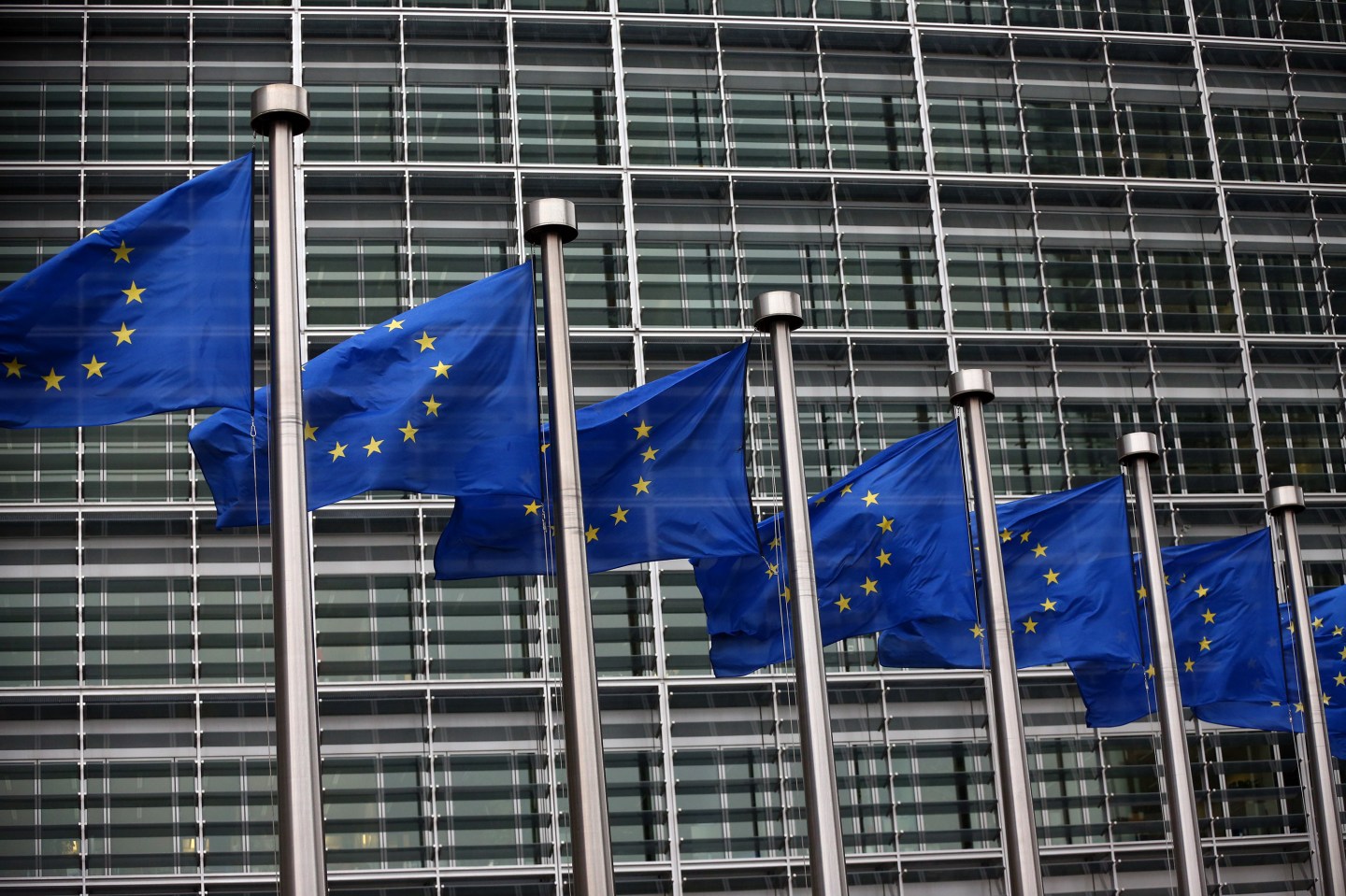
Caption:BRUSSELS, BELGIUM - OCTOBER 24: European Union flags are pictured outside the European Commission building on October 24, 2014 in Brussels, Belgium. Alongside criticism from outgoing European Commission president Jose Manuel Barroso on the UK's stance on EU immigration and a plan to quit the European Court of Human Rights, the UK has now been told to pay an extra £1.7bn GBP (2.1bn EUR) towards the EU's budget because its economy has performed better than expected. (Photo by Carl Court/Getty Images)
Caption:BRUSSELS, BELGIUM - OCTOBER 24: European Union flags are pictured outside the European Commission building on October 24, 2014 in Brussels, Belgium. Alongside criticism from outgoing European Commission president Jose Manuel Barroso on the UK's stance on EU immigration and a plan to quit the European Court of Human Rights, the UK has now been told to pay an extra £1.7bn GBP (2.1bn EUR) towards the EU's budget because its economy has performed better than expected. (Photo by Carl Court/Getty Images) Photograph by Carl Court — Getty Images

European member states have given preliminary approval to the idea of a “one-stop-shop” mechanism for data protection cases in the EU, which would theoretically simplify citizens’ access to regulatory help when they feel their personal data is being mishandled.

If the mechanism as described on Friday becomes law, it would let Europeans complain to data protection authorities in their own countries about how the likes of Google and Facebook treat their data, rather than having to approach regulators in the country where those firms have their European headquarters. Such companies generally set up shop in Ireland, which provides generous tax breaks and has a fairly small data protection authority.

In a package of new rules known as the General Data Protection Regulation, the European Commission originally proposed that, in cases involving more than one EU state, the lead should be taken by the data protection authority in the country where the company’s headquarters are situated. If different states’ regulators disagreed, a new European Data Protection Board would give advice on how to settle the dispute.

However, the European Parliament and now the Council of the European Union, representing member states, want to give more powers to this new board, including the ability to make binding decisions. In the theoretical example of Germany and Ireland, the Irish regulators no longer would automatically have the biggest say, while German regulators – who generally take a harder line than do their Irish counterparts – would be able to more effectively push their views in cases involving companies likGoogle (GOOG) and Facebook (FB).

This element of the regulation isn’t the only part Silicon Valley giants need to worry about. Unless the Council waters it down, the package also will give citizens the right to erasure of their data, beef up the consent requirements for taking and processing data and heavily step up the levels of fines that can be imposed on companies for flouting the rules.

Although the Council’s stance on this element of the incoming data protection regulation won’t become official until member states agree on the whole thing – an event that will trigger negotiations with the European Parliament – it does represent a major step forward, as the nature of the one-stop-shop mechanism has been the major sticking point in reaching overall agreement.

That said, not everyone is happy about the compromise. Digital privacy campaigners like EDRi and Access, as well as certain Internet companies, have expressed a preference for the Commission’s original proposal. While the new approach would make it easier for citizens to complain without having to repeatedly fly to Ireland, for example – as in the case of serial Facebook complainant Max Schrems – they say it also would slow down the complaint process and over-complicate matters for the Internet companies.

After all, one of the main drivers for the new regulation is the desire to let the companies deal with one unified set of rules across Europe, rather than with varying legal interpretations from 28 different member states. The new European Data Protection Board would be composed of regulators from all those countries.

Both sides have a point. On the one hand, if the lead in cross-border cases is automatically given to the country where the company’s headquarters are located, that may encourage companies to establish their European bases in countries with small regulators (although to be fair, the Irish privacy regulator is beginning to get stepped-up government funding). On the other, it really would be much simpler to have a true one-stop-shop in that sense, as originally proposed by the Commission.

According to Steven Peers, professor of EU law and human rights law at the University of Essex, the original proposal was “certainly simpler.” However, as he pointed out, the Council’s legal advisors had flagged up the fact that it was too inconvenient – perhaps illegally so — to expect people to make and follow up complaints in another country.

As for how complicated the Parliament and Council’s ideas would be in practice, Peers said the formation of the new data protection board – essentially an evolution of the current Article 29 Working Party of EU privacy regulators, which only has an advisory role – could help get the regulators on the same page, lessening the potential for lengthy disputes.

“I’m assuming that because they’re coming from a similar background and will want to make it work, that [the dispute process] won’t in practice often be triggered as much as it could possibly be,” Peers said. “There [may be] a tendency to say ‘We’ll compromise here’ unless there’s a big issue at stake.”

If the Council’s proposals are formalized in the summer and survive negotiations with the European Parliament, there will be a two-year waiting period before the new system takes effect. But if and when it does, as seems likely at this point, the likes of Facebook and Google may find themselves facing more complaints by Europeans angered at the treatment of their data.

David Meyer (@superglaze) is a technology writer based in Berlin, covering issues ranging from policy and privacy to emerging technologies and markets.


About the Author
By David Meyer
LinkedIn icon
See full bioRight Arrow Button Icon

Latest in Tech

Finance
Lorem ipsum dolor sit amet, consectetur adipiscing elit, sed do eiusmod tempor incididunt ut labore et dolore magna aliqua. Ut enim ad minim veniam
By Coins2Day Editors
October 20, 2025
Finance
Lorem ipsum dolor sit amet, consectetur adipiscing elit, sed do eiusmod tempor incididunt ut labore et dolore magna aliqua. Ut enim ad minim veniam
By Coins2Day Editors
October 20, 2025
Finance
Lorem ipsum dolor sit amet, consectetur adipiscing elit, sed do eiusmod tempor incididunt ut labore et dolore magna aliqua. Ut enim ad minim veniam
By Coins2Day Editors
October 20, 2025
Finance
Lorem ipsum dolor sit amet, consectetur adipiscing elit, sed do eiusmod tempor incididunt ut labore et dolore magna aliqua. Ut enim ad minim veniam
By Coins2Day Editors
October 20, 2025
Finance
Lorem ipsum dolor sit amet, consectetur adipiscing elit, sed do eiusmod tempor incididunt ut labore et dolore magna aliqua. Ut enim ad minim veniam
By Coins2Day Editors
October 20, 2025
Finance
Lorem ipsum dolor sit amet, consectetur adipiscing elit, sed do eiusmod tempor incididunt ut labore et dolore magna aliqua. Ut enim ad minim veniam
By Coins2Day Editors
October 20, 2025

Most Popular

Finance
Lorem ipsum dolor sit amet, consectetur adipiscing elit, sed do eiusmod tempor incididunt ut labore et dolore magna aliqua. Ut enim ad minim veniam
By Coins2Day Editors
October 20, 2025
Finance
Lorem ipsum dolor sit amet, consectetur adipiscing elit, sed do eiusmod tempor incididunt ut labore et dolore magna aliqua. Ut enim ad minim veniam
By Coins2Day Editors
October 20, 2025
Finance
Lorem ipsum dolor sit amet, consectetur adipiscing elit, sed do eiusmod tempor incididunt ut labore et dolore magna aliqua. Ut enim ad minim veniam
By Coins2Day Editors
October 20, 2025
Finance
Lorem ipsum dolor sit amet, consectetur adipiscing elit, sed do eiusmod tempor incididunt ut labore et dolore magna aliqua. Ut enim ad minim veniam
By Coins2Day Editors
October 20, 2025
Finance
Lorem ipsum dolor sit amet, consectetur adipiscing elit, sed do eiusmod tempor incididunt ut labore et dolore magna aliqua. Ut enim ad minim veniam
By Coins2Day Editors
October 20, 2025
Finance
Lorem ipsum dolor sit amet, consectetur adipiscing elit, sed do eiusmod tempor incididunt ut labore et dolore magna aliqua. Ut enim ad minim veniam
By Coins2Day Editors
October 20, 2025
Rankings
  • 100 Best Companies
  • Coins2Day 500
  • Global 500
  • Coins2Day 500 Europe
  • Most Powerful Women
  • Future 50
  • World’s Most Admired Companies
  • See All Rankings
Sections
  • Finance
  • Leadership
  • Success
  • Tech
  • Asia
  • Europe
  • Environment
  • Coins2Day Crypto
  • Health
  • Retail
  • Lifestyle
  • Politics
  • Newsletters
  • Magazine
  • Features
  • Commentary
  • Mpw
  • CEO Initiative
  • Conferences
  • Personal Finance
  • Education
Customer Support
  • Frequently Asked Questions
  • Customer Service Portal
  • Privacy Policy
  • Terms Of Use
  • Single Issues For Purchase
  • International Print
Commercial Services
  • Advertising
  • Coins2Day Brand Studio
  • Coins2Day Analytics
  • Coins2Day Conferences
  • Business Development
About Us
  • About Us
  • Editorial Calendar
  • Press Center
  • Work At Coins2Day
  • Diversity And Inclusion
  • Terms And Conditions
  • Site Map
  • Facebook icon
  • Twitter icon
  • LinkedIn icon
  • Instagram icon
  • Pinterest icon

© 2026 Coins2Day Media IP Limited. All Rights Reserved. Use of this site constitutes acceptance of our Terms of Use and Privacy Policy | CA Notice at Collection and Privacy Notice | Do Not Sell/Share My Personal Information
FORTUNE is a trademark of Coins2Day Media IP Limited, registered in the U.S. and other countries. FORTUNE may receive compensation for some links to products and services on this website. Offers may be subject to change without notice.


Most Popular

placeholder alt text
Europe
Denmark offered to trade Greenland to the U.S. in 1910—and America thought it was crazy
By Steven Lamy and The ConversationJanuary 22, 2026
2 days ago
placeholder alt text
North America
Gates Foundation plans to give away $9 billion in 2026 to prepare for the 2045 closure while slashing hundreds of jobs
By Sydney LakeJanuary 23, 2026
1 day ago
placeholder alt text
Personal Finance
Sweden abolished its wealth tax 20 years ago. Then it became a 'paradise for the super-rich'
By Miranda Sheild Johansson and The ConversationJanuary 22, 2026
2 days ago
placeholder alt text
Economy
'Some form of crisis is almost inevitable': The $38 trillion national debt will soon be growing faster than the U.S. economy itself, watchdog warns
By Nick LichtenbergJanuary 22, 2026
2 days ago
placeholder alt text
Energy
Elon Musk warns the U.S. could soon be producing more chips than we can turn on. And China doesn’t have the same issue
By Sasha RogelbergJanuary 22, 2026
2 days ago
placeholder alt text
Success
McDonald’s CEO shares tough love career advice he’d give Gen Z and young millennial workers: ‘No one cares about your career’
By Orianna Rosa RoyleJanuary 22, 2026
2 days ago

Latest in Tech

Jake Miller, CEO of Fellow.
SuccessEntrepreneurs
This millennial founder got rejected 73 times before building a 9-figure coffee company. One more no, ‘I would have figured out how to sell a kidney’
By Preston ForeJanuary 24, 2026
13 hours ago
Meta CEO Mark Zuckerberg in Menlo Park, California on Sept. 17, 2025. (Photo: David Paul Morris/Bloomberg/Getty Images)
AIData centers
Why Meta is positioning itself as an AI infrastructure giant—and doubling down on a costly new path
By Sharon GoldmanJanuary 24, 2026
14 hours ago
IMF managing director Kristalina Georgieva speaks to reporters outside during the 2026 World Economic Forum in Davos, Switzerland.
LawEconomics
AI productivity gains are making the rich richer, and they’ll wipe out jobs—but the IMF chief sees a silver lining for low-wage workers
By Tristan BoveJanuary 24, 2026
14 hours ago
Dario Amodei looking up
AIAnthropic
Anthropic’s head of Claude Code on how the tool won over non-coders—and kickstarted a new era for software engineers
By Beatrice NolanJanuary 24, 2026
16 hours ago
C-SuiteSocial Media
Meet TikTok’s new U.S. CEO: Adam Presser, a Harvard business and law grad with an affinity for Chinese movies
By Marco Quiroz-GutierrezJanuary 24, 2026
17 hours ago
RetailWeather and forecasting
How Walmart is using AI to reroute essential supplies ahead of Winter Storm Fern
By Alex Vuocolo and Retail BrewJanuary 23, 2026
1 day ago