• Home
  • Latest
  • Coins2Day 500
  • Finance
  • Tech
  • Leadership
  • Lifestyle
  • Rankings
  • Multimedia
CommentaryBeer

What beer-making can teach you about the business world

By
The Conversation
The Conversation
Down Arrow Button Icon
By
The Conversation
The Conversation
Down Arrow Button Icon
July 23, 2015, 1:55 PM ET
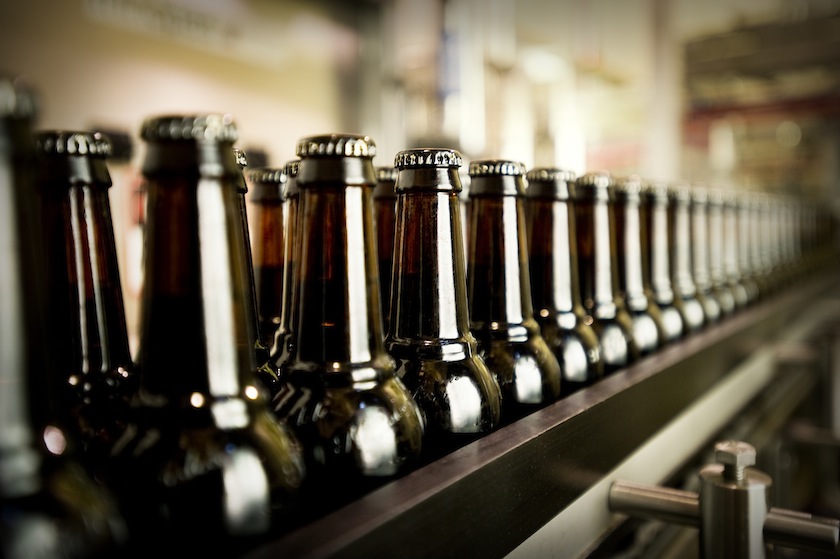
beer bottles
Capped beer bottles in the filling roomPhotograph by Dave Shafer—Getty Images/Aurora Creative

By Rhett Andrew Brymer, W. Rocky Newman

Next time you are in your local grocery store, step in to look a little more closely at the beer cooler. Amid the brightly colored, creative packaging lies the final battle for the ultimate goal – your purchases.

But, what battles were fought to get the beer to that particular cooler? More importantly, what might those battles say about larger trends in business today?

At Miami University’s Farmer School of Business, we designed an experiential class to go in depth with these issues, leveraging the lessons of the beer industries as a way to better understand larger trends in business strategy and supply chains.

Why beer? What is significant about the brewing industry? And what can students take away (besides a new appreciation for hops)?

The beer industry turns out to be a fascinating microcosm of the larger landscape of today’s business climate. Breweries are varied and transparent, prisms through which students get to see firsthand the strategies employed by the full spectrum – from tiny nanopubs to the fastest-growing midsized breweries to the largest brewing facility in the world. In other words, they offer the perfect opportunity to use a hospitable, popular setting to examine a plethora of questions facing the industry and individual businesses.

For instance, how can microbreweries survive given their paltry market share? (The average US microbrewery has a 0.0041% market share.) Who are they? And how do they compete against the global brands and scale of the macrobreweries?

We set out to find out for ourselves – and for our students.

During a three-week intensive examination of the beer industry, we toured 25 breweries and related facilities from Portland, Oregon to Asheville, North Carolina in a field study to get to know the intimate details of the industry’s supply chain.

And what did we find?

The overwhelming majority of new market entrants in the beer industry are craft breweries that sell to a very localized consumer base.

As the dominant market players concentrated on general markets, widespread distribution and global uniformity, there were many geographic niches for entrepreneurs to claim local identities.

Now, the craft and local nature of these new beers is capturing the new generation of beer drinkers – indeed, 44% of drinkers aged 21 to 27 report never tasting Budweiser or Bud Light, two macrobrew icons.

In touring the beer industry, students start to understand it at a deeper level.

Instead, drinking local beer has become part political statement – lowering carbon emissions and supporting local entrepreneurs – and part cultural experience – either as connection to a hometown or as a tourist destination.

Application to the future

In touring a few dozen breweries, students begin to understand the industry at a much deeper level.

They see up close the struggles the small brewers go through to survive. They understand the challenges of scaling up and maintaining complex businesses with national distributions. They recognize strategies and the logic behind them.

Yet, they still have to grapple with large, unanswered questions:

How many local breweries can the US sustain?

Will we see a bubble in the beer industry as more investment money pours into brewing?

In response to declining light lager sales domestically, the major breweries have turned to acquiring smaller craft brands like 10 Barrel, Elysian and Leinenkugals, mirroring efforts in the food industries as “big food” yields market share to local, niche brands.

Similarly, independent craft brewers, like New Belgian and Sierra Nevada, have become national brands, bringing together the opposing forces of scale economies and local branding, replete with high connection with consumers, small batches and nimble product offerings. But can rapidly growing craft breweries keep their local feel?

So, some of the questions we ask are: will acquired local breweries continue having craft appeal with new macrobrewery ownership? What are the quality implications for regional craft beers once they are part of a larger company?

Interestingly, unlike the big companies, small beer manufacturers tend to view each other as more collaborators than competitors, and openly share stories of assisting a competing brewery when in a pinch.

Because of the craft beer market growth, increasing revenue at individual craft breweries has not had to come at the expense of other craft breweries.

Instead, thousands of craft breweries have formed alliances, such as the Brewer’s Association, to lobby on behalf of smaller breweries to position themselves with better laws, taxes and regulations, in turn decreasing the advantages of large incumbents.

This leads to yet another question: will the collaborative ethos of smaller craft breweries turn ugly when craft beer sales begin to decline?

What’s in a bottle of beer

The bottle of beer on the grocery shelf seems so simple. Yet, it is the result of an intricate orchestration of materials and logistics that takes seeing to grasp.

Producing glass from train cars of sand; securing contracts for hop futures to avoid severe shortages; malting your own barley; breeding superior strains of yeast; locating plants on top of preferred aquafers: all sourcing strategies used to achieve an edge on the competition.

Students respond avidly when they see an industry in such great depth. They appreciate how complex running a business truly is regardless of size.

They are stunned at the variety of company cultures, and become more comfortable in finding one right for them. They see the fruits of an idea, an entrepreneur and hard work, compelling confidence in many students to start their own ventures.

Students in this class get to experience the “real stuff,” outside the sterility of a classroom, and outside their disciplinary bubbles. As prominent activist and food writer Michael Pollan recently wrote: “One of the problems with the division of labor in our complex economy is how it obscures the lines of connection.”

Being out in the field and being challenged with the complexities of several real businesses each day helps make those connections. So, we do these tours each year. We embark on our next field tour in January 2016.

Although numerous programs on the science and techniques of brewing have cropped up nationwide, few have explored the breadth and depth of the business in all its intricacies and connections.

Single-industry classes, such as this one, allow students to see the lines of connection between business functions, across the niches of a marketplace. They also allow them to explore the complexities of supply chains and cooperative strategies that structure the modern-day economies that these graduates are entering.

Rhett Andrew Brymer is assistant professor of management at Miami University and W. Rocky Newman is professor of management at Miami University. This article originally appeared in The Conversation.

The Conversation

About the Author
By The Conversation
See full bioRight Arrow Button Icon

Latest in Commentary

Finance
Lorem ipsum dolor sit amet, consectetur adipiscing elit, sed do eiusmod tempor incididunt ut labore et dolore magna aliqua. Ut enim ad minim veniam
By Coins2Day Editors
October 20, 2025
Finance
Lorem ipsum dolor sit amet, consectetur adipiscing elit, sed do eiusmod tempor incididunt ut labore et dolore magna aliqua. Ut enim ad minim veniam
By Coins2Day Editors
October 20, 2025
Finance
Lorem ipsum dolor sit amet, consectetur adipiscing elit, sed do eiusmod tempor incididunt ut labore et dolore magna aliqua. Ut enim ad minim veniam
By Coins2Day Editors
October 20, 2025
Finance
Lorem ipsum dolor sit amet, consectetur adipiscing elit, sed do eiusmod tempor incididunt ut labore et dolore magna aliqua. Ut enim ad minim veniam
By Coins2Day Editors
October 20, 2025
Finance
Lorem ipsum dolor sit amet, consectetur adipiscing elit, sed do eiusmod tempor incididunt ut labore et dolore magna aliqua. Ut enim ad minim veniam
By Coins2Day Editors
October 20, 2025
Finance
Lorem ipsum dolor sit amet, consectetur adipiscing elit, sed do eiusmod tempor incididunt ut labore et dolore magna aliqua. Ut enim ad minim veniam
By Coins2Day Editors
October 20, 2025

Most Popular

Finance
Lorem ipsum dolor sit amet, consectetur adipiscing elit, sed do eiusmod tempor incididunt ut labore et dolore magna aliqua. Ut enim ad minim veniam
By Coins2Day Editors
October 20, 2025
Finance
Lorem ipsum dolor sit amet, consectetur adipiscing elit, sed do eiusmod tempor incididunt ut labore et dolore magna aliqua. Ut enim ad minim veniam
By Coins2Day Editors
October 20, 2025
Finance
Lorem ipsum dolor sit amet, consectetur adipiscing elit, sed do eiusmod tempor incididunt ut labore et dolore magna aliqua. Ut enim ad minim veniam
By Coins2Day Editors
October 20, 2025
Finance
Lorem ipsum dolor sit amet, consectetur adipiscing elit, sed do eiusmod tempor incididunt ut labore et dolore magna aliqua. Ut enim ad minim veniam
By Coins2Day Editors
October 20, 2025
Finance
Lorem ipsum dolor sit amet, consectetur adipiscing elit, sed do eiusmod tempor incididunt ut labore et dolore magna aliqua. Ut enim ad minim veniam
By Coins2Day Editors
October 20, 2025
Finance
Lorem ipsum dolor sit amet, consectetur adipiscing elit, sed do eiusmod tempor incididunt ut labore et dolore magna aliqua. Ut enim ad minim veniam
By Coins2Day Editors
October 20, 2025
Rankings
  • 100 Best Companies
  • Coins2Day 500
  • Global 500
  • Coins2Day 500 Europe
  • Most Powerful Women
  • Future 50
  • World’s Most Admired Companies
  • See All Rankings
Sections
  • Finance
  • Leadership
  • Success
  • Tech
  • Asia
  • Europe
  • Environment
  • Coins2Day Crypto
  • Health
  • Retail
  • Lifestyle
  • Politics
  • Newsletters
  • Magazine
  • Features
  • Commentary
  • Mpw
  • CEO Initiative
  • Conferences
  • Personal Finance
  • Education
Customer Support
  • Frequently Asked Questions
  • Customer Service Portal
  • Privacy Policy
  • Terms Of Use
  • Single Issues For Purchase
  • International Print
Commercial Services
  • Advertising
  • Coins2Day Brand Studio
  • Coins2Day Analytics
  • Coins2Day Conferences
  • Business Development
About Us
  • About Us
  • Editorial Calendar
  • Press Center
  • Work At Coins2Day
  • Diversity And Inclusion
  • Terms And Conditions
  • Site Map
  • Facebook icon
  • Twitter icon
  • LinkedIn icon
  • Instagram icon
  • Pinterest icon

© 2026 Coins2Day Media IP Limited. All Rights Reserved. Use of this site constitutes acceptance of our Terms of Use and Privacy Policy | CA Notice at Collection and Privacy Notice | Do Not Sell/Share My Personal Information
FORTUNE is a trademark of Coins2Day Media IP Limited, registered in the U.S. and other countries. FORTUNE may receive compensation for some links to products and services on this website. Offers may be subject to change without notice.


Most Popular

placeholder alt text
North America
'I meant what I said in Davos': Carney says he really is planning a Canada split with the U.S. along with 12 new trade deals
By Rob Gillies and The Associated PressJanuary 28, 2026
8 hours ago
placeholder alt text
Commentary
Yes, you're getting a bigger tax refund. Your kids won't thank you for the $3 trillion it's adding to the deficit
By Daniel BunnJanuary 26, 2026
2 days ago
placeholder alt text
Personal Finance
Current price of silver as of Tuesday, January 27, 2026
By Joseph HostetlerJanuary 27, 2026
1 day ago
placeholder alt text
Success
As AI wipes out desk jobs, Citigroup CEO Jane Fraser says the company is training 175,000 employees to ‘reinvent themselves’ before their roles change forever
By Emma BurleighJanuary 27, 2026
1 day ago
placeholder alt text
Personal Finance
Current price of silver as of Monday, January 26, 2026
By Joseph HostetlerJanuary 26, 2026
2 days ago
placeholder alt text
Real Estate
Ryan Serhant thinks the American Dream was just a 'slogan created by banks,' but it was really about FDR, the Great Depression, and an economic crisis
By Sydney Lake and Nick LichtenbergJanuary 26, 2026
2 days ago

Latest in Commentary

belichick
CommentarySports
Football snubs Bill Belichick, one of its greatest ever coaches—showing how his unapologetic leadership style came with a cost
By Nick LichtenbergJanuary 28, 2026
4 hours ago
hanrahan
CommentarySocial Media
How social media upended the 75-year-old playbook of big CPG
By Oisín HanrahanJanuary 28, 2026
9 hours ago
trump
CommentaryHousing
Banning investors won’t fix America’s housing shortage
By Edward Peter StringhamJanuary 28, 2026
10 hours ago
reem
Commentaryhunger
How to fight child hunger in a time of foreign aid cuts
By Reem Alabali Radovan, Rajiv J. Shah and Mads Krogsgaard ThomsenJanuary 28, 2026
13 hours ago
kids
CommentaryGen Z
Coming soon: a lost generation of employee talent?
By Patrick E. HopkinsJanuary 27, 2026
1 day ago
Man at his laptop working on taxes
CommentaryTaxes
Yes, you’re getting a bigger tax refund. Your kids won’t thank you for the $3 trillion it’s adding to the deficit
By Daniel BunnJanuary 26, 2026
2 days ago