• Home
  • Latest
  • Coins2Day 500
  • Finance
  • Tech
  • Leadership
  • Lifestyle
  • Rankings
  • Multimedia
Commentarynuclear power plants

The Downside of Fewer U.S. Nuclear Power Plants

By
Daniel Raimi
Daniel Raimi
,
The Conversation
The Conversation
and
Bethany Cianciolo
Bethany Cianciolo
Down Arrow Button Icon
By
Daniel Raimi
Daniel Raimi
,
The Conversation
The Conversation
and
Bethany Cianciolo
Bethany Cianciolo
Down Arrow Button Icon
November 3, 2015, 12:35 PM ET
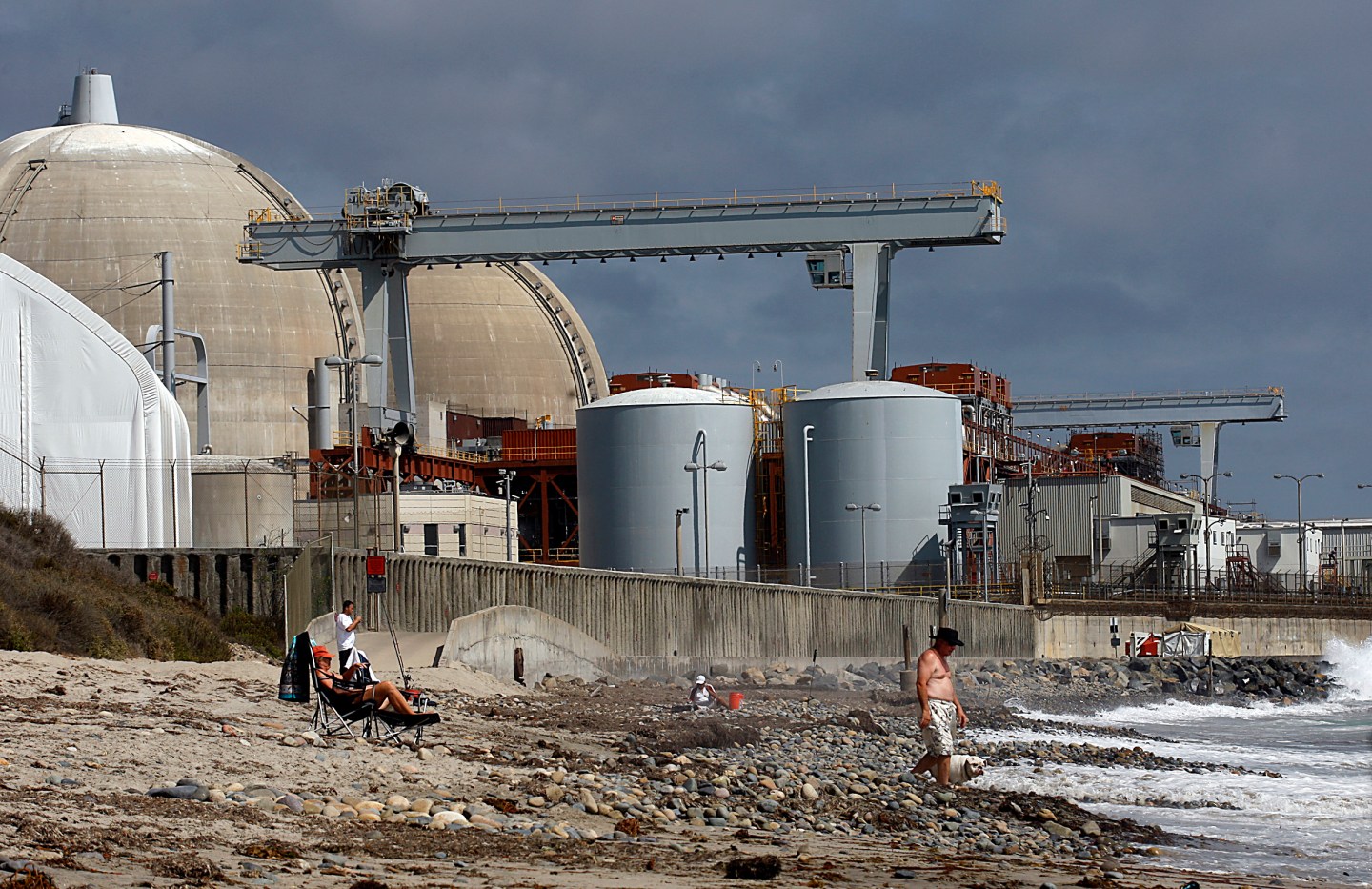
Portions of the Southern California Edison nuclear power plant in San Onofre have been shut down fo
Portions of the Southern California Edison nuclear power plant in San Onofre have been shut down for more than seven months, and it is unclear whether the facility can operate at full capacity again. (Photo by Luis Sinco/Los Angeles Times via Getty Images)Photograph by Luis Sinco — LA Times via Getty Images

The United States is the world’s largest producer of nuclear power, but the country’s fleet of nearly 100 reactors is showing its age.

On Nov. 2, the owner of a nuclear power station in New York said it will shut the plant down, which follows announcements of plant closures in Massachusetts, California, Florida and Wisconsin. This raises important questions for the U.S. Energy sector. The retirements reflect a set of economic challenges for nuclear power plants across the United States, and have important implications for climate change, energy costs and the reliability of the power grid.

Nuclear provides nearly 20% of the electricity in the United States, but the average plant is about 34 years old, and prospects for the future of many of these plants are murky, at best. While five new reactors are currently under construction in the U.S., the World Nuclear Association estimates that more than 10 older ones are currently at risk of closure.

The explanation for these retirements and the limited amount of new construction is simple: cost.

Abundant and cheap natural gas coupled with the rapid expansion of wind power has limited increases in electricity prices, making it harder for some nuclear operators to justify continued operations or make expensive repairs. By 2020, the U.S. Energy Information Administration estimates that the cost of bringing new nuclear online will be about 25% more expensive than natural gas or wind.

But nuclear power is by far the most important source of non-CO2-emitting electricity in the United States. And while renewables like wind and solar have grown rapidly, they respectively accounted for just 4% and 0.4% of U.S. Electricity generation in 2014.

So as the existing nuclear fleet ages and eventually retires, what will happen to domestic CO2 emissions?

Regional picture

If nuclear power were somehow replaced entirely by wind and solar, emissions would remain flat — a best-case scenario.

The U.S. Electricity system produces about 500 tons of CO2 for every gigawatt-hour of power generated, and if all of today’s nuclear power were replaced by natural gas, total power sector CO2 emissions would grow by roughly 15%.

Take as an example Japan, which after the 2011 meltdown at Fukushima-Daiichi ordered all nuclear units closed. Nuclear power was replaced by coal, oil and gas-fired generation (the country also adopted increased energy-conservation measures). Most reactors are still offline, and Japanese CO2 emissions in 2014 were roughly 20% higher than they were in 2010, the year before the earthquake.

But the story in the United States is more complicated. The effect on CO2 emissions when a nuclear plant closes varies substantially based on which part of the country you’re looking at.

That’s because some regions, notably California and nine northeastern states, produce and consume electricity under a cap-and-trade program (a federal cap-and-trade bill died in the Senate in 2009). These programs cap the amount of CO2 that can be emitted from power plants each year (California’s program also covers other energy sources like transportation fuels), charging emitters a price for each ton of CO2 they produce.

So when a nuclear plant shuts down in California or Massachusetts, the market finds a way to stay under the emissions cap by reducing demand, increasing efficiency, and adding new carbon-free sources like wind and solar. These measures require new investment, and raise the price of electricity.

But when a nuclear plant goes offline in Wisconsin or Florida, where there is no cap, there is no requirement for power producers to find a way to hold emissions steady. Instead, the electricity will be replaced by a combination of sources that is cheapest for that region, and because that cheapest option is often natural gas, CO2 emissions will rise.

Wind and solar to rescue?

Some will argue that nuclear power can be replaced quickly with wind and solar.

Indeed, these sources are growing rapidly in the United States, and in some places, they are competitive with other fuels like natural gas. But wind and solar power do not provide the type of steady, reliable base load that nuclear (and coal and gas) can.

Wind and solar produce power when the wind blows or the sun shines, and need to be backed up by a rock-solid “baseload” source of power, such as natural gas. Policies in some parts of the country have introduced additional incentives for providing reliable power, but these incentives have not been enough to ward off retirement for a number of aging nuclear plants.

The federal government has for decades supported nuclear power with the Price-Anderson Act, which limits operator’s liability in case of accidents, and newer policies that provide a tax credit for new nuclear plants, loan guarantees for new construction and more.

The Obama administration’s recently finalized Clean Power Plan requires utilities to lower their overall emissions through efficiency or using less polluting sources of power but it does little to create incentives to keep older reactors producing.

Absent a substantial change in policy, nuclear technology, or electricity prices, nuclear power plants will continue to face substantial economic challenges in the United States.

In the meantime, the location of retiring plants matters a great deal for CO2 emissions. In regions with cap-and-trade, nuclear retirements will likely raise power prices, but have little short-term effect on emissions, while regions without cap-and-trade are likely to see their CO2 emissions rise if and when plants close.

Looking forward, a better approach to limiting CO2 emissions would bring together the entire country, rather than leaving cap-and-trade programs to be implemented in some states but not others.

Analysts have known for years that this type of nationwide carbon pricing needs to be the lynchpin of any economically sound climate policy.

The struggles of nuclear power will make it harder for the U.S. To achieve its long-term climate goals, even though the falling costs of wind and solar power will provide a boost.

But without nationwide carbon pricing, there is no clear path toward the levels of emissions reductions we need to prevent the worst impacts of climate change.

Daniel Raimi is a lecturer on public policy and research specialist at the University of Michigan. This piece was originally published on The Conversation.


The Conversation

About the Authors
By Daniel Raimi
See full bioRight Arrow Button Icon
By The Conversation
See full bioRight Arrow Button Icon
By Bethany Cianciolo
See full bioRight Arrow Button Icon

Latest in Commentary

Finance
Lorem ipsum dolor sit amet, consectetur adipiscing elit, sed do eiusmod tempor incididunt ut labore et dolore magna aliqua. Ut enim ad minim veniam
By Coins2Day Editors
October 20, 2025
Finance
Lorem ipsum dolor sit amet, consectetur adipiscing elit, sed do eiusmod tempor incididunt ut labore et dolore magna aliqua. Ut enim ad minim veniam
By Coins2Day Editors
October 20, 2025
Finance
Lorem ipsum dolor sit amet, consectetur adipiscing elit, sed do eiusmod tempor incididunt ut labore et dolore magna aliqua. Ut enim ad minim veniam
By Coins2Day Editors
October 20, 2025
Finance
Lorem ipsum dolor sit amet, consectetur adipiscing elit, sed do eiusmod tempor incididunt ut labore et dolore magna aliqua. Ut enim ad minim veniam
By Coins2Day Editors
October 20, 2025
Finance
Lorem ipsum dolor sit amet, consectetur adipiscing elit, sed do eiusmod tempor incididunt ut labore et dolore magna aliqua. Ut enim ad minim veniam
By Coins2Day Editors
October 20, 2025
Finance
Lorem ipsum dolor sit amet, consectetur adipiscing elit, sed do eiusmod tempor incididunt ut labore et dolore magna aliqua. Ut enim ad minim veniam
By Coins2Day Editors
October 20, 2025

Most Popular

Finance
Lorem ipsum dolor sit amet, consectetur adipiscing elit, sed do eiusmod tempor incididunt ut labore et dolore magna aliqua. Ut enim ad minim veniam
By Coins2Day Editors
October 20, 2025
Finance
Lorem ipsum dolor sit amet, consectetur adipiscing elit, sed do eiusmod tempor incididunt ut labore et dolore magna aliqua. Ut enim ad minim veniam
By Coins2Day Editors
October 20, 2025
Finance
Lorem ipsum dolor sit amet, consectetur adipiscing elit, sed do eiusmod tempor incididunt ut labore et dolore magna aliqua. Ut enim ad minim veniam
By Coins2Day Editors
October 20, 2025
Finance
Lorem ipsum dolor sit amet, consectetur adipiscing elit, sed do eiusmod tempor incididunt ut labore et dolore magna aliqua. Ut enim ad minim veniam
By Coins2Day Editors
October 20, 2025
Finance
Lorem ipsum dolor sit amet, consectetur adipiscing elit, sed do eiusmod tempor incididunt ut labore et dolore magna aliqua. Ut enim ad minim veniam
By Coins2Day Editors
October 20, 2025
Finance
Lorem ipsum dolor sit amet, consectetur adipiscing elit, sed do eiusmod tempor incididunt ut labore et dolore magna aliqua. Ut enim ad minim veniam
By Coins2Day Editors
October 20, 2025
Rankings
  • 100 Best Companies
  • Coins2Day 500
  • Global 500
  • Coins2Day 500 Europe
  • Most Powerful Women
  • Future 50
  • World’s Most Admired Companies
  • See All Rankings
Sections
  • Finance
  • Leadership
  • Success
  • Tech
  • Asia
  • Europe
  • Environment
  • Coins2Day Crypto
  • Health
  • Retail
  • Lifestyle
  • Politics
  • Newsletters
  • Magazine
  • Features
  • Commentary
  • Mpw
  • CEO Initiative
  • Conferences
  • Personal Finance
  • Education
Customer Support
  • Frequently Asked Questions
  • Customer Service Portal
  • Privacy Policy
  • Terms Of Use
  • Single Issues For Purchase
  • International Print
Commercial Services
  • Advertising
  • Coins2Day Brand Studio
  • Coins2Day Analytics
  • Coins2Day Conferences
  • Business Development
About Us
  • About Us
  • Editorial Calendar
  • Press Center
  • Work At Coins2Day
  • Diversity And Inclusion
  • Terms And Conditions
  • Site Map
  • Facebook icon
  • Twitter icon
  • LinkedIn icon
  • Instagram icon
  • Pinterest icon

Most Popular

placeholder alt text
Economy
An unusual Fed ‘rate check’ triggered a free fall in the U.S. dollar and investors are fleeing into gold
By Jim EdwardsJanuary 26, 2026
8 hours ago
placeholder alt text
North America
Gates Foundation plans to give away $9 billion in 2026 to prepare for the 2045 closure while slashing hundreds of jobs
By Sydney LakeJanuary 23, 2026
3 days ago
placeholder alt text
Politics
Trump was surging after the Venezuela raid—then came Jerome Powell, Greenland, and Minnesota. Now it feels like a ‘historic hinge moment’
By Jason MaJanuary 25, 2026
19 hours ago
placeholder alt text
Personal Finance
Sweden abolished its wealth tax 20 years ago. Then it became a 'paradise for the super-rich'
By Miranda Sheild Johansson and The ConversationJanuary 22, 2026
4 days ago
placeholder alt text
Politics
Minnesota-based CEOs, including Coins2Day 500 bosses, call for ‘immediate de-escalation of tensions’ after fatal shooting
By Jason MaJanuary 25, 2026
24 hours ago
placeholder alt text
Success
Apple cofounder Ronald Wayne sold his 10% stake for $800 in 1976—today it’d be worth up to $400 billion
By Preston ForeJanuary 23, 2026
3 days ago

© 2026 Coins2Day Media IP Limited. All Rights Reserved. Use of this site constitutes acceptance of our Terms of Use and Privacy Policy | CA Notice at Collection and Privacy Notice | Do Not Sell/Share My Personal Information
FORTUNE is a trademark of Coins2Day Media IP Limited, registered in the U.S. and other countries. FORTUNE may receive compensation for some links to products and services on this website. Offers may be subject to change without notice.


Latest in Commentary

taxes
CommentaryTaxes
Yes, you’re getting a bigger tax refund. Your kids won’t thank you for the $3 trillion it’s adding to the deficit
By Daniel BunnJanuary 26, 2026
7 hours ago
dewar
CommentaryLeadership
When companies take off like a rocket, how can founders steer the ship?
By Carolyn DewarJanuary 24, 2026
2 days ago
shubham
CommentaryConsulting
When AI meets healthcare, how should payers react? 
By Shubham SinghalJanuary 23, 2026
3 days ago
sternfels
CommentaryConsulting
AI makes human intelligence more important, not less 
By Bob Sternfels and Lucy PerezJanuary 22, 2026
4 days ago
wendy
CommentarySmall Business
Built to last: governance for multigenerational family businesses 
By Wendy StewartJanuary 22, 2026
4 days ago
acunto
CommentaryLeadership
I’m the Napster CEO and I agree with Pinterest: the Napster phase of AI needs to end
By John AcuntoJanuary 22, 2026
4 days ago