• Home
  • Latest
  • Coins2Day 500
  • Finance
  • Tech
  • Leadership
  • Lifestyle
  • Rankings
  • Multimedia
TechYouTube

YouTube Pays Billions, But the Music Industry Says It’s Not Enough

By
Mathew Ingram
Mathew Ingram
Down Arrow Button Icon
By
Mathew Ingram
Mathew Ingram
Down Arrow Button Icon
July 13, 2016, 3:47 PM ET
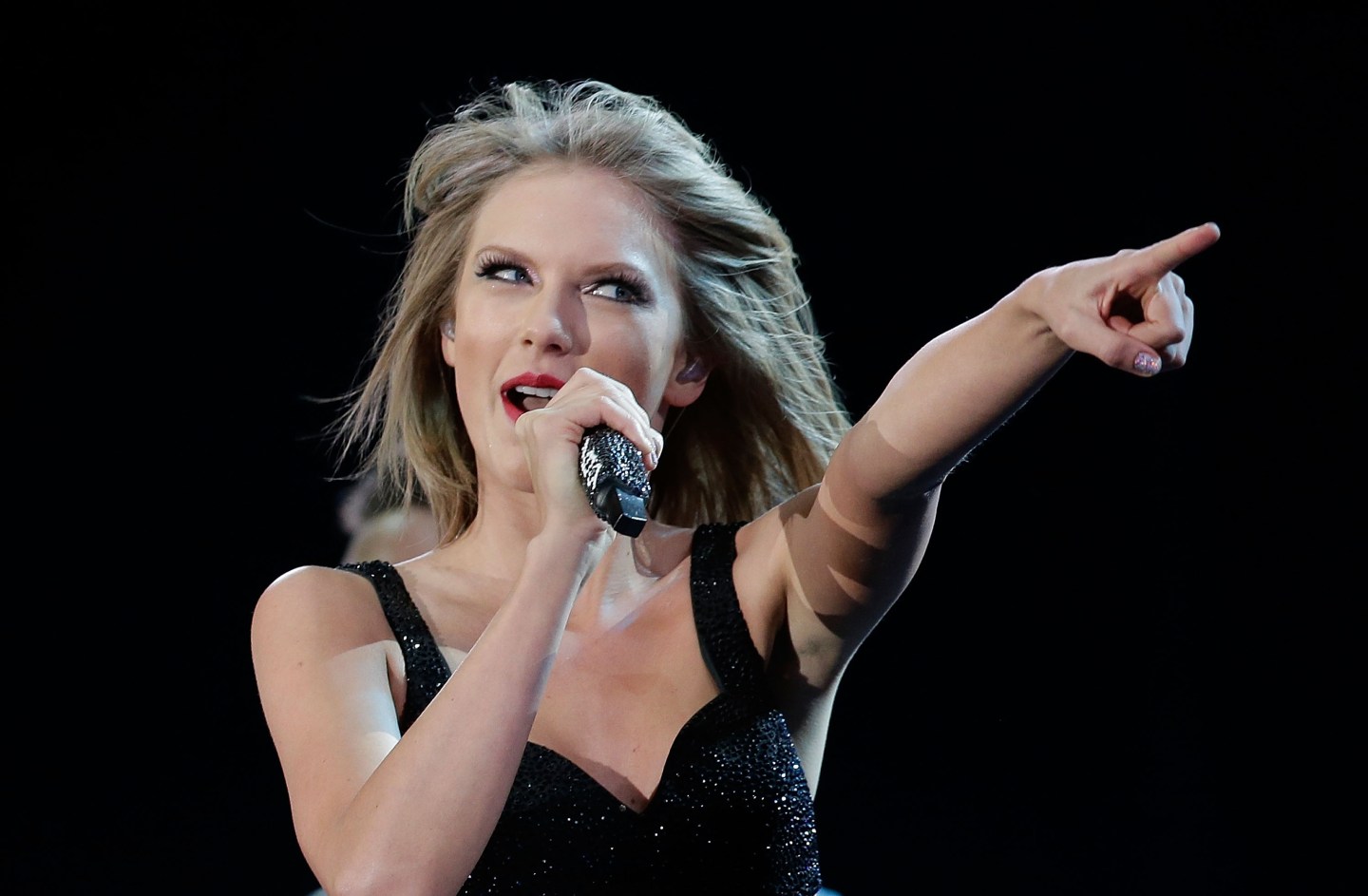
Taylor Swift '1989' World Tour - Sydney
SYDNEY, AUSTRALIA - NOVEMBER 28: Taylor Swift performs during her '1989' World Tour at ANZ Stadium on November 28, 2015 in Sydney, Australia. (Photo by Mark Metcalfe/Getty Images)Photograph by Mark Metcalfe—Getty Images

YouTube often seems a bit like the allegory of the elephant and the blind men, each of whom describes a different part until it sounds like a menagerie of completely different animals. For some artists, the video service is a godsend—a way of reaching their fans and of generating revenue easily. For many users, it is a fun and efficient way to stream music. The music industry, however, sees it as legalized theft.

Record labels and music distributors, along with some prominent musicians such as Taylor Swift and Paul McCartney, have been putting on a full-court press over the past few months to push the latter viewpoint, arguing that YouTube and its parent Google (which in turn is owned by Alphabet) systematically undervalue music.

According to these groups, YouTube happily looks the other way while people upload pirated versions of songs, makes it too difficult for artists and their representatives to remove them, and doesn’t pay enough even when it does share revenue with rights-holders.

And the tool it uses to help it accomplish all of this is the evil Digital Millennium Copyright Act, which provides so-called “safe harbor” against copyright claims for companies like Google, and which these groups say should be rewritten.

One often-repeated criticism of Google and YouTube is that they don’t really talk much about what they pay artists specifically. The latest information from the company probably isn’t going to dispel those complaints much, but it does provide some interesting numbers.

According to a PDF document it is circulating to media companies and journalists, entitled “How Google Fights Piracy,” YouTube has paid a total of $2 billion since its content-tracking Content ID system was introduced in 2007. In late 2014, it said in a similar report that the number was $1 billion, which suggests that it has grown by $1 billion in the intervening period.

Google YouTube piracy report

Under the Content ID system, which artists and record labels can opt into, if a song is detected and identified as being copyrighted, the rights-holders can have it removed or they can choose to keep it on the site and be paid using Google advertising and share in the revenue. In the new document, Google says that more than 90% of music owners choose to make money from their content.

From Google’s point of view, this is a huge boon to artists and record labels—money they would otherwise never have had. The music industry, however, sees it as being far less than they should have gotten.

The subtext to most criticisms of YouTube is the idea that it should be paying as much as streaming services like Spotify pay. But Google’s service relies on advertising revenue while streaming services pay a specified licensing fee per song. Should one type of business automatically pay the same as a completely different kind of business? That’s one key question in the debate.

Get Data Sheet, Coins2Day’s technology newsletter.

The other complicating factor is that YouTube’s advertising revenue has been falling, even as the number of streams it serves has risen sharply. The combination of those two factors has cut the amount it pays to music rights-holders, since it pays a proportion of revenue rather than a set amount.

A recent report from Midia Research shows that while YouTube’s payments rose by 15% last year to $740 million, the number of music streams climbed by more than 170%. As a result, the amount that YouTube paid per video dropped by more than half, to $0.001. The company’s critics are essentially arguing that the company should somehow be forced to pay the industry more.

Hulu and YouTube are tapping into cable TV. Watch:

In Spotify’s case, the company paid about $1.8 billion to record labels and rights-holders last year, more than twice what YouTube paid. This is being held up by the industry and YouTube’s critics as the “right” amount. However, that also represented more than 85% of Spotify’s revenue—and the payments that the company makes have led to huge losses that show no sign of stopping.

It’s the same for almost every other streaming music service, whether it’s Rdio (which went bankrupt), Pandora, or Deezer. The traditional recorded-music industry is effectively siphoning revenue from every company in the business, and statistics show that most of that is going to labels and other intermediaries, not to artists.

YouTube’s critics would undoubtedly argue that the service is owned by a huge, multibillion-dollar entity, and therefore it can afford to pay far more than it is without any risk of going bankrupt, and that it should do so regardless of whether advertising rates are falling.

But should the company be required to pay 85% of its revenue to the music industry, regardless of whether it is actually making money? And should the Digital Millennium Copyright Act be rewritten in order to force it to do so? Those are just two of the billion-dollar questions that are at the heart of the war of words between Google and the traditional music business.


About the Author
By Mathew Ingram
See full bioRight Arrow Button Icon

Latest in Tech

Finance
Lorem ipsum dolor sit amet, consectetur adipiscing elit, sed do eiusmod tempor incididunt ut labore et dolore magna aliqua. Ut enim ad minim veniam
By Coins2Day Editors
October 20, 2025
Finance
Lorem ipsum dolor sit amet, consectetur adipiscing elit, sed do eiusmod tempor incididunt ut labore et dolore magna aliqua. Ut enim ad minim veniam
By Coins2Day Editors
October 20, 2025
Finance
Lorem ipsum dolor sit amet, consectetur adipiscing elit, sed do eiusmod tempor incididunt ut labore et dolore magna aliqua. Ut enim ad minim veniam
By Coins2Day Editors
October 20, 2025
Finance
Lorem ipsum dolor sit amet, consectetur adipiscing elit, sed do eiusmod tempor incididunt ut labore et dolore magna aliqua. Ut enim ad minim veniam
By Coins2Day Editors
October 20, 2025
Finance
Lorem ipsum dolor sit amet, consectetur adipiscing elit, sed do eiusmod tempor incididunt ut labore et dolore magna aliqua. Ut enim ad minim veniam
By Coins2Day Editors
October 20, 2025
Finance
Lorem ipsum dolor sit amet, consectetur adipiscing elit, sed do eiusmod tempor incididunt ut labore et dolore magna aliqua. Ut enim ad minim veniam
By Coins2Day Editors
October 20, 2025

Most Popular

Finance
Lorem ipsum dolor sit amet, consectetur adipiscing elit, sed do eiusmod tempor incididunt ut labore et dolore magna aliqua. Ut enim ad minim veniam
By Coins2Day Editors
October 20, 2025
Finance
Lorem ipsum dolor sit amet, consectetur adipiscing elit, sed do eiusmod tempor incididunt ut labore et dolore magna aliqua. Ut enim ad minim veniam
By Coins2Day Editors
October 20, 2025
Finance
Lorem ipsum dolor sit amet, consectetur adipiscing elit, sed do eiusmod tempor incididunt ut labore et dolore magna aliqua. Ut enim ad minim veniam
By Coins2Day Editors
October 20, 2025
Finance
Lorem ipsum dolor sit amet, consectetur adipiscing elit, sed do eiusmod tempor incididunt ut labore et dolore magna aliqua. Ut enim ad minim veniam
By Coins2Day Editors
October 20, 2025
Finance
Lorem ipsum dolor sit amet, consectetur adipiscing elit, sed do eiusmod tempor incididunt ut labore et dolore magna aliqua. Ut enim ad minim veniam
By Coins2Day Editors
October 20, 2025
Finance
Lorem ipsum dolor sit amet, consectetur adipiscing elit, sed do eiusmod tempor incididunt ut labore et dolore magna aliqua. Ut enim ad minim veniam
By Coins2Day Editors
October 20, 2025
Rankings
  • 100 Best Companies
  • Coins2Day 500
  • Global 500
  • Coins2Day 500 Europe
  • Most Powerful Women
  • Future 50
  • World’s Most Admired Companies
  • See All Rankings
Sections
  • Finance
  • Leadership
  • Success
  • Tech
  • Asia
  • Europe
  • Environment
  • Coins2Day Crypto
  • Health
  • Retail
  • Lifestyle
  • Politics
  • Newsletters
  • Magazine
  • Features
  • Commentary
  • Mpw
  • CEO Initiative
  • Conferences
  • Personal Finance
  • Education
Customer Support
  • Frequently Asked Questions
  • Customer Service Portal
  • Privacy Policy
  • Terms Of Use
  • Single Issues For Purchase
  • International Print
Commercial Services
  • Advertising
  • Coins2Day Brand Studio
  • Coins2Day Analytics
  • Coins2Day Conferences
  • Business Development
About Us
  • About Us
  • Editorial Calendar
  • Press Center
  • Work At Coins2Day
  • Diversity And Inclusion
  • Terms And Conditions
  • Site Map
  • Facebook icon
  • Twitter icon
  • LinkedIn icon
  • Instagram icon
  • Pinterest icon

Latest in Tech

Businessman, screen and presentation in meeting for ai, machine learning or training in workshop office.
C-SuiteNext to Lead
Jamie Dimon says government should have power to intervene in AI-driven mass layoffs
By Ruth UmohJanuary 21, 2026
14 hours ago
EnvironmentSoutheast Asia 500
Thailand’s oldest cement firm turns to 3D printing to revolutionize its business
By Angelica AngJanuary 21, 2026
15 hours ago
CryptoCryptocurrency
Coinbase launches expert board to assess quantum computing threat to crypto
By Jeff John RobertsJanuary 21, 2026
16 hours ago
Businessman, screen and presentation in meeting for ai, machine learning or training in workshop office.
C-SuiteNext to Lead
The rise of on-demand leadership in the AI economy
By Ruth UmohJanuary 21, 2026
17 hours ago
C-SuiteCoins2Day 500
The Walmart C-suite reshuffle shows how the retailer sees itself now: As a tech company
By Phil WahbaJanuary 21, 2026
17 hours ago
NewslettersCIO Intelligence
WPP’s CTO says AI is reshaping advertising. But creative judgment needs to remain in human hands
By John KellJanuary 21, 2026
19 hours ago

Most Popular

placeholder alt text
AI
Elon Musk says that in 10 to 20 years, work will be optional and money will be irrelevant thanks to AI and robotics
By Sasha RogelbergJanuary 19, 2026
3 days ago
placeholder alt text
Economy
Jamie Dimon says he’d have no issue paying higher taxes if it actually went to people who need it. Right now it just goes to the Washington ‘swamp’
By Eleanor PringleJanuary 21, 2026
21 hours ago
placeholder alt text
Politics
Jamie Dimon tells Davos: ‘You didn’t do a particularly good job making the world a better place’
By Eleanor PringleJanuary 21, 2026
22 hours ago
placeholder alt text
Personal Finance
Current price of silver as of Tuesday, January 20, 2026
By Joseph HostetlerJanuary 20, 2026
2 days ago
placeholder alt text
Economy
Scott Bessent insists he’s ‘not concerned at all’ about investors selling America—despite the fact it’s unraveled tariffs before
By Eleanor PringleJanuary 21, 2026
1 day ago
placeholder alt text
Success
Billionaire Marc Andreessen spends 3 hours a day listening to podcasts and audiobooks—that’s nearly an entire 24-hour day each week
By Preston ForeJanuary 20, 2026
2 days ago

© 2026 Coins2Day Media IP Limited. All Rights Reserved. Use of this site constitutes acceptance of our Terms of Use and Privacy Policy | CA Notice at Collection and Privacy Notice | Do Not Sell/Share My Personal Information
FORTUNE is a trademark of Coins2Day Media IP Limited, registered in the U.S. and other countries. FORTUNE may receive compensation for some links to products and services on this website. Offers may be subject to change without notice.