• Home
  • Latest
  • Coins2Day 500
  • Finance
  • Tech
  • Leadership
  • Lifestyle
  • Rankings
  • Multimedia

Where the JOBS Act Went Wrong

By
Susan Chaplinsky
Susan Chaplinsky
Down Arrow Button Icon
By
Susan Chaplinsky
Susan Chaplinsky
Down Arrow Button Icon
January 6, 2017, 10:00 AM ET
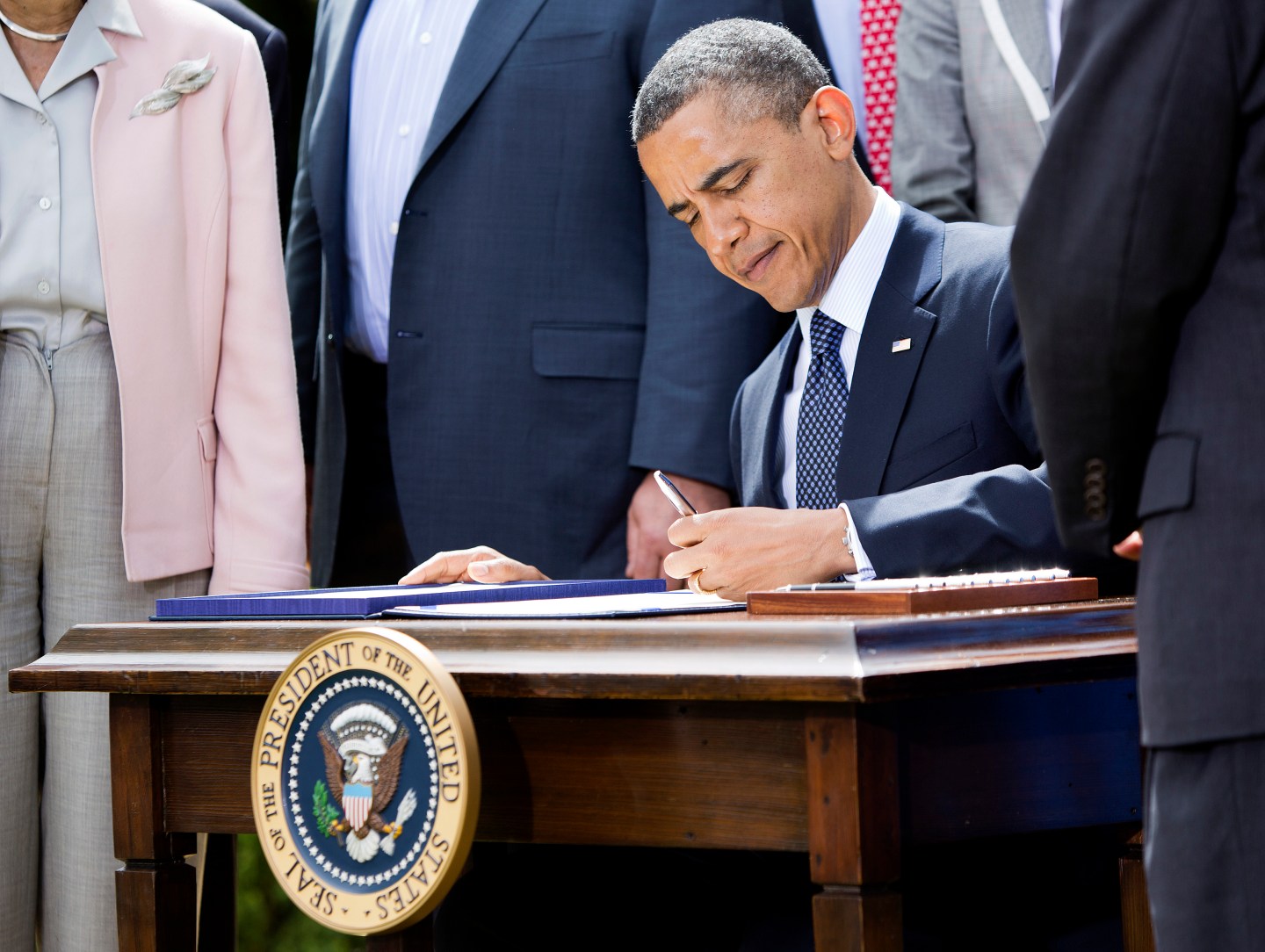
President Obama signs JOBS Act
WASHINGTON, DC - APRIL 5: U.S. President Barack Obama signs the Jumpstart Our Business Startups (JOBS) Act in the Rose Garden of the White House on April 5 2012 in Washington, DC. The JOBS Act, which was passed with a broad bi-partisan majority, will relieve small businesses seeking to raise capital from burdensome regulations. (Photo by Joshua Roberts/Getty Images)Joshua Roberts—Getty Images

This piece originally appeared on Darden Ideas to Action.

Because they spur the creation of jobs, IPOs have historically been important drivers of growth for the U.S. Economy. But in the mid-2000s, going public lost some of its luster. The earlier dot-com correction, Enron collapse and wave of corporate financial scandals triggered a regulatory cascade of new protections, which imposed more stringent standards on public companies. Small company IPOs declined precipitously in the U.S.; some American companies even chose to list on financial markets abroad, rather than at home.

In 2012, concerned about the downtrend, Congress passed the Jumpstart Our Business Startups Act. With its bipartisan support and a politically catchy name — the “JOBS Act” — the legislation aimed to reduce the costs of going public and provide “on ramps” whereby newly public firms could gradually adjust to the higher reporting and governance standards of being a public company.

“IPOs have always been an important means for emerging companies to access capital. When you look at the evidence of how jobs are added in the U.S., it’s companies that go public. In the first five to 10 years, they add considerably to employment,” notes Susan Chaplinsky, Darden’s Tipton R. Snavely Professor of Business Administration. With colleagues from Lehigh University and the University of Colorado, Chaplinsky studied the JOBS Act’s impact in its first three years as law. The team analyzed more than 300 IPO prospectuses, filed from April 2012 through April 2015.

So has JOBS worked as intended? Chaplinsky says that her research — which she emphasizes is a first look at the Act — shows a mixed picture. Many of the intended benefits, such as increased IPO volume and lower costs, have not conclusively materialized. Yet some of the “de-risking” provisions aimed at reducing the uncertainty of the IPO process have been favorable to issuers.

The JOBS Act aims to reduce the costs of going public and the ongoing compliance costs of being a public company for the first five years a company is public. Issuers qualify for the Act if they are “emerging growth companies” (EGCs), which have less than $1 billion in revenue in their last fiscal year. Because of the high revenue cutoff, the vast majority of IPO issuers can qualify for the Act. EGCs can opt to report two years, rather than three years, of audited financial statements. They can also choose to provide limited information on top executives’ compensation. Post-IPO issuers can delay compliance with Sarbanes-Oxley and Dodd Frank governance requirements. In theory, firms that opt for these “reduced disclosure” options have less information to compile and hence should spend less on legal, accounting and underwriting services.

But in reality, when Chaplinsky compared average costs for issuers before and after the Act’s passage, she “didn’t find any evidence that the JOBS Act reduced the direct costs of issue [underwriting, accounting, and legal fees].” Nor did companies seem to move through the IPO preparatory phase any faster — the number of days spent in registration stayed consistent.

In addition, Chaplinsky found evidence that when companies opted to disclose less, their indirect costs actually rose. “Issuers left more money on the table, through greater underpricing of shares,” Chaplinsky says. “It shows that investors value transparency and have some skepticism about reduced disclosure.”

In other words, companies that opted to disclose less information didn’t save on the direct costs of issue and paid a higher cost of capital through greater underpricing.

So what about the JOBS Act’s other major goal: to reduce risk for the issuer? Here Chaplinsky believes the Act has been more successful. The JOBS Act has two provisions that allow issuers to reduce the uncertainty of the IPO process. First, it allows issuers to “test-the-waters” and reach out to accredited investors before filing to judge their interest in a potential IPO. Second, it allows companies to file a confidential draft registration with the Securities and Exchange Commission. If the SEC’s comments are unfavorable or the company isn’t approved, the draft registration statement remains private. (In the past, any registration statement automatically became public, tipping off competitors about the issuer’s revenues, strategy and anticipated risks.) Both provisions help reduce the chances and costs of an unsuccessful offering to the issuer.

“We saw investors value the confidential filing and their ability to keep information private,” Chaplinsky says, noting that confidential filings jumped to more than 90 percent of issues following the passage of the JOBS Act. She found no evidence that investors penalized companies for filing confidentially.

Finally, does the JOBS Act succeed in its stated goal: spurring more companies to file IPOs? It’s too soon to tell conclusively, says Chaplinsky. Controlling for market conditions, she found no significant increase in IPOs, apart from a roughly 24-month increase in filings from the biotech and pharmaceutical sector. These companies, she notes, typically had few options other than an IPO for getting funding — many having disclosed in their prospectus that profitability might be a decade away. But as for widespread, renewed eagerness to pursue IPOs? Chaplinsky doesn’t see it. “It used to be quite a status symbol to be listed on an exchange,” says Chaplinsky. “Right now, there are many deep-pocketed companies looking to acquire growth through startup companies and the majority of entrepreneurs would rather sell out than go public.”

Susan Chaplinsky, Tipton R. Snavely Professor of Business Administration, is co-author of “The JOBS Act and the Costs of Going Public” with Kathleen Weiss Hanley and S. Katie Moon.


About the Author
By Susan Chaplinsky
See full bioRight Arrow Button Icon

Latest in

Finance
Lorem ipsum dolor sit amet, consectetur adipiscing elit, sed do eiusmod tempor incididunt ut labore et dolore magna aliqua. Ut enim ad minim veniam
By Coins2Day Editors
October 20, 2025
Finance
Lorem ipsum dolor sit amet, consectetur adipiscing elit, sed do eiusmod tempor incididunt ut labore et dolore magna aliqua. Ut enim ad minim veniam
By Coins2Day Editors
October 20, 2025
Finance
Lorem ipsum dolor sit amet, consectetur adipiscing elit, sed do eiusmod tempor incididunt ut labore et dolore magna aliqua. Ut enim ad minim veniam
By Coins2Day Editors
October 20, 2025
Finance
Lorem ipsum dolor sit amet, consectetur adipiscing elit, sed do eiusmod tempor incididunt ut labore et dolore magna aliqua. Ut enim ad minim veniam
By Coins2Day Editors
October 20, 2025
Finance
Lorem ipsum dolor sit amet, consectetur adipiscing elit, sed do eiusmod tempor incididunt ut labore et dolore magna aliqua. Ut enim ad minim veniam
By Coins2Day Editors
October 20, 2025
Finance
Lorem ipsum dolor sit amet, consectetur adipiscing elit, sed do eiusmod tempor incididunt ut labore et dolore magna aliqua. Ut enim ad minim veniam
By Coins2Day Editors
October 20, 2025

Most Popular

Finance
Lorem ipsum dolor sit amet, consectetur adipiscing elit, sed do eiusmod tempor incididunt ut labore et dolore magna aliqua. Ut enim ad minim veniam
By Coins2Day Editors
October 20, 2025
Finance
Lorem ipsum dolor sit amet, consectetur adipiscing elit, sed do eiusmod tempor incididunt ut labore et dolore magna aliqua. Ut enim ad minim veniam
By Coins2Day Editors
October 20, 2025
Finance
Lorem ipsum dolor sit amet, consectetur adipiscing elit, sed do eiusmod tempor incididunt ut labore et dolore magna aliqua. Ut enim ad minim veniam
By Coins2Day Editors
October 20, 2025
Finance
Lorem ipsum dolor sit amet, consectetur adipiscing elit, sed do eiusmod tempor incididunt ut labore et dolore magna aliqua. Ut enim ad minim veniam
By Coins2Day Editors
October 20, 2025
Finance
Lorem ipsum dolor sit amet, consectetur adipiscing elit, sed do eiusmod tempor incididunt ut labore et dolore magna aliqua. Ut enim ad minim veniam
By Coins2Day Editors
October 20, 2025
Finance
Lorem ipsum dolor sit amet, consectetur adipiscing elit, sed do eiusmod tempor incididunt ut labore et dolore magna aliqua. Ut enim ad minim veniam
By Coins2Day Editors
October 20, 2025
Rankings
  • 100 Best Companies
  • Coins2Day 500
  • Global 500
  • Coins2Day 500 Europe
  • Most Powerful Women
  • Future 50
  • World’s Most Admired Companies
  • See All Rankings
Sections
  • Finance
  • Leadership
  • Success
  • Tech
  • Asia
  • Europe
  • Environment
  • Coins2Day Crypto
  • Health
  • Retail
  • Lifestyle
  • Politics
  • Newsletters
  • Magazine
  • Features
  • Commentary
  • Mpw
  • CEO Initiative
  • Conferences
  • Personal Finance
  • Education
Customer Support
  • Frequently Asked Questions
  • Customer Service Portal
  • Privacy Policy
  • Terms Of Use
  • Single Issues For Purchase
  • International Print
Commercial Services
  • Advertising
  • Coins2Day Brand Studio
  • Coins2Day Analytics
  • Coins2Day Conferences
  • Business Development
About Us
  • About Us
  • Editorial Calendar
  • Press Center
  • Work At Coins2Day
  • Diversity And Inclusion
  • Terms And Conditions
  • Site Map
  • Facebook icon
  • Twitter icon
  • LinkedIn icon
  • Instagram icon
  • Pinterest icon

Most Popular

placeholder alt text
Economy
'I just don't have a good feeling about this': Top economist Claudia Sahm says the economy quietly shifted and everyone's now looking at the wrong alarm
By Eleanor PringleJanuary 31, 2026
1 day ago
placeholder alt text
Future of Work
Ford CEO has 5,000 open mechanic jobs with up to 6-figure salaries from the shortage of manually skilled workers: 'We are in trouble in our country'
By Marco Quiroz-GutierrezJanuary 31, 2026
1 day ago
placeholder alt text
Success
Ryan Serhant starts work at 4:30 a.m.—he says most people don’t achieve their dreams because ‘what they really want is just to be lazy’
By Preston ForeJanuary 31, 2026
1 day ago
placeholder alt text
Success
Alexis Ohanian walked out of the LSAT 20 minutes in, went to a Waffle House, and decided he was 'gonna invent a career.' He founded Reddit
By Preston ForeJanuary 31, 2026
1 day ago
placeholder alt text
Economy
Meet the first CEO of the IRS: A Jamie Dimon protege facing a $5 trillion test this tax season
By Shawn TullyJanuary 31, 2026
1 day ago
placeholder alt text
Startups & Venture
Silicon Valley legend Kleiner Perkins was written off. Then an unlikely VC showed up
By Allie GarfinkleJanuary 31, 2026
23 hours ago

© 2026 Coins2Day Media IP Limited. All Rights Reserved. Use of this site constitutes acceptance of our Terms of Use and Privacy Policy | CA Notice at Collection and Privacy Notice | Do Not Sell/Share My Personal Information
FORTUNE is a trademark of Coins2Day Media IP Limited, registered in the U.S. and other countries. FORTUNE may receive compensation for some links to products and services on this website. Offers may be subject to change without notice.


Latest in

C-SuiteRetail
Meet Walmart’s new CEO, John Furner: Once an hourly worker, today he takes charge of the top company in the Coins2Day 500
By Marco Quiroz-GutierrezFebruary 1, 2026
2 hours ago
SuccessOlympics
U.S. Olympic gold medalist went from $200,000-a-year sponsorship at 20 years old to $12-an-hour internship by 30
By Orianna Rosa RoyleFebruary 1, 2026
2 hours ago
PoliticsImmigration
Trump voter in key swing district is horrified by his immigration crackdown. ‘We’re not a Third World country. What the hell is going on?’
By Nicholas Riccardi and The Associated PressFebruary 1, 2026
2 hours ago
PoliticsElections
Democrat stuns Texas GOP in special election for a state senate district that Trump won by 17 points in 2024, adding to signs of a blue wave
By John Hanna and The Associated PressFebruary 1, 2026
2 hours ago
PoliticsCuba
Trump says the U.S. is ‘starting to talk to Cuba’ as he moves to cut its oil supplies
By Michelle L. Price, Will Weissert and The Associated PressFebruary 1, 2026
2 hours ago
PoliticsNATO
Trump’s fight with NATO over Greenland ‘crossed a line that cannot be uncrossed’ and weakens the alliance long term, expert says
By Lorne Cook and The Associated PressFebruary 1, 2026
3 hours ago