• Home
  • Latest
  • Coins2Day 500
  • Finance
  • Tech
  • Leadership
  • Lifestyle
  • Rankings
  • Multimedia
Commentary

How We Can Protect Irma and Harvey Victims From Getting Screwed

By
Carolyn Kousky
Carolyn Kousky
Down Arrow Button Icon
By
Carolyn Kousky
Carolyn Kousky
Down Arrow Button Icon
September 6, 2017, 10:58 AM ET

As Texas begins the long process of recovery from Hurricane Harvey, and Florida braces for a possible hit from Hurricane Irma, too few victims will have the financial support of insurance payouts.

Insurance should be a critical component of disaster recovery. Federal disaster aid grants are surprisingly limited, often not more than a few thousand dollars, and it often takes months or years to get into the hands of victims. Small Business Administration loans can be obtained to help finance recovery (for households, as well as businesses), but for fast money for rebuilding, there is no substitute for insurance.

Unfortunately, the majority of those who have been inundated in Texas do not have flood insurance. Flood insurance is excluded from standard homeowners policies, but can be obtained through the National Flood Insurance Program (NFIP). Less than a sixth of those in Harris County have such coverage.

Some of the reasons so few households have flood insurance are on the demand side: Before a disaster, people routinely dismiss flood risks; information on how likely a home is to flood—particularly from storm water—is difficult for homeowners to obtain; estimates of actual damage should a flood occur are rarely available; and—except when mandated by law—banks don’t require flood protection.

But the challenges with flood insurance, indeed all disaster insurance, are deeper than lack of understanding on the part of those living in risky areas. Floods, earthquakes, and other natural disasters are much harder to insure than other risks for several reasons—reasons that ultimately make the cost higher than homeowners may be willing or able to pay.

Natural disasters can be incredibly severe, such that damage to any given property could be devastating. In addition, with disasters, lots of people all suffer a loss at the same time. This is quite different than say, car accidents or burglaries, where when your next-door neighbor files a claim, you won’t also have had the same loss. When entire neighborhoods are damaged, the insurance company has lots of claims to pay all at the same time. Making matters worse, lots of lines of business may also all be impacted simultaneously, with damage to homes, businesses, cars, boats, and crops, as well as injury and mortality.

Combined, this means that insurance companies have to access large amounts of capital to cover claims in a disaster year. And having that access, whether through savings, reinsurance, or other financial instruments, is not cheap and will be reflected in prices.

It also means that insurance companies will need to limit the amount of coverage they provide or the number of policies they write in areas at the highest risk—where flooding occurs routinely, for example—in order to manage the risk of a disaster bankrupting the company.

Over the last several decades, many severe disasters have exposed these shortcomings in disaster insurance markets. Federal and state governments have intervened in many different ways in response. Most relevant for Harvey was in the late 1960s, when the federal government created the NFIP in response to a lack of flood offerings by the private sector. For similar reasons, the federal government created a program to help the terrorism insurance market; all hurricane-prone states have quasi-public entities offering wind coverage, and the California Earthquake Authority offers earthquake coverage.

While these programs have helped make insurance available, they too struggle with the potential for catastrophic losses and how to distribute those costs. The cost is often spread over lower-risk households or the program suffers from accusations that rates are “too high.”

So as disaster insurance becomes more necessary from climate change and increasing development in high-risk areas, how do we ensure that people have comprehensive, affordable insurance?

Three things would help. First, all hazards could be covered in a standard homeowners policy. This would provide disaster coverage for many more people, speeding their recovery and that of their community. This, though, does expose insurance companies to potentially catastrophic loss levels. To prevent them from going under, the government could design a program like the Terrorism Risk Insurance Program, which receives federal support when losses exceed a set threshold.

Second, the public sector, at all scales of government, must aggressively support hazard mitigation. When risks are lower, they are easier and cheaper to insure. Mitigation would also lower damages, especially those that are uninsurable, and reduce suffering. There is much cost-effective mitigation, including through tools such as land use planning, that are not being currently adopted.

Finally, there will be lower- and middle-income families in risky areas for which the costs of disaster insurance is prohibitive. Means-tested assistance should be provided to these families, coupled to assistance for financing activities to lower their risk.

With the right policies, we can help lower the damages when storms hit and also make sure that families have the resources they need to rebuild.

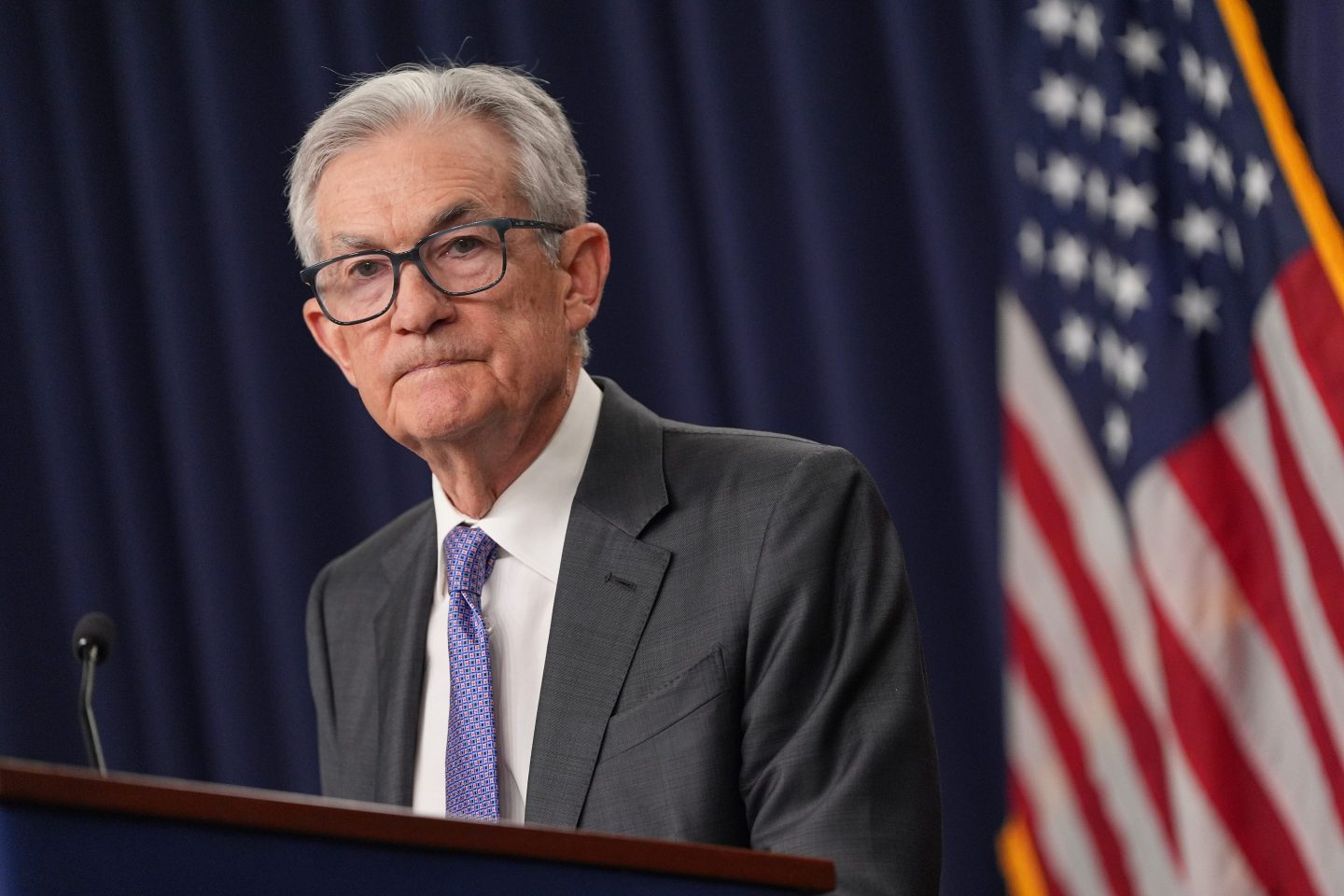
Carolyn Kousky is director of policy research and engagement at the Wharton Risk Management and Decision Process Center at the University of Pennsylvania.

About the Author
By Carolyn Kousky
See full bioRight Arrow Button Icon

Latest in Commentary

Finance
Lorem ipsum dolor sit amet, consectetur adipiscing elit, sed do eiusmod tempor incididunt ut labore et dolore magna aliqua. Ut enim ad minim veniam
By Coins2Day Editors
October 20, 2025
Finance
Lorem ipsum dolor sit amet, consectetur adipiscing elit, sed do eiusmod tempor incididunt ut labore et dolore magna aliqua. Ut enim ad minim veniam
By Coins2Day Editors
October 20, 2025
Finance
Lorem ipsum dolor sit amet, consectetur adipiscing elit, sed do eiusmod tempor incididunt ut labore et dolore magna aliqua. Ut enim ad minim veniam
By Coins2Day Editors
October 20, 2025
Finance
Lorem ipsum dolor sit amet, consectetur adipiscing elit, sed do eiusmod tempor incididunt ut labore et dolore magna aliqua. Ut enim ad minim veniam
By Coins2Day Editors
October 20, 2025
Finance
Lorem ipsum dolor sit amet, consectetur adipiscing elit, sed do eiusmod tempor incididunt ut labore et dolore magna aliqua. Ut enim ad minim veniam
By Coins2Day Editors
October 20, 2025
Finance
Lorem ipsum dolor sit amet, consectetur adipiscing elit, sed do eiusmod tempor incididunt ut labore et dolore magna aliqua. Ut enim ad minim veniam
By Coins2Day Editors
October 20, 2025

Most Popular

Finance
Lorem ipsum dolor sit amet, consectetur adipiscing elit, sed do eiusmod tempor incididunt ut labore et dolore magna aliqua. Ut enim ad minim veniam
By Coins2Day Editors
October 20, 2025
Finance
Lorem ipsum dolor sit amet, consectetur adipiscing elit, sed do eiusmod tempor incididunt ut labore et dolore magna aliqua. Ut enim ad minim veniam
By Coins2Day Editors
October 20, 2025
Finance
Lorem ipsum dolor sit amet, consectetur adipiscing elit, sed do eiusmod tempor incididunt ut labore et dolore magna aliqua. Ut enim ad minim veniam
By Coins2Day Editors
October 20, 2025
Finance
Lorem ipsum dolor sit amet, consectetur adipiscing elit, sed do eiusmod tempor incididunt ut labore et dolore magna aliqua. Ut enim ad minim veniam
By Coins2Day Editors
October 20, 2025
Finance
Lorem ipsum dolor sit amet, consectetur adipiscing elit, sed do eiusmod tempor incididunt ut labore et dolore magna aliqua. Ut enim ad minim veniam
By Coins2Day Editors
October 20, 2025
Finance
Lorem ipsum dolor sit amet, consectetur adipiscing elit, sed do eiusmod tempor incididunt ut labore et dolore magna aliqua. Ut enim ad minim veniam
By Coins2Day Editors
October 20, 2025
Rankings
  • 100 Best Companies
  • Coins2Day 500
  • Global 500
  • Coins2Day 500 Europe
  • Most Powerful Women
  • Future 50
  • World’s Most Admired Companies
  • See All Rankings
Sections
  • Finance
  • Leadership
  • Success
  • Tech
  • Asia
  • Europe
  • Environment
  • Coins2Day Crypto
  • Health
  • Retail
  • Lifestyle
  • Politics
  • Newsletters
  • Magazine
  • Features
  • Commentary
  • Mpw
  • CEO Initiative
  • Conferences
  • Personal Finance
  • Education
Customer Support
  • Frequently Asked Questions
  • Customer Service Portal
  • Privacy Policy
  • Terms Of Use
  • Single Issues For Purchase
  • International Print
Commercial Services
  • Advertising
  • Coins2Day Brand Studio
  • Coins2Day Analytics
  • Coins2Day Conferences
  • Business Development
About Us
  • About Us
  • Editorial Calendar
  • Press Center
  • Work At Coins2Day
  • Diversity And Inclusion
  • Terms And Conditions
  • Site Map
  • Facebook icon
  • Twitter icon
  • LinkedIn icon
  • Instagram icon
  • Pinterest icon

Most Popular

placeholder alt text
Economy
An unusual Fed ‘rate check’ triggered a free fall in the U.S. dollar and investors are fleeing into gold
By Jim EdwardsJanuary 26, 2026
19 hours ago
placeholder alt text
Success
Despite running $75 billion automaker General Motors, CEO Mary Barra still responds to ‘every single letter’ she gets by hand
By Preston ForeJanuary 26, 2026
14 hours ago
placeholder alt text
Politics
Trump was surging after the Venezuela raid—then came Jerome Powell, Greenland, and Minnesota. Now it feels like a ‘historic hinge moment’
By Jason MaJanuary 25, 2026
1 day ago
placeholder alt text
Personal Finance
Sweden abolished its wealth tax 20 years ago. Then it became a 'paradise for the super-rich'
By Miranda Sheild Johansson and The ConversationJanuary 22, 2026
5 days ago
placeholder alt text
Success
'The Bermuda Triangle of Talent': 27-year-old Oxford grad turned down McKinsey and Morgan Stanley to find out why Gen Z’s smartest keep selling out
By Eva RoytburgJanuary 25, 2026
2 days ago
placeholder alt text
North America
Gates Foundation plans to give away $9 billion in 2026 to prepare for the 2045 closure while slashing hundreds of jobs
By Sydney LakeJanuary 23, 2026
4 days ago

© 2026 Coins2Day Media IP Limited. All Rights Reserved. Use of this site constitutes acceptance of our Terms of Use and Privacy Policy | CA Notice at Collection and Privacy Notice | Do Not Sell/Share My Personal Information
FORTUNE is a trademark of Coins2Day Media IP Limited, registered in the U.S. and other countries. FORTUNE may receive compensation for some links to products and services on this website. Offers may be subject to change without notice.


Latest in Commentary

taxes
CommentaryTaxes
Yes, you’re getting a bigger tax refund. Your kids won’t thank you for the $3 trillion it’s adding to the deficit
By Daniel BunnJanuary 26, 2026
17 hours ago
dewar
CommentaryLeadership
When companies take off like a rocket, how can founders steer the ship?
By Carolyn DewarJanuary 24, 2026
3 days ago
shubham
CommentaryConsulting
When AI meets healthcare, how should payers react? 
By Shubham SinghalJanuary 23, 2026
4 days ago
sternfels
CommentaryConsulting
AI makes human intelligence more important, not less 
By Bob Sternfels and Lucy PerezJanuary 22, 2026
4 days ago
wendy
CommentarySmall Business
Built to last: governance for multigenerational family businesses 
By Wendy StewartJanuary 22, 2026
5 days ago
acunto
CommentaryLeadership
I’m the Napster CEO and I agree with Pinterest: the Napster phase of AI needs to end
By John AcuntoJanuary 22, 2026
5 days ago