• Home
  • Latest
  • Coins2Day 500
  • Finance
  • Tech
  • Leadership
  • Lifestyle
  • Rankings
  • Multimedia
Commentary

Blacks and Latinos Will Be Broke in a Few Decades

By
Josh Hoxie
Josh Hoxie
Down Arrow Button Icon
By
Josh Hoxie
Josh Hoxie
Down Arrow Button Icon
September 19, 2017, 3:18 PM ET

Many people see progress on racial equity in the U.S. As a steady march forward, in which people of color become more equal with their white counterparts as the years go by.

Those are people who don’t pay attention to household wealth figures.

A new report I co-authored, “The Road to Zero Wealth,” looks at the past 30 years of wealth accumulation across racial lines, as well as what the future will bring if current trends continue. Our findings were bleak.

The divide between the wealth of a typical black family and a typical white family today is vast. A median black family has just $1,700 in wealth—total assets minus total debt. Thirty years ago, that same family had $6,800 in today’s dollars. Latino families at the median have similarly small assets, just $2,000, and also saw a decline over the past three decades.

White median household wealth, meanwhile, is significantly higher: $116,800, up from $102,000 over the same period.

So black and Latino families at the middle have seen their wealth slip while white families in the middle saw their wealth rise. What does this look like projected into the future?

By 2053, just 10 years after the country is projected to become majority non-white, black median families will own zero wealth if current trends continue. Twenty years later, Latino median families will follow suit. White median families will continue to own six figures.

Even those black and Latino families who’ve achieved the traditional markers of middle class life—a good-paying job and a college degree—still lag far behind their white counterparts in terms of wealth. Black and Latino families with a member holding a four-year degree own just a fifth of the wealth of equivalent white families. In fact, they own less wealth than a white family whose head has just a high school diploma.

These numbers represent a troubling trend in which assets and economic opportunities are channeled away from families of color and toward white families.

The enduring legacy of slavery and the Jim Crow era contribute to this growing divide. For instance, just 2% of the heavily subsidized mortgages made available by the Federal Housing Administration in the 30 years following the Great Depression went to non-white households. Homes are the biggest asset most middle-class families own, so this sort of federally sanctioned discrimination created a huge, intergenerational disadvantage for the black and Latino families left out.

Modern public policy decisions rooted in expanding inequality also play a significant role. One such policy is America’s complex system of tax expenditures—essentially discounts handed out to certain groups and individuals that together total more than a half a trillion dollars in public spending each year.

One example is the mortgage interest deduction, a tax break designed to promote homeownership. Unfortunately, the deduction is only available to those who itemize their tax returns, which skews the beneficiaries heavily toward the already wealthy—who are disproportionally white.

Changing our priorities around tax incentives, as well as investments in bold new programs like Children’s Savings Accounts (CSA) and a federal jobs guarantee, could reverse the decades-long rise in the racial wealth divide. Had Congress instituted a robust universal CSA program in 1979—seeding small savings and investment accounts for all children that could mature as they grew older—the white-Latino wealth gap would have disappeared by now and the white-black gap would have dropped by 82%.

Policy changes like these would require bold leadership from across the federal government, including Congress and the White House. In today’s political atmosphere, marked most often by scandal and regressive policy decrees as well as congressional gridlock, this does not appear forthcoming.

The good news, however, is that the policies needed to begin to turn the tide on our growing divide are readily at hand. We know what the problem is and how to fix it. Building the political will, and political power, to put such policies in play is the next step.

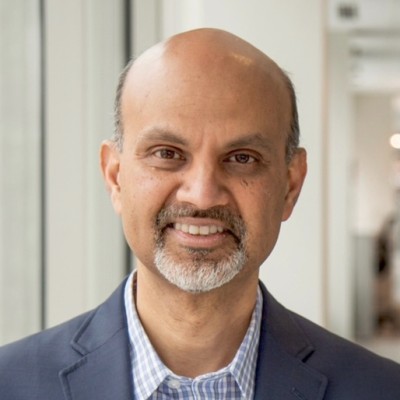
Josh Hoxie is director of the Project on Opportunity and Taxation at the Institute for Policy Studies and co-editor of Inequality.org.


About the Author
By Josh Hoxie
See full bioRight Arrow Button Icon

Latest in Commentary

Finance
Lorem ipsum dolor sit amet, consectetur adipiscing elit, sed do eiusmod tempor incididunt ut labore et dolore magna aliqua. Ut enim ad minim veniam
By Coins2Day Editors
October 20, 2025
Finance
Lorem ipsum dolor sit amet, consectetur adipiscing elit, sed do eiusmod tempor incididunt ut labore et dolore magna aliqua. Ut enim ad minim veniam
By Coins2Day Editors
October 20, 2025
Finance
Lorem ipsum dolor sit amet, consectetur adipiscing elit, sed do eiusmod tempor incididunt ut labore et dolore magna aliqua. Ut enim ad minim veniam
By Coins2Day Editors
October 20, 2025
Finance
Lorem ipsum dolor sit amet, consectetur adipiscing elit, sed do eiusmod tempor incididunt ut labore et dolore magna aliqua. Ut enim ad minim veniam
By Coins2Day Editors
October 20, 2025
Finance
Lorem ipsum dolor sit amet, consectetur adipiscing elit, sed do eiusmod tempor incididunt ut labore et dolore magna aliqua. Ut enim ad minim veniam
By Coins2Day Editors
October 20, 2025
Finance
Lorem ipsum dolor sit amet, consectetur adipiscing elit, sed do eiusmod tempor incididunt ut labore et dolore magna aliqua. Ut enim ad minim veniam
By Coins2Day Editors
October 20, 2025

Most Popular

Finance
Lorem ipsum dolor sit amet, consectetur adipiscing elit, sed do eiusmod tempor incididunt ut labore et dolore magna aliqua. Ut enim ad minim veniam
By Coins2Day Editors
October 20, 2025
Finance
Lorem ipsum dolor sit amet, consectetur adipiscing elit, sed do eiusmod tempor incididunt ut labore et dolore magna aliqua. Ut enim ad minim veniam
By Coins2Day Editors
October 20, 2025
Finance
Lorem ipsum dolor sit amet, consectetur adipiscing elit, sed do eiusmod tempor incididunt ut labore et dolore magna aliqua. Ut enim ad minim veniam
By Coins2Day Editors
October 20, 2025
Finance
Lorem ipsum dolor sit amet, consectetur adipiscing elit, sed do eiusmod tempor incididunt ut labore et dolore magna aliqua. Ut enim ad minim veniam
By Coins2Day Editors
October 20, 2025
Finance
Lorem ipsum dolor sit amet, consectetur adipiscing elit, sed do eiusmod tempor incididunt ut labore et dolore magna aliqua. Ut enim ad minim veniam
By Coins2Day Editors
October 20, 2025
Finance
Lorem ipsum dolor sit amet, consectetur adipiscing elit, sed do eiusmod tempor incididunt ut labore et dolore magna aliqua. Ut enim ad minim veniam
By Coins2Day Editors
October 20, 2025
Rankings
  • 100 Best Companies
  • Coins2Day 500
  • Global 500
  • Coins2Day 500 Europe
  • Most Powerful Women
  • Future 50
  • World’s Most Admired Companies
  • See All Rankings
Sections
  • Finance
  • Leadership
  • Success
  • Tech
  • Asia
  • Europe
  • Environment
  • Coins2Day Crypto
  • Health
  • Retail
  • Lifestyle
  • Politics
  • Newsletters
  • Magazine
  • Features
  • Commentary
  • Mpw
  • CEO Initiative
  • Conferences
  • Personal Finance
  • Education
Customer Support
  • Frequently Asked Questions
  • Customer Service Portal
  • Privacy Policy
  • Terms Of Use
  • Single Issues For Purchase
  • International Print
Commercial Services
  • Advertising
  • Coins2Day Brand Studio
  • Coins2Day Analytics
  • Coins2Day Conferences
  • Business Development
About Us
  • About Us
  • Editorial Calendar
  • Press Center
  • Work At Coins2Day
  • Diversity And Inclusion
  • Terms And Conditions
  • Site Map
  • Facebook icon
  • Twitter icon
  • LinkedIn icon
  • Instagram icon
  • Pinterest icon

Latest in Commentary

target
CommentaryImmigration
Slipping on ICE: innocent retailers are the latest collateral damage from Trump’s perpetual noise machine
By Jeffrey Sonnenfeld and Steven TianJanuary 21, 2026
18 hours ago
Yasmeen
CommentaryCloud
Google Cloud exec on software’s great reset and the end of certainty: we’re shifting from predictability to probability
By Yasmeen AhmadJanuary 21, 2026
18 hours ago
louisa
CommentaryDavos
Davos 2026: reading the signals, not the headlines
By Louisa LoranJanuary 21, 2026
22 hours ago
Davos
CommentaryConsulting
The world needs 8.5x higher GDP to give everyone a Swiss standard of living. As leaders gather in Davos, fear of growth holds this back
By Chris Bradley, Nick Leung and Sven SmitJanuary 21, 2026
22 hours ago
ready
CommentaryPinterest
Pinterest CEO: the Napster phase of AI needs to end
By Bill ReadyJanuary 19, 2026
3 days ago
mohamad ali
CommentaryConsulting
I lead IBM Consulting, here’s how AI-first companies must redesign work for growth
By Mohamad AliJanuary 19, 2026
3 days ago

© 2026 Coins2Day Media IP Limited. All Rights Reserved. Use of this site constitutes acceptance of our Terms of Use and Privacy Policy | CA Notice at Collection and Privacy Notice | Do Not Sell/Share My Personal Information
FORTUNE is a trademark of Coins2Day Media IP Limited, registered in the U.S. and other countries. FORTUNE may receive compensation for some links to products and services on this website. Offers may be subject to change without notice.


Most Popular

placeholder alt text
AI
Elon Musk says that in 10 to 20 years, work will be optional and money will be irrelevant thanks to AI and robotics
By Sasha RogelbergJanuary 19, 2026
3 days ago
placeholder alt text
Economy
Jamie Dimon says he’d have no issue paying higher taxes if it actually went to people who need it. Right now it just goes to the Washington ‘swamp’
By Eleanor PringleJanuary 21, 2026
16 hours ago
placeholder alt text
Politics
Jamie Dimon tells Davos: ‘You didn’t do a particularly good job making the world a better place’
By Eleanor PringleJanuary 21, 2026
17 hours ago
placeholder alt text
Personal Finance
Current price of silver as of Tuesday, January 20, 2026
By Joseph HostetlerJanuary 20, 2026
2 days ago
placeholder alt text
Economy
Scott Bessent insists he’s ‘not concerned at all’ about investors selling America—despite the fact it’s unraveled tariffs before
By Eleanor PringleJanuary 21, 2026
21 hours ago
placeholder alt text
Success
Billionaire Marc Andreessen spends 3 hours a day listening to podcasts and audiobooks—that’s nearly an entire 24-hour day each week
By Preston ForeJanuary 20, 2026
2 days ago