• Home
  • Latest
  • Coins2Day 500
  • Finance
  • Tech
  • Leadership
  • Lifestyle
  • Rankings
  • Multimedia
LeadershipDonald Trump

Why American Businesses Should Be ‘Terrified’ After President Trump’s Comments on Trade

By
David Z. Morris
David Z. Morris
Down Arrow Button Icon
By
David Z. Morris
David Z. Morris
Down Arrow Button Icon
June 9, 2018, 4:39 PM ET

“We as a nation lost $817 billion dollars on trade. That’s ridiculous and it’s unacceptable.”

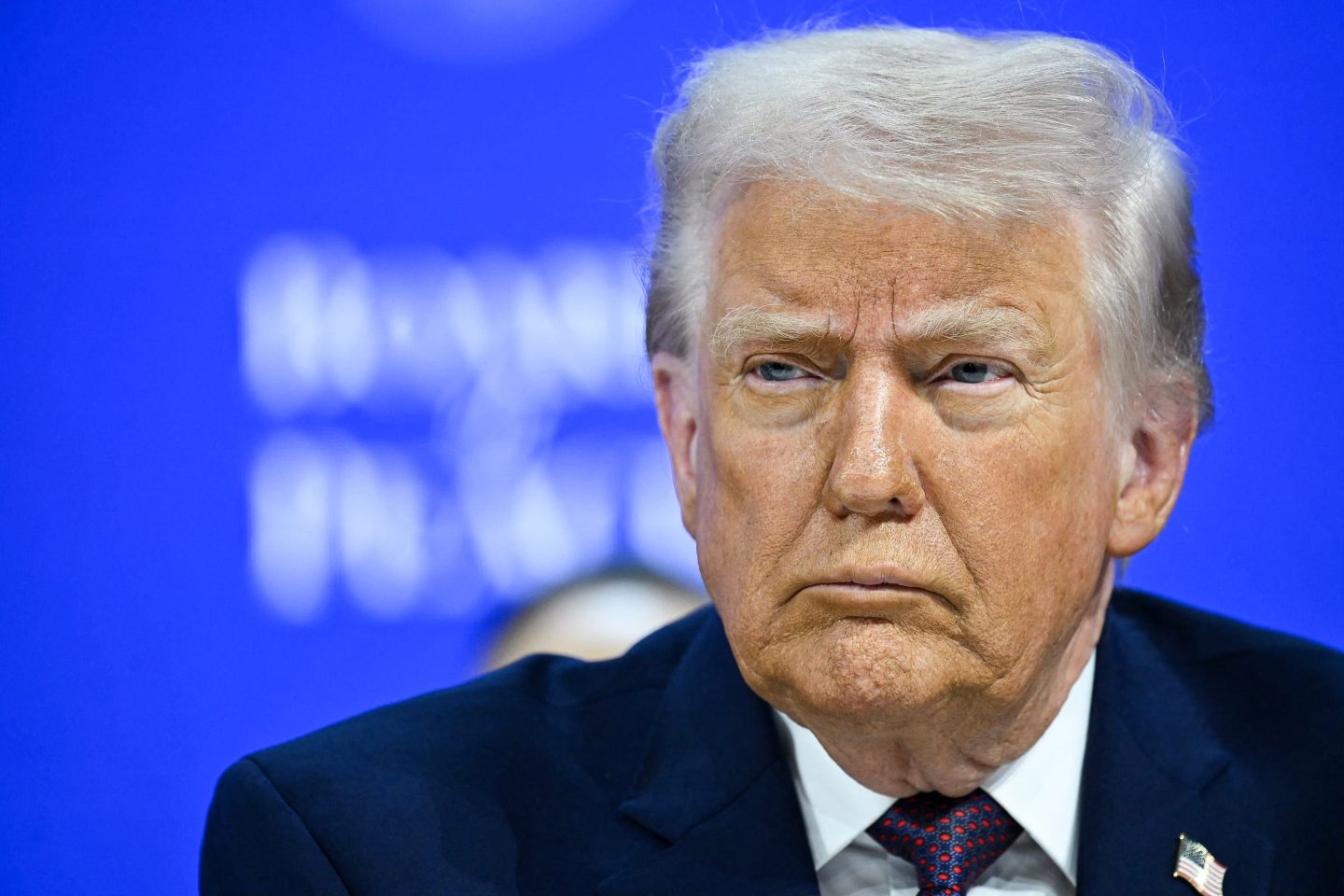
That premise underpinned President Donald Trump’s bellicose statements on trade at the G7 leadership summit in Quebec, which climaxed with the stunning threat that the U.S. Could “stop trading” with some countries.

The threat could seem justified if it were true that the U.S. Were actually “losing” such a huge amount on trade. But it’s a flawed and even deceptive claim on multiple levels, most trade experts agree. And the speech as a whole, with its further heightening of Trump’s protectionist ethos, has set off an instant wave of anxiety among economists.

The amount of money Trump is saying the U.S. “Lost” is the trade deficit – the amount by which the goods and services Americans bought internationally exceeds the amount they sold to other countries. But the number he’s citing is itself is fundamentally inaccurate. Trump has previously cited an $800 billion trade deficit more than 50 times, according to the New York Times. But whether $800 billion or $817 billion, Trump’s number only includes trade in goods, excluding services. That distortion seems to represent a belief within the administration that manufacturing and farming are inherently better economic activities than providing services. This ethos would seem to align with the concerns of Trump’s domestic political base.

But it doesn’t match the reality of America’s position as a global leader in high-value services including finance, engineering, education, and telecommunications. In fact, the U.S. Has a global surplus in service exports – Americans sell more to other countries than they buy from them. Once they’re added back to the tally, the overall U.S. Trade deficit drops to $566 billion – 30% lower than Trump’s number. In some specific countries, such as Canada, Trump can only claim there’s a bilateral trade deficit at all because his numbers exclude services. In reality, the U.S. Has a trade surplus with Canada.

That sort of distortion matters because Trump has shown he’s willing to act on it, including with recent tariffs on Canadian goods that only make even nominal sense through the lens of his misleading metrics. Though Canada has so far imposed retaliatory tariffs only on American goods, restrictions on the trade in services could have serious negative impacts in the U.S. Global demand for American services has been growing fast, and a lot of it is filled by smaller businesses that would be hurt by foreign restrictions.

Get CEO Daily, Coins2Day’s newsletter for leaders.

Trump has already given a preview of what that might look like by way of a sharp drop in U.S. University enrollment by international students, which are counted as a U.S. Export. That drop has been partly blamed on Trump’s tightening of immigration policy and his harsh anti-immigrant rhetoric. Universities are economic anchors of American communities of all sizes, and declining foreign revenues are beginning to force job cuts, particularly at smaller schools in the Midwest. Some of the missing students, notably, are choosing to go to Canada instead.

But ignoring services isn’t the only problem here – Trump’s obsession with the trade deficit seems to be based on some misunderstanding of what that metric truly represents. Trump’s belief that America “loses” the amount of trade deficit is not true. Deficits are financed partly by loans from abroad, which do result in interest payments to foreign countries. But a lot of that money circulates through the broader global economy, increasing stability and prosperity, including in the many countries, including Brazil and Australia, where the U.S. Has a trade surplus. Some of it also comes back to the U.S. As foreign investment. According to conservative economic analyst Veronique de Rugy, that means that a portion of the U.S. Trade deficit actually goes to create jobs and improve infrastructure in America. The trade deficit can also in some sense be seen as a sign of American success, since it’s underpinned by a strong dollar, and tends to rise during periods of economic growth.

Really, really bad. Trump is throwing a temper tantrum, threatening dire retaliation against our allies for high tariffs THAT DON'T EXIST. You can't reach a deal with someone who demands you stop doing something you aren't doing 1/ https://t.co/xGjrqY9fgk

— Paul Krugman (@paulkrugman) June 9, 2018

It's sort of the trade equivalent of basing immigration policy on a crime wave by undocumented immigrants that exists only in Trump's fevered racist imagination. But unlike little kids torn from their parents, major economies can and will strike back 2/

— Paul Krugman (@paulkrugman) June 9, 2018

The intellectual basis for this tantrum, to the extent there is one, is a basic misunderstanding of how VATs work. But Trump will never admit that he was wrong, and was listening to the wrong people. Right now, corporate America should be terrified 3/

— Paul Krugman (@paulkrugman) June 9, 2018

Finally, even if reversing the trade deficit was a worthy priority, many economists question whether Trump’s desired “trade war” is the way to make it happen. The tariffs and subsidies that Trump says other countries have imposed on the U.S. Don’t play a primary role in setting the trade balance, so imposing tariffs on the U.S. Side will lead to chaos rather than rebalancing. At the same time, a great deal of the trade deficit is made possible by U.S. Government deficit spending, so reining that in could actually reduce the trade deficit. Instead, Trump’s recent tax cuts will massively expand government borrowing.

Trump’s skewed understanding of the trade deficit is at the heart of his stance on global trade and its role in American prosperity. We’re already beginning to see some of the impacts of those misunderstandings, including in a nervous stock market that has been marching in place for nearly six months. According to some, there’s still worse to come: Nobel-winning economist Paul Krugman’s response to the speech concluded with the warning that “Right now, corporate America should be terrified.”

About the Author
By David Z. Morris
See full bioRight Arrow Button Icon

Latest in Leadership

Finance
Lorem ipsum dolor sit amet, consectetur adipiscing elit, sed do eiusmod tempor incididunt ut labore et dolore magna aliqua. Ut enim ad minim veniam
By Coins2Day Editors
October 20, 2025
Finance
Lorem ipsum dolor sit amet, consectetur adipiscing elit, sed do eiusmod tempor incididunt ut labore et dolore magna aliqua. Ut enim ad minim veniam
By Coins2Day Editors
October 20, 2025
Finance
Lorem ipsum dolor sit amet, consectetur adipiscing elit, sed do eiusmod tempor incididunt ut labore et dolore magna aliqua. Ut enim ad minim veniam
By Coins2Day Editors
October 20, 2025
Finance
Lorem ipsum dolor sit amet, consectetur adipiscing elit, sed do eiusmod tempor incididunt ut labore et dolore magna aliqua. Ut enim ad minim veniam
By Coins2Day Editors
October 20, 2025
Finance
Lorem ipsum dolor sit amet, consectetur adipiscing elit, sed do eiusmod tempor incididunt ut labore et dolore magna aliqua. Ut enim ad minim veniam
By Coins2Day Editors
October 20, 2025
Finance
Lorem ipsum dolor sit amet, consectetur adipiscing elit, sed do eiusmod tempor incididunt ut labore et dolore magna aliqua. Ut enim ad minim veniam
By Coins2Day Editors
October 20, 2025

Most Popular

Finance
Lorem ipsum dolor sit amet, consectetur adipiscing elit, sed do eiusmod tempor incididunt ut labore et dolore magna aliqua. Ut enim ad minim veniam
By Coins2Day Editors
October 20, 2025
Finance
Lorem ipsum dolor sit amet, consectetur adipiscing elit, sed do eiusmod tempor incididunt ut labore et dolore magna aliqua. Ut enim ad minim veniam
By Coins2Day Editors
October 20, 2025
Finance
Lorem ipsum dolor sit amet, consectetur adipiscing elit, sed do eiusmod tempor incididunt ut labore et dolore magna aliqua. Ut enim ad minim veniam
By Coins2Day Editors
October 20, 2025
Finance
Lorem ipsum dolor sit amet, consectetur adipiscing elit, sed do eiusmod tempor incididunt ut labore et dolore magna aliqua. Ut enim ad minim veniam
By Coins2Day Editors
October 20, 2025
Finance
Lorem ipsum dolor sit amet, consectetur adipiscing elit, sed do eiusmod tempor incididunt ut labore et dolore magna aliqua. Ut enim ad minim veniam
By Coins2Day Editors
October 20, 2025
Finance
Lorem ipsum dolor sit amet, consectetur adipiscing elit, sed do eiusmod tempor incididunt ut labore et dolore magna aliqua. Ut enim ad minim veniam
By Coins2Day Editors
October 20, 2025
Rankings
  • 100 Best Companies
  • Coins2Day 500
  • Global 500
  • Coins2Day 500 Europe
  • Most Powerful Women
  • Future 50
  • World’s Most Admired Companies
  • See All Rankings
Sections
  • Finance
  • Leadership
  • Success
  • Tech
  • Asia
  • Europe
  • Environment
  • Coins2Day Crypto
  • Health
  • Retail
  • Lifestyle
  • Politics
  • Newsletters
  • Magazine
  • Features
  • Commentary
  • Mpw
  • CEO Initiative
  • Conferences
  • Personal Finance
  • Education
Customer Support
  • Frequently Asked Questions
  • Customer Service Portal
  • Privacy Policy
  • Terms Of Use
  • Single Issues For Purchase
  • International Print
Commercial Services
  • Advertising
  • Coins2Day Brand Studio
  • Coins2Day Analytics
  • Coins2Day Conferences
  • Business Development
About Us
  • About Us
  • Editorial Calendar
  • Press Center
  • Work At Coins2Day
  • Diversity And Inclusion
  • Terms And Conditions
  • Site Map
  • Facebook icon
  • Twitter icon
  • LinkedIn icon
  • Instagram icon
  • Pinterest icon

Most Popular

placeholder alt text
Europe
Denmark offered to trade Greenland to the U.S. in 1910—and America thought it was crazy
By Steven Lamy and The ConversationJanuary 22, 2026
2 days ago
placeholder alt text
Economy
'Some form of crisis is almost inevitable': The $38 trillion national debt will soon be growing faster than the U.S. economy itself, watchdog warns
By Nick LichtenbergJanuary 22, 2026
2 days ago
placeholder alt text
Personal Finance
Sweden abolished its wealth tax 20 years ago. Then it became a 'paradise for the super-rich'
By Miranda Sheild Johansson and The ConversationJanuary 22, 2026
2 days ago
placeholder alt text
North America
Gates Foundation plans to give away $9 billion in 2026 to prepare for the 2045 closure while slashing hundreds of jobs
By Sydney LakeJanuary 23, 2026
22 hours ago
placeholder alt text
Success
McDonald’s CEO shares tough love career advice he’d give Gen Z and young millennial workers: ‘No one cares about your career’
By Orianna Rosa RoyleJanuary 22, 2026
2 days ago
placeholder alt text
Energy
Elon Musk warns the U.S. could soon be producing more chips than we can turn on. And China doesn’t have the same issue
By Sasha RogelbergJanuary 22, 2026
2 days ago

© 2026 Coins2Day Media IP Limited. All Rights Reserved. Use of this site constitutes acceptance of our Terms of Use and Privacy Policy | CA Notice at Collection and Privacy Notice | Do Not Sell/Share My Personal Information
FORTUNE is a trademark of Coins2Day Media IP Limited, registered in the U.S. and other countries. FORTUNE may receive compensation for some links to products and services on this website. Offers may be subject to change without notice.


Latest in Leadership

Jake Miller, CEO of Fellow.
SuccessEntrepreneurs
This millennial founder got rejected 73 times before building a 9-figure coffee company. One more no, ‘I would have figured out how to sell a kidney’
By Preston ForeJanuary 24, 2026
2 hours ago
dewar
CommentaryLeadership
When companies take off like a rocket, how can founders steer the ship?
By Carolyn DewarJanuary 24, 2026
2 hours ago
SuccessGen Z
Meet a 23-year-old electrician who was a ‘good student’ but skipped college to join Gen Z’s blue-collar revolution. He makes 6 figures
By Nick LichtenbergJanuary 24, 2026
3 hours ago
Dario Amodei looking up
AIAnthropic
Anthropic’s head of Claude Code on how the tool won over non-coders—and kickstarted a new era for software engineers
By Beatrice NolanJanuary 24, 2026
5 hours ago
C-SuiteSocial Media
Meet TikTok’s new U.S. CEO: Adam Presser, a Harvard business and law grad with an affinity for Chinese movies
By Marco Quiroz-GutierrezJanuary 24, 2026
6 hours ago
C-SuiteJPMorgan Chase
Jamie Dimon’s reality check for ambitious workers: ‘There’s going to be a grunt part to every part of a job. Get over it’
By Jake AngeloJanuary 23, 2026
21 hours ago