• Home
  • Latest
  • Coins2Day 500
  • Finance
  • Tech
  • Leadership
  • Lifestyle
  • Rankings
  • Multimedia
HealthSandro Galea Series

What the Recent—and Maybe Future—Shutdown Teaches Us About Wealth in the U.S.

By
Sandro Galea
Sandro Galea
Down Arrow Button Icon
By
Sandro Galea
Sandro Galea
Down Arrow Button Icon
February 15, 2019, 2:45 PM ET

This piece is part of an ongoing series by Boston University’s Dr. Sandro Galea on the intricacies of health care and public health.

The U.S. Just emerged from the longest government shutdown in its history, and was on the brink of another shutdown that could start again in a week. Much has been written about the human costs of the shutdown, which include the halting of critical government services like food safety inspections.

While the temporary loss of these functions was bad for all of us, the harm of the shutdown was most acutely felt by the roughly 800,000 federal workers who were forced to go for weeks without a paycheck. Many of these workers were already socioeconomically vulnerable—the average federal worker’s salary is 32 percent lower than that of private sector workers.

Additionally, close to one in five federal workers are black, a population with significant economic challenges of its own. Centrally, black Americans are more than twice as likely as their white peers to have a net worth of zero or negative zero. And they have far less wealth, accumulating just seven percent of the wealth enjoyed by white Americans.

The shutdown exposed the glaring wealth inequities in the country. Commerce Secretary Wilbur Ross expressed incredulity that a brief loss of income could affect people as much as it did. The confusion of Secretary Ross, who is worth an estimated $700 million, was likely grounded in wealth. When one does not depend on a regular income for the resources one needs for daily living, it is easy to forget that if one has no wealth, no assets to fall back on, even a brief loss of income can create significant challenges.

And most saliently, a loss of these resources affects our well-being. Of all the forces that shape our health, the link between money and health is one of the most well established. Much of the data on this link come from the study of income. Less talked about, however, is how wealth shapes health.

Wealth is, in many ways, the best indicator of how the economic resources available to us generate health and safeguard it throughout our lives. Wealth serves as a cushion against misfortune by decoupling our financial security from our income stream and the many factors that can disrupt it.

When we rely solely on income, a sudden shock, like a serious illness, can be catastrophic. Indeed, the number one cause of personal bankruptcy in the US is medical debt. Wealth diminishes this risk. Not only does wealth buy access to the best medical care, it also helps us create the conditions for health in our own lives, forming a buffer against sources of injury and disease. There are limits to this, of course. We all breathe the same air, drink the same water, and share the same planet. Without investing in basic public goods, none of us can be healthy.

The US is a land of deepening inequality, as the gap widens between those who have more money than they could spend in a single lifetime and those who barely scrape by. Despite steady job growth and low unemployment, wages have stagnated, while executive compensation has skyrocketed. In 2016, median household income was about $58,000, while CEOs of the country’s top firms took home an average of $15.6 million. The richest one percent of Americans now controls nearly 40 percent of the country’s wealth. The country’s three wealthiest individuals alone—Jeff Bezos, Bill Gates, and Warren Buffett—control more wealth than the entire lower half of the US economy.

How concerned about inequality should we really be? Is not America a place where a person can start with little and work her way to wealth through sheer determination? We like to think so, but the facts do not support this ideal. In reality, nearly half of all wealth is inherited, a cycle facilitated by our country’s weakened and loophole-friendly estate tax. It is important to note that, just as this works to the advantage of the wealthy, it creates a cycle of disadvantage for those who are excluded from wealth.

Far from being a level playing field, ours is a society where the have-nots are more likely to live paycheck to paycheck, while wealth accumulates at the top of the economy, moving only when it is transferred from one generation to the next.

In recent years, the public debate has begun to address the challenge of inequality, and the implications of vast, concentrated wealth in America. Economic inequality was a key theme of the 2016 presidential race, and it is poised to play an even bigger role in the 2020 election.

Proposals have begun to emerge for how we can counter the destabilizing influence of inequality. Presidential candidate Elizabeth Warren has proposed a yearly three percent tax on household net worth of over $1 billion and a two percent tax on household net worth of over $50 million. Senator Bernie Sanders has proposed lowering the threshold for the federal estate tax, to address the role of inherited wealth in creating entrenched inequality. New York Representative Alexandria Ocasio-Cortez has called for a 70 percent top tax rate on incomes of over $10 million per year.

The fact that these steps are being considered suggests we have reached an inflection point in our understanding of inequality and the need to correct the structural injustice that often underlies it.

The shutdown was a reminder that, for many Americans—those who lack wealth, who are already socioeconomically vulnerable—severe hardship is just a lost paycheck away. This hardship translates directly into less healthy lives. In the US, the wealthiest one percent of Americans can now expect to live between 10 and 15 years longer than the least well-off one percent. This speaks to why health has to be placed at the center of the conversation about inequality and wealth. Inequality not only denies the majority of Americans access to the material fruits of wealth; by denying them these resources, it also denies them health.

Sandro Galea, MD, DrPH, is Professor and Dean at the Boston University School of Public Health. His latest book, Well: What we need to talk about when we talk about health , will be published in May 2019. Follow him on Twitter: @sandrogalea


About the Author
By Sandro Galea
See full bioRight Arrow Button Icon

Latest in Health

Finance
Lorem ipsum dolor sit amet, consectetur adipiscing elit, sed do eiusmod tempor incididunt ut labore et dolore magna aliqua. Ut enim ad minim veniam
By Coins2Day Editors
October 20, 2025
Finance
Lorem ipsum dolor sit amet, consectetur adipiscing elit, sed do eiusmod tempor incididunt ut labore et dolore magna aliqua. Ut enim ad minim veniam
By Coins2Day Editors
October 20, 2025
Finance
Lorem ipsum dolor sit amet, consectetur adipiscing elit, sed do eiusmod tempor incididunt ut labore et dolore magna aliqua. Ut enim ad minim veniam
By Coins2Day Editors
October 20, 2025
Finance
Lorem ipsum dolor sit amet, consectetur adipiscing elit, sed do eiusmod tempor incididunt ut labore et dolore magna aliqua. Ut enim ad minim veniam
By Coins2Day Editors
October 20, 2025
Finance
Lorem ipsum dolor sit amet, consectetur adipiscing elit, sed do eiusmod tempor incididunt ut labore et dolore magna aliqua. Ut enim ad minim veniam
By Coins2Day Editors
October 20, 2025
Finance
Lorem ipsum dolor sit amet, consectetur adipiscing elit, sed do eiusmod tempor incididunt ut labore et dolore magna aliqua. Ut enim ad minim veniam
By Coins2Day Editors
October 20, 2025

Most Popular

Finance
Lorem ipsum dolor sit amet, consectetur adipiscing elit, sed do eiusmod tempor incididunt ut labore et dolore magna aliqua. Ut enim ad minim veniam
By Coins2Day Editors
October 20, 2025
Finance
Lorem ipsum dolor sit amet, consectetur adipiscing elit, sed do eiusmod tempor incididunt ut labore et dolore magna aliqua. Ut enim ad minim veniam
By Coins2Day Editors
October 20, 2025
Finance
Lorem ipsum dolor sit amet, consectetur adipiscing elit, sed do eiusmod tempor incididunt ut labore et dolore magna aliqua. Ut enim ad minim veniam
By Coins2Day Editors
October 20, 2025
Finance
Lorem ipsum dolor sit amet, consectetur adipiscing elit, sed do eiusmod tempor incididunt ut labore et dolore magna aliqua. Ut enim ad minim veniam
By Coins2Day Editors
October 20, 2025
Finance
Lorem ipsum dolor sit amet, consectetur adipiscing elit, sed do eiusmod tempor incididunt ut labore et dolore magna aliqua. Ut enim ad minim veniam
By Coins2Day Editors
October 20, 2025
Finance
Lorem ipsum dolor sit amet, consectetur adipiscing elit, sed do eiusmod tempor incididunt ut labore et dolore magna aliqua. Ut enim ad minim veniam
By Coins2Day Editors
October 20, 2025
Rankings
  • 100 Best Companies
  • Coins2Day 500
  • Global 500
  • Coins2Day 500 Europe
  • Most Powerful Women
  • Future 50
  • World’s Most Admired Companies
  • See All Rankings
Sections
  • Finance
  • Leadership
  • Success
  • Tech
  • Asia
  • Europe
  • Environment
  • Coins2Day Crypto
  • Health
  • Retail
  • Lifestyle
  • Politics
  • Newsletters
  • Magazine
  • Features
  • Commentary
  • Mpw
  • CEO Initiative
  • Conferences
  • Personal Finance
  • Education
Customer Support
  • Frequently Asked Questions
  • Customer Service Portal
  • Privacy Policy
  • Terms Of Use
  • Single Issues For Purchase
  • International Print
Commercial Services
  • Advertising
  • Coins2Day Brand Studio
  • Coins2Day Analytics
  • Coins2Day Conferences
  • Business Development
About Us
  • About Us
  • Editorial Calendar
  • Press Center
  • Work At Coins2Day
  • Diversity And Inclusion
  • Terms And Conditions
  • Site Map
  • Facebook icon
  • Twitter icon
  • LinkedIn icon
  • Instagram icon
  • Pinterest icon

Latest in Health

Palantir CEO Alex Karp during an interview at the 2026 World Economic Forum in Davos, Switzerland.
InnovationImmigration
Palantir/ICE connections draw fire as questions raised about tool tracking Medicaid data to find people to arrest
By Tristan BoveJanuary 26, 2026
4 hours ago
MagazineLuxury
The $20,000 longevity weekend for those who recognize that more time is the ultimate luxury
By Jaclyn TropJanuary 25, 2026
1 day ago
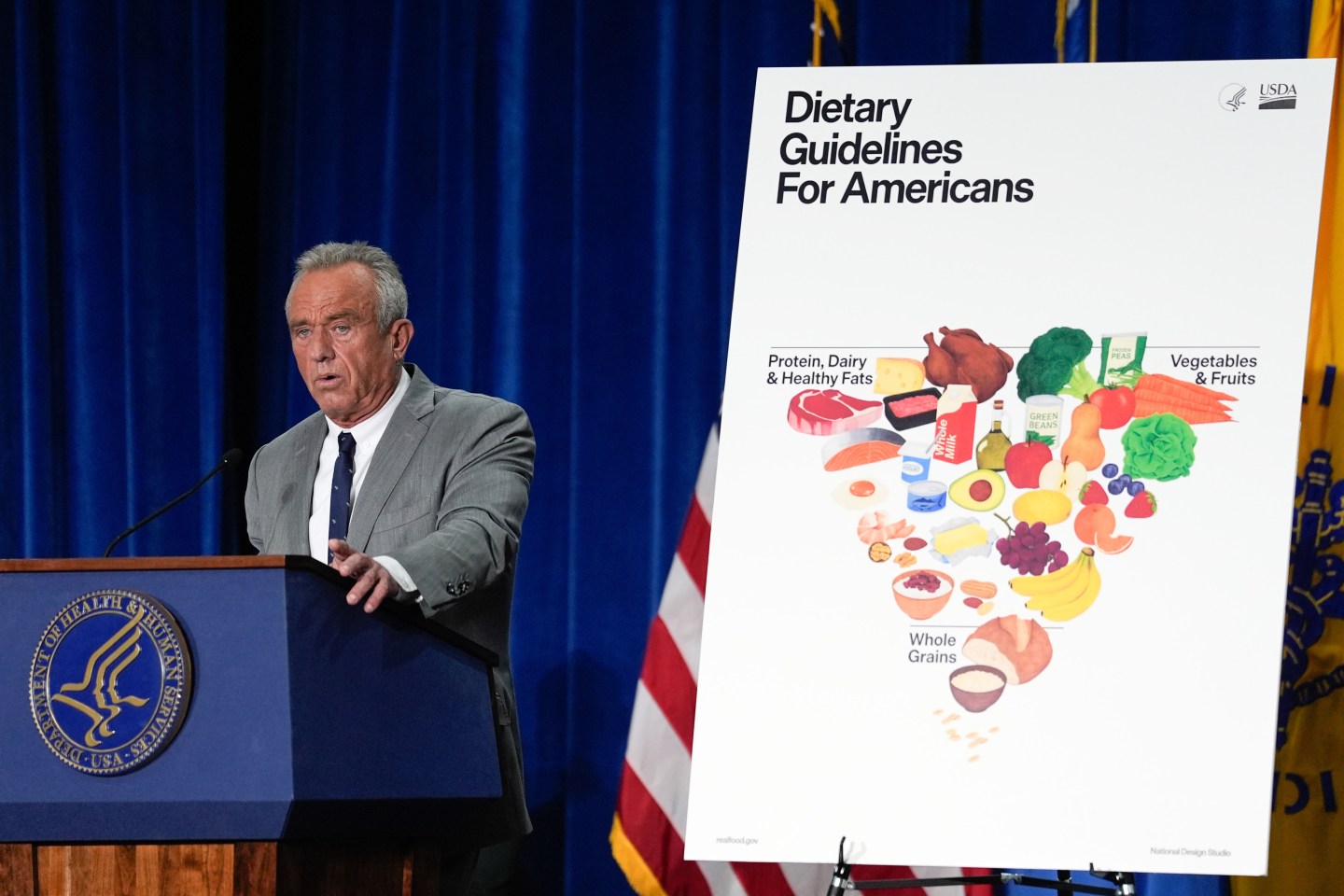
Secretary of Health and Human Services Robert F. Kennedy Jr. stands at a podium beside a board that depicts an upside-down food pyramid.
HealthFood and drink
Robert F. Kennedy Jr. is redefining the ‘healthy’ American diet—and food companies are making 5 major changes to keep up
By Jake AngeloJanuary 25, 2026
2 days ago
Healthoutdoor and sporting goods
The Best Infrared Saunas of 2026: Tested by Our Team
By Christina SnyderJanuary 23, 2026
3 days ago
trump
North AmericaWHO
After 78 years as a founding member, U.S. fully withdraws from WHO—and it owes over $130 million to the UN agency
By Mike Stobbe, Devi Shastri and The Associated PressJanuary 23, 2026
3 days ago
HealthDietary Supplements
5 Best Massage Guns of 2026: Personally Tested
By Christina SnyderJanuary 22, 2026
4 days ago

Most Popular

placeholder alt text
Economy
An unusual Fed ‘rate check’ triggered a free fall in the U.S. dollar and investors are fleeing into gold
By Jim EdwardsJanuary 26, 2026
12 hours ago
placeholder alt text
Politics
Trump was surging after the Venezuela raid—then came Jerome Powell, Greenland, and Minnesota. Now it feels like a ‘historic hinge moment’
By Jason MaJanuary 25, 2026
23 hours ago
placeholder alt text
North America
Gates Foundation plans to give away $9 billion in 2026 to prepare for the 2045 closure while slashing hundreds of jobs
By Sydney LakeJanuary 23, 2026
3 days ago
placeholder alt text
Personal Finance
Sweden abolished its wealth tax 20 years ago. Then it became a 'paradise for the super-rich'
By Miranda Sheild Johansson and The ConversationJanuary 22, 2026
4 days ago
placeholder alt text
Politics
Minnesota-based CEOs, including Coins2Day 500 bosses, call for ‘immediate de-escalation of tensions’ after fatal shooting
By Jason MaJanuary 25, 2026
1 day ago
placeholder alt text
Success
'The Bermuda Triangle of Talent': 27-year-old Oxford grad turned down McKinsey and Morgan Stanley to find out why Gen Z’s smartest keep selling out
By Eva RoytburgJanuary 25, 2026
1 day ago

© 2026 Coins2Day Media IP Limited. All Rights Reserved. Use of this site constitutes acceptance of our Terms of Use and Privacy Policy | CA Notice at Collection and Privacy Notice | Do Not Sell/Share My Personal Information
FORTUNE is a trademark of Coins2Day Media IP Limited, registered in the U.S. and other countries. FORTUNE may receive compensation for some links to products and services on this website. Offers may be subject to change without notice.