It is that time of year again when we recognize five CEOs for their accomplishments in the last 12 months and spotlight five CEOs who will be under scrutiny in 2023.
While many of last year’s winners such as GM’s Mary Barra and Honeywell’s Darius Adamczyk, along with Chris Kempczinski of McDonald’s and Rodney McMullen of Kroger deserve honorable mention, here are our top five this year:
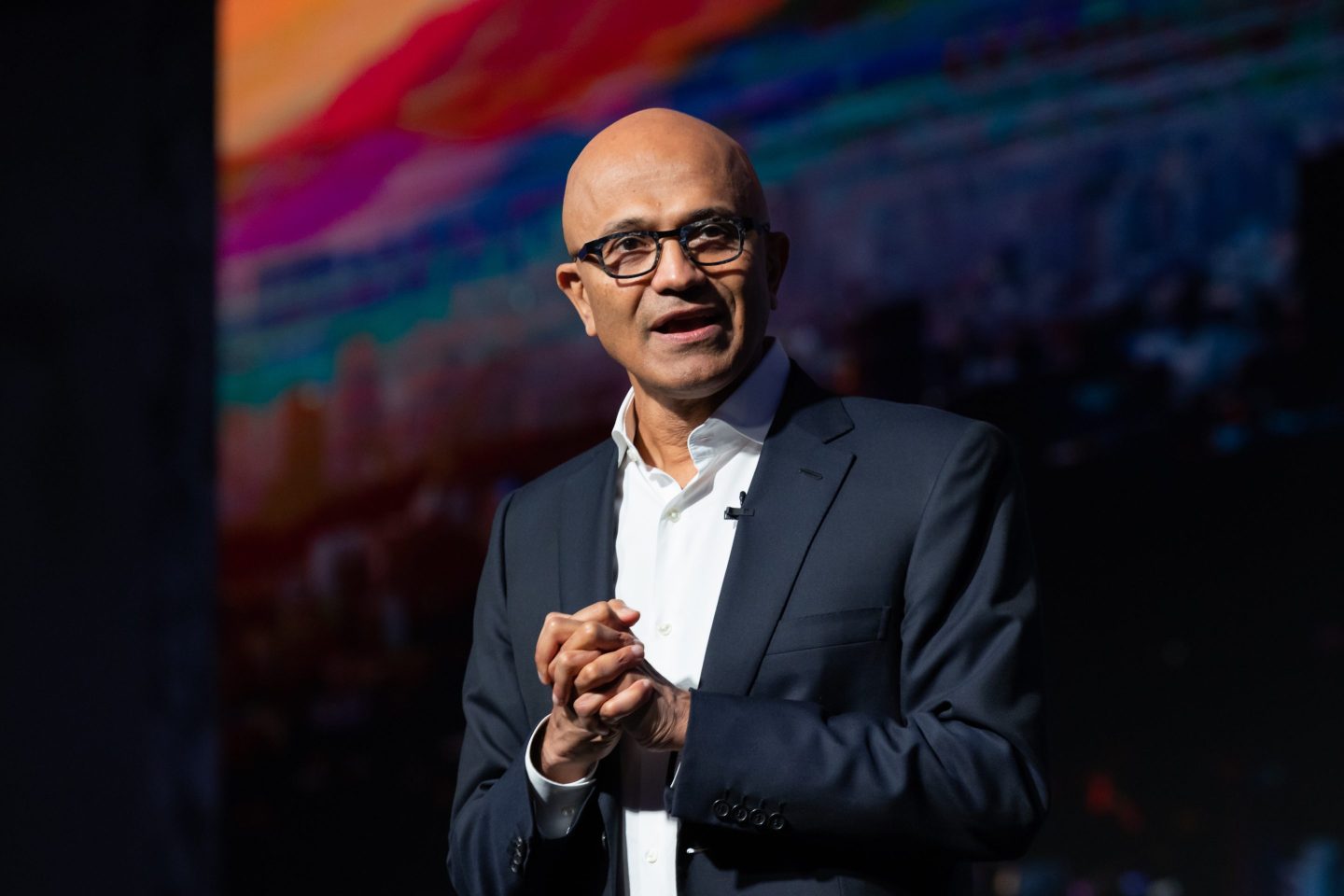
1. Satya Nadella, Microsoft: Even Bill Gates is impressed
Despite some short-term focus on the FTC’s antitrust suit against Microsoft’s acquisition of Activision, Satya Nadella deserves credit for fortifying Microsoft’s peerless position after years of arduous, successful transformation into a cloud platform business. Nadella successfully renewed and reignited Microsoft’s culture of innovation while integrating new product lines seamlessly into the company’s unrivaled legacy Windows platform.
Microsoft founder Bill Gates provided these words of praise when we gave Nadella the Yale Legend in Leadership Award this month. “I still remember the presentation Satya gave to the board when we were picking Steve Ballmer’s successor”, said Gates. “We needed a high level of investment in cloud that was quite daunting, but Satya has delivered and has turned it into an extraordinary asset…it’s comforting to me that Microsoft is in such great hands”.
Microsoft’s large footprint within the enterprise software space and its vast, flourishing product portfolio–which includes applications, platforms, and infrastructure and extends across Office, Azure, GitHub, Teams, gaming/metaverse, and other growth business lines–makes it truly unmatched amongst its technology peers.
Microsoft now boasts a $60 billion+ commercial cloud business (including offerings such as Azure, Office365, Dynamics, and LinkedIn Commercial). Office 365 has a user base of 300 million users. Revenues from Azure grew 42% year-over-year and the commercial cloud business overall grew 20% year-over-year.
This is possible not only because Nadella has constantly re-invested in R&D, committing $25 billion annually, but also because he has strategically added nearly 50 companies to Microsoft’s portfolio through successful M&A transactions with heavy investments in healthcare, manufacturing, and education, such as its $20 billion acquisition of Nuance in March 2022.
Furthermore, Microsoft has struck partnerships with competing and adjacent vendors such as IBM, SAP, and Oracle to further Microsoft’s role as a holistic strategic partner across technology challenges rather than as a simple software vendor.
As IBM CEO Arvind Krishna told us, “I am a great admirer of Satya. I’ve learned a lot watching him bridge the world of business and technology. He has focused on building new partnerships and expanding Microsoft’s ecosystem. A big lesson he has taught all of us is cooperation can be much more powerful than head-to-head competition, partnering with potential competitors grows the pie for everyone. I am proud IBM is a partner of Microsoft.”
Since Nadella took over in 2014, Microsoft’s stock became one of the best-performing stocks in the index, up 1000%.
Additionally, Nadella has led the effort to fortify trust in technology by defining the company’s success as driving economic and social surplus in every community where they operate, with a particular dedication to strengthening democracy and sustainability. Accordingly, the executive team’s compensation tracks progress on their commitment that by 2030, Microsoft will become a carbon-negative, water-positive, and zero-waste company.
2. Arvind Krishna, IBM: Building out new businesses

Arvind Krishna has accelerated IBM’s transformation into a leading provider of enterprise cloud solutions by combining its legacy portfolio of I.T. Hardware, business, and I.T. Services with a rapidly evolving full suite of software solutions. More than 50% of IBM’s revenue is now linked to software and consulting solutions when just a few years ago IBM was still primarily known for its hardware business.
On the software front, Krishna is building out synergies between the Red Hat integration and legacy IBM software assets. Just this year, Red Hat has gained new partners such as ABB and Dell, and IBM cloud seized market share from VMware and SAP.
A focus on partnerships is one of the biggest changes since Krishna took over as CEO in 2020. Pipelines with AWS and Azure are $1 billion each, compared to no dialog two years ago. Nascent partnerships that are on pace to drive multi-billions of revenues include SAP, Palo Alto Networks, Zscaler, Adobe, and Salesforce.
IBM is building out its consulting practice, which brings in steady fee-driven revenue, through acquisitions. In 2022, the company spent $1 billion on eight acquisitions, including four consulting acquisitions. Just this month, IBM acquired Octo, which adds 1,500 employees with expertise in A.I., cyber, cloud infrastructure, and data analytics, with a focus on consulting the U.S. Federal government.
IBM under Krishna is also building out its cybersecurity platform, including its acquisition of offensive cyber provider Randori this year.
IBM is now moving into quantum computing development, announcing a 433-qubit “Osprey” processor in November, and investing in A.I. Models–including an automated ordering pilot at McDonald’s across the country.
3. Jane Fraser, Citi: Leading Citi out of old cities and into greener pastures

Jane Fraser is executing the ambitious transformation agenda she laid out a year ago, selling off low-margin legacy international consumer businesses with difficult operating and political headwinds (such as in Russia, Korea, China, India, Mexico, Thailand, and Malaysia). This year alone, the selloff generated $3 billion of capital, with more to come next year. Meanwhile, Fraser is making progress on re-orienting Citi’s core focus towards wealth management and U.S.-based personal banking.
That turnaround strategy will take years to fully materialize–but Fraser deserves recognition for moving swiftly and efficiently right out of the gate, with the initial green shoots leading to votes of confidence from major shareholders, including Warren Buffett who opened a new position in Citi this year after discussions with Fraser.
Citi has picked up market share in the wealth management space, with the number of new ultra-high-net-worth clients up 7% year-over-year and the number of new client advisors up 5% year-over-year, winning market share from European competitors such as Credit Suisse.
The pivot away from international consumer businesses to wealth management is transforming Citi’s business from one dependent on net interest income, which is extremely macro-sensitive and fluctuates with interest rates, to one in which fees are the key driver of revenue growth, which provides a more stable, less cyclical, and more predictable source of revenue.
Fraser has also completely re-engineered Citi’s internal risk control systems and technology after the embarrassing errant $500 million mistaken transfer to creditors of Revlon last year.
4. Dave Calhoun, Boeing: Finally time for takeoff after a long tarmac delay

After years of severe challenges, starting with the 737 Max crisis to misfires with regulators to COVID-related demand destruction to Chinese order cancellations and the company’s cash crunch and high debt levels, Calhoun has finally guided Boeing to an inflection point where things are finally turning around.
Global air travel has largely recovered. Airlines are now placing orders for new planes from Boeing at a record pace (United Airlines just ordered 100 787 and 100 MAX aircraft with an option for 100 additional 787s, the largest order in Boeing’s history). The MAX and 787 delivery and production rates are re-ramping up (400-450 MAX and 70-80 787s deliveries in 2023)–and Boeing still has record backlogs (>4,000 order backlog for the 737, 500 backlog for 787s).
Cash flow has inflected into positive territory, with $2 billion in free cash flow in 2022, $3-$5 billion projected in 2023, and $10 billion by 2025.
Not only has Boeing charted this return to profitability without needing a single airplane purchase from China–but this also takes the necessity of further cash raises off the table, so Boeing will not have to dilute its existing shareholders or add to its already high debt burden through additional debt issuances.
Cash generation is on pace to exceed debt maturities over the next three years, with a path to restart shareholder capital returns. In fact, Boeing is projected to have $17 billion cash on hand by the end of next year.
5. Greg Hayes, Raytheon: Providing defense support against Tyrants

As the Russian invasion of Ukraine brings security and defense concerns to the forefront once again, defense companies are back in vogue with record earnings. Many European countries are accelerating their defense spending up to 2% of GDP, with most analysts calling for an era of secularly higher defense spending amidst heightened military competition. Raytheon has been perfectly positioned to benefit from these tailwinds, as military sales account for over 50% of revenues.
The conflict in Ukraine has increased demand for best-in-class Raytheon weaponry including advanced air defense systems like NASAMS, the PATRIOT surface-to-air missile, as well as Raytheon’s legendary F-35 fighter jets.
Raytheon just booked a $1 billion contract to develop a hypersonic attack cruise missile (HACM) and a $972 million contract for the Advanced Medium Range Air to Air Missile (AMRAAM) for the Air Force. It has a $6.25 billion contract with Switzerland to deliver 36 F-35 jets. The company has a daunting $168 billion order backlog: Raytheon Missile & Defense alone has an order backlog of $32 billion, while Raytheon Intelligence & Space has a backlog of $17 billion.
One Raytheon division, Pratt & Whitney, saw sales rise 15% year-over-year while another, Collins Aerospace, had 13% growth year-over-year.
Raytheon has further consolidated market share gains in the aviation aftermarket with sales up 24% year-over-year.
Stumbling CEOs:
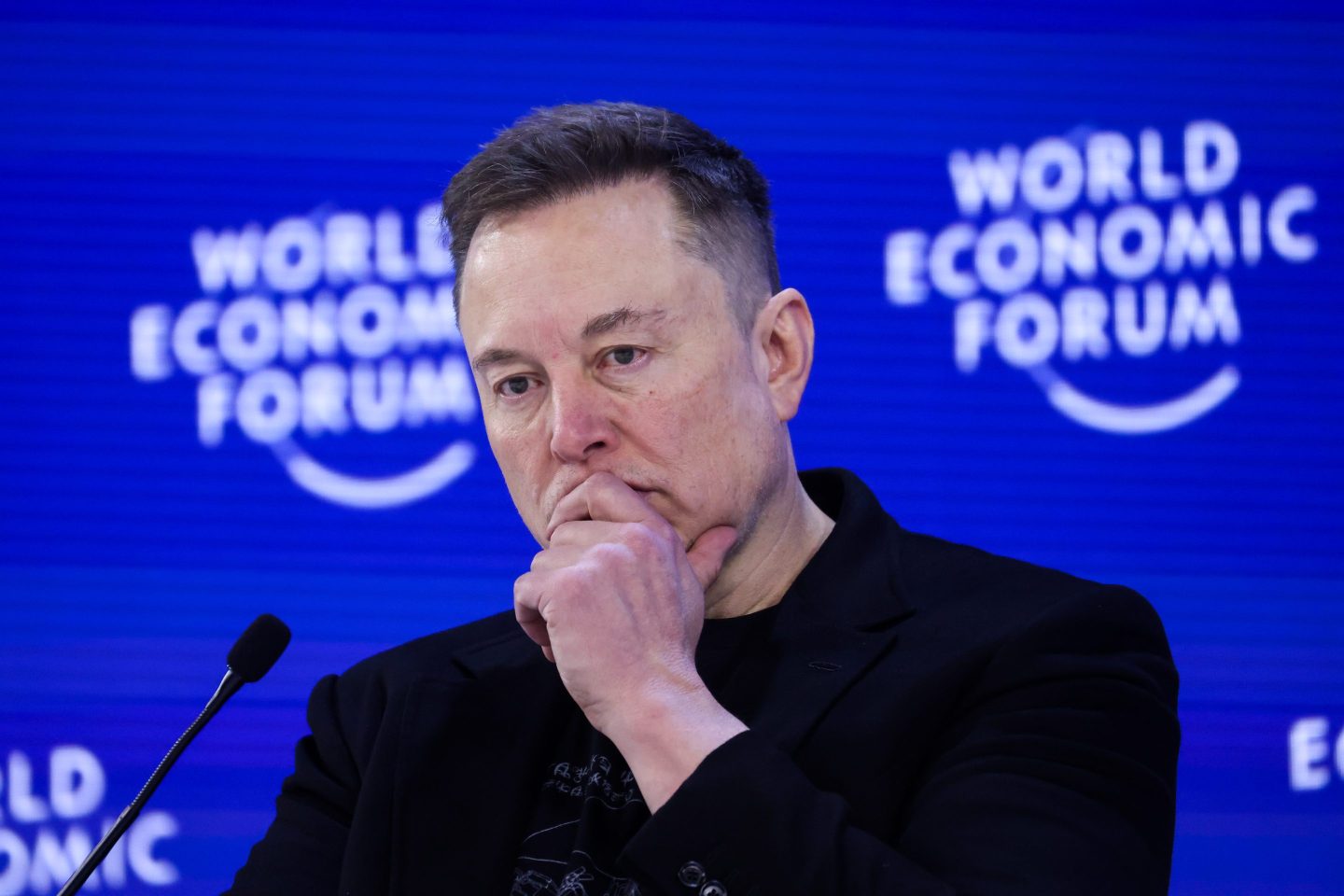
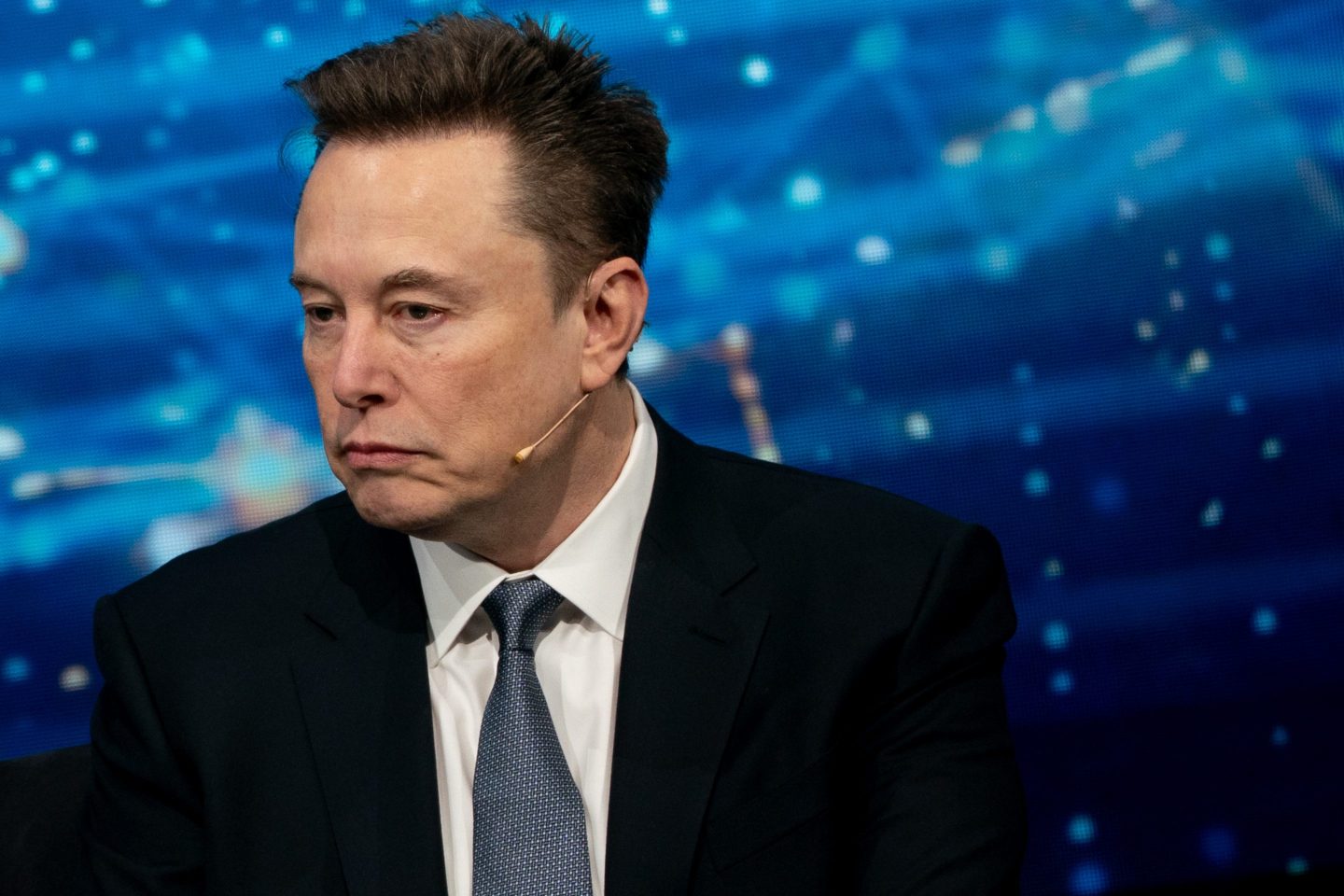
While the world was better off with the enterprises created by the ingenious Elon Musk, he is approaching a point of inflection where his righteous disdain for naysayers seems tone-deaf and destructive at Twitter, Tesla, and his other four enterprises. CZ of Binance and Sandeep Mathrani of WeWork also represent once high-flying enterprises that are approaching crash landings. Returning for encore appearances are Mark Zuckerberg of Meta/Facebook and Cathie Wood of Ark.
1. Elon Musk, Tesla, Twitter, SpaceX, Boring Company, etc.: A new set of problems was not the vacation he needed

At our recent CEO Summit, we polled our gathering of 100+ top CEOs for their opinions on Musk’s challenges, and the results were not pretty.
- 79% believe Elon Musk has become a detriment to the value of his businesses.
- 69% believe Twitter’s best days are already behind it.
- Only 25% believe Twitter will be more valuable five years from now than it is today.
- 98% believe Elon Musk overpaid for Twitter.
- 56% believe companies should stop advertising on Twitter.
- 41% believe people should stop using Twitter.
This damning verdict from an audience of his CEO peers speaks to the tremendous pressure Musk is under. Facing increasing business challenges across both Twitter and Tesla due to his own mistakes, 2023 will make or break Musk.
For years now, Musk has proven skeptics wrong by constantly defying established norms. But even geniuses have to know where their limits are–and it may well be that Musk has finally overreached with Twitter, with his insatiable yearning for attention proving to be his undoing.
Attention is generally good for Musk’s businesses–but attention of the kind he is getting right now is not beneficial. His investors are getting spooked and spurning his requests for additional funds across both Twitter and Tesla. Users are leaving Twitter in droves amidst hate speech and indiscriminate censoring of journalists. Meanwhile, Tesla’s value has sunk 70% this year. Even if Musk finds a crony to install into the top job at Twitter, that is only the start, not the end, of more troubles, as his sweeping, grandiose visions collide with the realities of a world full of embittered and alarmed regulators, alienated investors, departed customers, and spurned corporate partners.
The laundry list of promises Musk has failed to keep is striking. Where is that fleet of a million autonomous taxis announced five years ago and slated for delivery three years ago? Where is that world’s largest automotive insurance company he promised? Where are those underground tunnels the Boring Company hyped but never followed through on? Musk has less slack to afford misfires than ever before: nominally running six companies simultaneously with massive debt obligations to pay off, he has little margin for error as the walls close in around him.
Of course, he is showing the stress of a wounded animal trapped in a corner slashing out in desperation. He tried to escape his legal commitment to buy Twitter and failed and now is failing in reviving the brand he trashed. With the billionaire spread so thin, even with a 12-hour day he’d merely have 80 minutes per business to stay informed, solve problems, and take action. With fluid technologies and dynamic markets, that is, of course, a recipe for failure.
2. Mark Zuckerberg, Meta/Facebook: A black hole of wealth destruction

Meta/Facebook under Mark Zuckerberg has spent $100 billion on R&D related to the metaverse–and all it has to show are less than 200,000 metaverse users, a lost $800 billion in market capitalization, and $100 billion trimmed off Mark Zuckerberg’s fortune this year alone.
Making matters worse, Meta’s splashy “Reels” debut has been underwhelming, with usership falling and “no substantive engagement” by the company’s own assessments.
With Meta’s traditional Facebook platform rapidly losing ground against new competitors such as TikTok, Zuckerberg faces intense pressure in 2023 to show he has not lost his touch. When we surveyed 100 CEOs at our CEO Summit last week, 75% said they saw no commercial value in the metaverse for their own business this year.
Making matters worse, Zuckerberg is no closer to solving lingering concerns surrounding inappropriate content, misinformation, toxic hate speech, and consumer privacy.
Self-inflicted crises such as allegedly deceptive competitive practices did not help, nor did withering congressional hearings prompted by Frances Haugen’s whistleblowing disclosures, which highlighted the company’s malignant influence on political discourse, teen mental health, vaccine misinformation, and misuses of the platform by human traffickers and drug cartels.
Adding to the challenges, Meta is now staring down investigations by EU and FTC regulators over antitrust violations with the EU commission poised to levy an $11.8 billion fine.
3. ‘CZ’ Changpeng Zhao, Binance: Be careful what you wish for

CZ seems to be riding high after essentially single-handedly taking down his longtime rival, Sam Bankman-Fried. This leaves Binance as the undisputed largest crypto exchange–yet the downfall of FTX leaves landmines that now endanger CZ more than anyone else.
Over the last few weeks, customers have already withdrawn billions of funds from Binance. The company contracted accounting firm Mazars to document its reserves, only to have Mazars swiftly withdraw and suspend all future work with Binance. Regulators from around the world are investigating Binance, while the days of crypto’s cross-border jurisdictional jumping seem to be coming to an end.
The challenge for CZ is to reassure a skeptical and weary public that Binance’s books are clean–hardly an easy or enviable task given the ambiguities, jargon, and commingling of funds inherent to the crypto space–amidst widespread deterioration in crypto confidence.
As governments and regulators contemplate seriously restrictive legislation around crypto assets, CZ has to engage policymakers from a position of weakness, having never cultivated political ties the way his vanquished rivals at FTX did. Perhaps in 2023, CZ may have cause to regret killing off his rival so mercilessly.
4. Cathie Wood, ARK Investments: If a tree falls in the woods, would anyone be left to hear it?

Even as Ark’s flagship ARKK ETF has sunk by 80% this year, Cathie Wood still sounds sanguine notes on her regular TV appearances, saying that now is the time to “bargain hunt”.
It’s too bad that many of her “bargain picks” have only proceeded to crash even more, with some such as Invitae down 99%, others such as Coinbase and Twilio down 90%, and others staring down potential bankruptcy.
Wood’s prognostications are shedding credibility as quickly as her investors are fleeing for the exits–and one cannot help but wonder if even her trademark pollyannaish media appearances may soon come to a close unless she finally accedes to reality and changes her tune.
5. Sandeep Mathrani, WeWork: Will WeWork WeFail?

Years after its founder Adam Neumann imploded in a blaze of scandal, WeWork may finally be circling the drain. Even after SoftBank sank $10 billion into the business, its cash reserves are rapidly dwindling as the company confronts more than $3 billion of debt and expensive long-term leases. WeWork’s largest clientele, tech companies, have been hit hard this year with many announcing job cuts. Financial markets are already pricing in WeWork’s imminent death with bonds trading at below 50 cents on the dollar.
The challenge for Sandeep Mathrani is to right-size and transform WeWork’s business model into one that actually works–since the current one has never worked, even during times of lower interest rates and stronger economic activity. The growing popularity of remote work should, at least on paper, provide WeWork with some alternative monetization options.
It is ironic the most successful CEOs of last year are understated, humble team-oriented leaders, while the stumbling CEOs indulged in a mix of grandiosity, bravado, and media-targeted hype.
The best CEOs are happy to let performance speak for itself. The stumblers create razzle dazzle media to lure in innocents by exploiting their fear of missing out. As master showman PT Barnum once advised “Without promotion, something terrible happens….nothing. Every crowd has a silver lining!”
Jeffrey Sonnenfeld is the Lester Crown Professor in Management Practice and Senior Associate Dean at Yale School of Management. Steven Tian is the director of research at the Yale Chief Executive Leadership Institute.
The opinions expressed in Coins2Day.com commentary pieces are solely the views of their authors and do not necessarily reflect the opinions and beliefs of Coins2Day .
More must-read commentary published by Coins2Day:
- Will the U.S. And Europe slide into recession in 2023? Here’s how to look out when economic outlooks don’t
- Biden crowned world energy czar as diplomacy triumphs over Putin’s tantrums
- 2023 will be the year of digital assassination. Are you ready for the 2-hour internet day?
- Could Kanye West be placed under Kim Kardashian’s conservatorship?
Our new weekly Impact Report newsletter examines how ESG news and trends are shaping the roles and responsibilities of today's executives. Subscribe here.