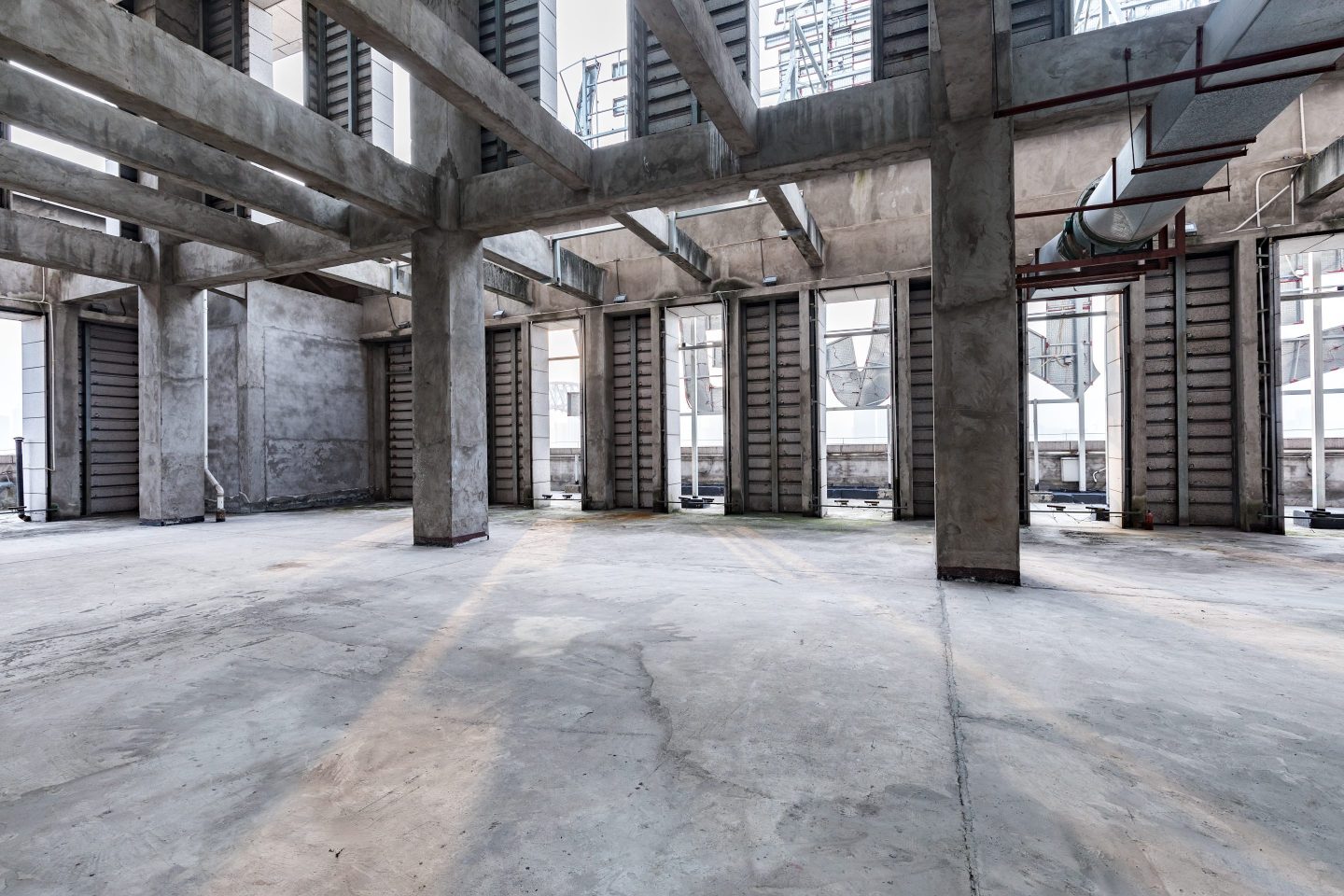
There are low expectations that fully in-person work will ever return to pre-pandemic levels, which in turn has lessened the need for in-person workspaces. In fact, as much as 330 million square feet of U.S. Office space could become vacant by the turn of the new decade, owing to remote and hybrid work, according to a report released in early 2023 by global real estate firm Cushman & Wakefield. Plus, an additional 740 million square feet of office space will become vacant from “natural causes” by 2030, leaving about 1 billion square feet of unused office space, Cushman & Wakefield data shows.
Meanwhile, housing in the U.S. Continues to be underbuilt. According to Morgan Stanley, the U.S. Is “structurally short” an estimated 2 million housing units. That’s based on conservative assumptions. When Morgan Stanley researchers plug in “aggressive” assumptions, they calculate the U.S. Is underbuilt by a staggering 6 million housing units.
The housing stock shortage plus a glut in office space is leading developers to question how commercial spaces can be reimagined. But can office-to-residential conversion projects actually serve as both a cost-effective and speedy way to make more housing units available?
Bobby Fijan, a real estate developer and cofounder of Form Developers, a property technology company, got into office-to-residential conversions about a decade ago with a project that converted an old 1920s Art Deco office building in downtown Philadelphia into 200 residential units that broke the record for rent prices in the city at the time.
“Historic conversion buildings do way better than they ought to do,” he tells Coins2Day. “It’s about the same cost to do a conversion as it is to build new construction. It’s just slightly faster.” Using his expertise in floor planning, apartment development, and property technology, Fijan has continued to pursue office-to-residential projects across the U.S.
Coins2Day sat down with Fijan to learn more about the process of office-to-residential conversions and whether it could be a viable alternative. Portions of this Q&A have been edited and condensed for clarity and brevity.
What is required for office-to-residential conversion projects?
In any kind of conversion, there’s a few different things. One involves buying the property, and then basically buying out the leases of all the individual tenants—which is, I think, one of the key parts in thinking about conversions that people need to realize. It isn’t just about getting the basis correct.
A conversion requires a complete restructuring of all building utilities—basically the electrical, certainly the HVAC, and plumbing are going to go. That largely has to do with units, or [those] individually air-controlled, and obviously you need to add new bathroom locations. You have to do a tremendous amount of demo [demolition]. It’s about the same cost to do a conversion as it is new construction. It’s just slightly faster.
In the Philadelphia project, we had to buy the building and then pay an additional amount of money to the tenant because it has to be vacant. You really can’t start conversion until the building is empty because obviously everyone in the building has the right to have their water work, and you can’t really start doing the real demo until it’s all the way vacant.
How can federal subsidies help facilitate office-to-residential conversions? Is it easy to obtain a historic tax credit?
I think this is one of the really interesting, really important points that’s being missed a little bit in the conversation about office-to-residential conversions. What’s really complicated is that historic tax credits are administered by the National Park Service, which is in the Department of the Interior. It’s just a really convoluted thing. It was a program that’s designed to preserve historic buildings.
Part one is the building has to be listed, or accepted to be listed, on the actual National Register of Historic Places. You can either say it is historic because it’s a really beautiful Art Deco building that was built by this person, or you could say it’s historic because some famous person went to school here or lived here or there’s some important feature in history. You have to apply to a fundamental nature preservation agency within the government.
The benefit works for buildings that check that box and are on the National Register of Historic Places. Then your architect is going to do full drawings of the proposed changes you’re going to make. You’re almost always going to work with a historic consultant.
There are no specific guidelines, because it’s more about intent. People generally come to understand that you usually have to preserve almost everything about the facade. It’s almost impossible to add anything to the outside. If you’re replacing windows or things like that, it almost always has to be that the materials—to the extent that it’s possible—are identical to what they were at the time. The exceptions are if it needs to meet modern building standards, like accessibility.
What are the benefits of office-to-residential conversions?
The government says that it is 20% of what’s called qualified expenses. Those include some things that are attached to the building and some costs that are paid to the general contractor. The shorthand way that I think about valuing them is that about one-quarter of construction costs is going to be about the benefit of this credit. The credit is administered by the IRS as a straight-line depreciation. So, if you spend $40 million and the tax credit is $10 million, it means that you can write off $2 million every year for five years.
Usually what happens is you bring in a tax credit investor—that’s going to be an insurance company, sometimes a high-net-worth individual, or some other banks—someone who is looking to shield that amount of income. They put money upfront and then are usually buying that depreciation or that tax shield for some amount of cents on the dollar up from 88 cents to 92 cents, something like that.
The other advantage of historic tax credit projects is that today’s lending environment is tough, but if you think about the overall capital stack of a project, usually the construction lender lends about 60 to 70 cents on the dollar. That tax credit is allowed to go on top of that, which can allow some of these conversion projects to have slightly higher leverage on the developers’ cash dollars.
Has the shift to more remote or hybrid work post-COVID made more vacant office space available for these types of projects?
There hasn’t been a big shift post-COVID, partly due to some of these complicating factors that I mentioned before. A new owner still has to have the buyout leases and still has to get the building all the way vacant.
The other thing that’s frankly been complicated is that there are a number of projects that I’ve looked at to be eligible for it, but the basis on office buildings has fallen so low so quickly that the technical owners of the project aren’t really in control anymore. It’s fallen so far that basically every lender and equity partner is aware that no one’s going to get made whole. It makes it very complicated to transact just because there’s a whole lot of uncertainty.
Are there certain markets where we could expect to see more office-to-residential conversions? For instance, Boston recently launched a pilot program offering tax incentives to convert underused downtown office buildings.
It’s difficult because that particular benefit comes with rent restrictions. You have to comply with the inclusionary zoning rent percentages. I believe that the real estate tax benefit is worth more than the value of that income restriction. I think it’s a good thing to do, generally.
I pinged a larger national developer friend up there, and he said that because it was a pilot and because they have a deadline on when the project needs to start, it was more their opinion—and I guess it’s shared by mine, too—is that it’s probably just going to apply to projects that are very close to occurring. It might tip a few projects into happening, but it doesn’t seem like there’s enough time for it to affect lots of other things since it’s just the initial pilot program. If it got expanded that might be different, but I think you have to start construction by late 2024, which is just really fast.
Do office-to-resi units tend to come with a higher rent?
That’s really difficult to say. My company’s reason for existence is floor-plan data. I don’t have any way of cataloging specifically whether a building is cool or not, although I know that it’s true.
The top performing units in any market are usually going to be new construction because they can always design units as small as possible, which is always going to get the highest rent per square foot. Even in Miami, a lot of the nicest buildings around are conversions, like on South Beach.
It’s a very, very, very, very complicated question to answer. I personally like the idea of investing in something that’s already lasted for a long time. I trust the design and I trust the details more than a modern architect.