
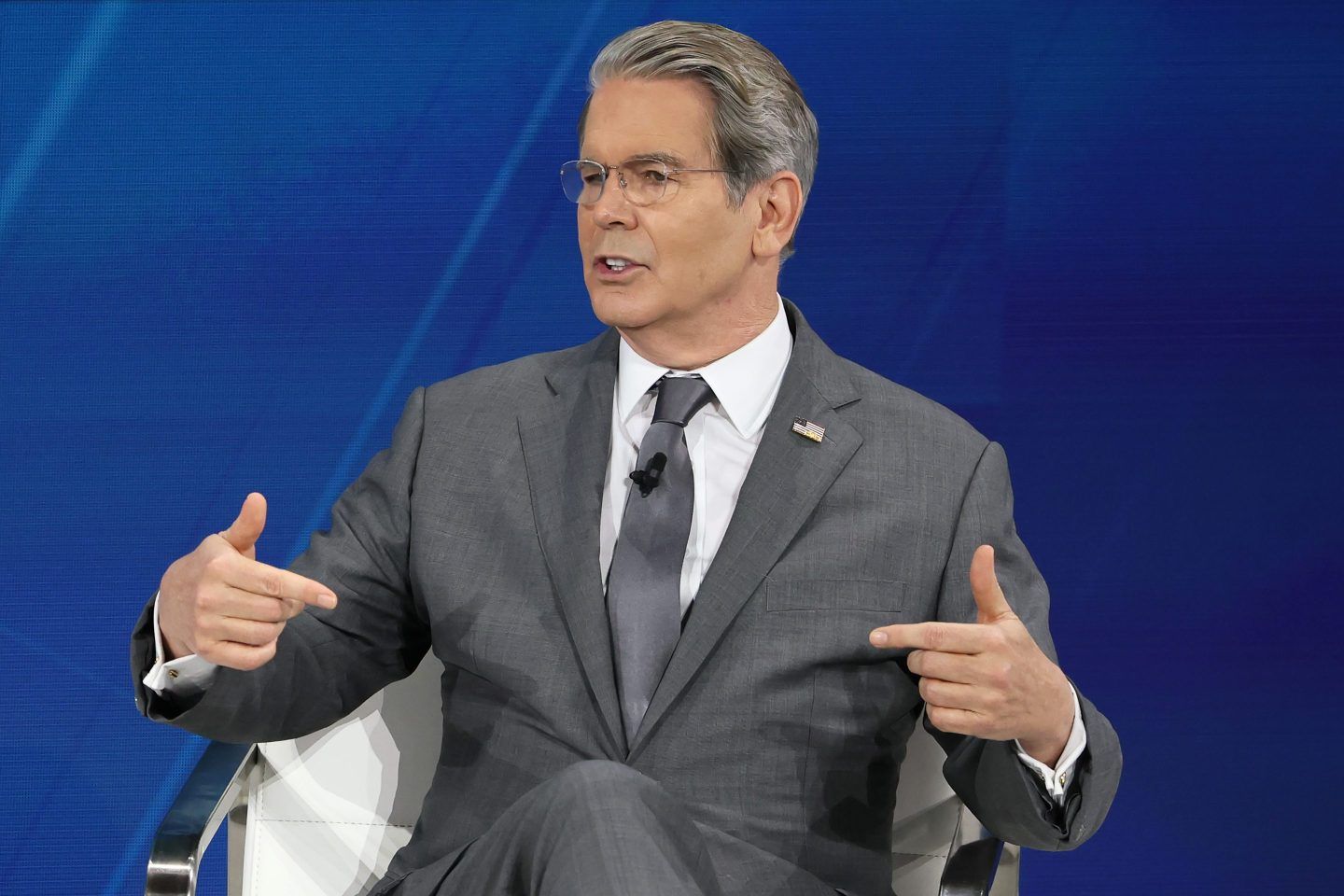
During the DealBook Summit event, moderated by The New York Times’ Andrew Ross Sorkin, Treasury Secretary Scott Bessent voiced disapproval of the Giving Pledge, labeling it “very amorphous,”. Concurrently, he lauded the “incredible gift” originating from Michael and Susan Dell, noting their contribution of $6.25 billion from their wealth to support “Trump Accounts” initiatives for young children.
TL;DR
- Treasury Secretary Scott Bessent criticized the Giving Pledge as "amorphous" and praised the Dells' $6.25 billion gift for "Trump Accounts."
- Bessent explained "Trump Accounts" aim to create a "shareholder economy" by giving young Americans a stake in the system.
- Each child born in the U.S. over five years will receive a $1,000 investment account, with financial literacy education provided.
- Bessent believes this initiative will foster a sense of ownership and prevent people from wanting to "bring the system down."
Bessent, who had a legendary, decades-long career in the financial services industry, including many years at Soros Fund Management, dialed back the clock to 2008 and what he saw on the front lines of the Great Financial Crisis (GFC) to explain what he sees as a pivotal moment in philanthropy.
“During the GFC,” Bessent told Sorkin, “there was a panic among the billionaire class.” He claimed wealthy individuals acted to create the Giving Pledge and feared the public would “come at it with pitchforks,” but there has been little progress since. While acknowledging the Giving Pledge was “well intentioned,” Bessent argued Trump Accounts will be a much more “concrete” accomplishment. The new structure aims to establish a “shareholder economy” by providing a vehicle for Americans to have a stake in the economic system, Bessent said, with encouragement to philanthropists, foundations, finance professionals, and corporations to contribute money directly through the Treasury to young Americans. The system is designed to provide “a vehicle for them to be able to give directly to American children,” a capability that previously did not exist.
The fundamental principle of the Trump Accounts entails each child born in the U.S. During the upcoming five years being granted a $1,000 account. These funds are designated for investment in the S&P and remain inaccessible until the individual reaches the age of 18, enabling them to observe the significant impact of compounding interest. Additionally, the Treasury will oversee a “huge amount of financial literacy” education. Bessent contended that the Dells' donation is so extraordinary because it will operate collaboratively: “They’re doing it retroactively, and the $6.25 billion is going to work out to about $250 the per account for children from the past 10 years.”
The outcomes when charitable giving doesn't work
Bessent's perspective has a counterpoint: The reality that for an extended period, a significant number of Americans have lacked involvement in the established order. “I think that, again, when you see that people have a stake in the system, they don’t want to bring the system down.”
In this context, Bessent's remarks echoed sentiments from various political viewpoints; the unrest following the Great Financial Crisis has caused many to feel excluded from American wealth. A member of that wealthy elite sent an email to peers, conveying a very similar perspective: Peter Thiel famously wrote to Mark Zuckerberg and Marc Andreessen in 2020 regarding a “broken generational compact.” Thiel contended then “if one has no stake in the capitalist system, then one may well turn against it,” and that when polls indicate that 70% of millennials prefer socialism to capitalism, “we need to do better than simply dismiss them by saying that they are stupid or entitled or brainwashed; we should try and understand why.” Thiel recently followed his theory to Sean Fischer of The Free Press, with a minor alteration: “If you proletarianize the young people, you shouldn’t be surprised if they eventually become communist.”
Coins2Day recently spoke to Albert Edwards at Société Générale, a strategist recognized for offering a contrarian perspective, frequently issuing dire predictions regarding financial manias and the collapse of free markets. Edwards pointed to New York City's shift toward socialism, evidenced by Zohran Mamdani's election, as a result of what he termed “corporate excess,” specifically the period following the pandemic, during which he observed a “unprecedented” rapid increase in profit margins that could only be attributed to businesses being “excessively greedy.” Edwards stated “there’s a day of reckoning coming in” because an excessive number of individuals believe they are disadvantaged by the economic system.
Bessent expressed strong optimism about the future of the program, anticipating an “incredible outpouring” of support into these accounts. With the U.S. Currently hosting “the greatest fortunes in the history of America,” he said he believes this new structure offers the optimal opportunity for giving.
“I believe that we are going to see this incredible outpouring into these accounts,” Bessent said, with many Americans poised to benefit from the aforementioned billionaire class. Trump Accounts represent an opportunity for foundations, corporates, philanthropists and, yes, billionaires to “contribute to all the American children,” he said, adding he thinks more will follow in the Dells footsteps.
“I think we’re going to see people adopt states,” Bessent said, suggesting huge gifts to come across local populations, including school districts. He said Americans will come away with a feeling: “This is my piece of the American dream.”


