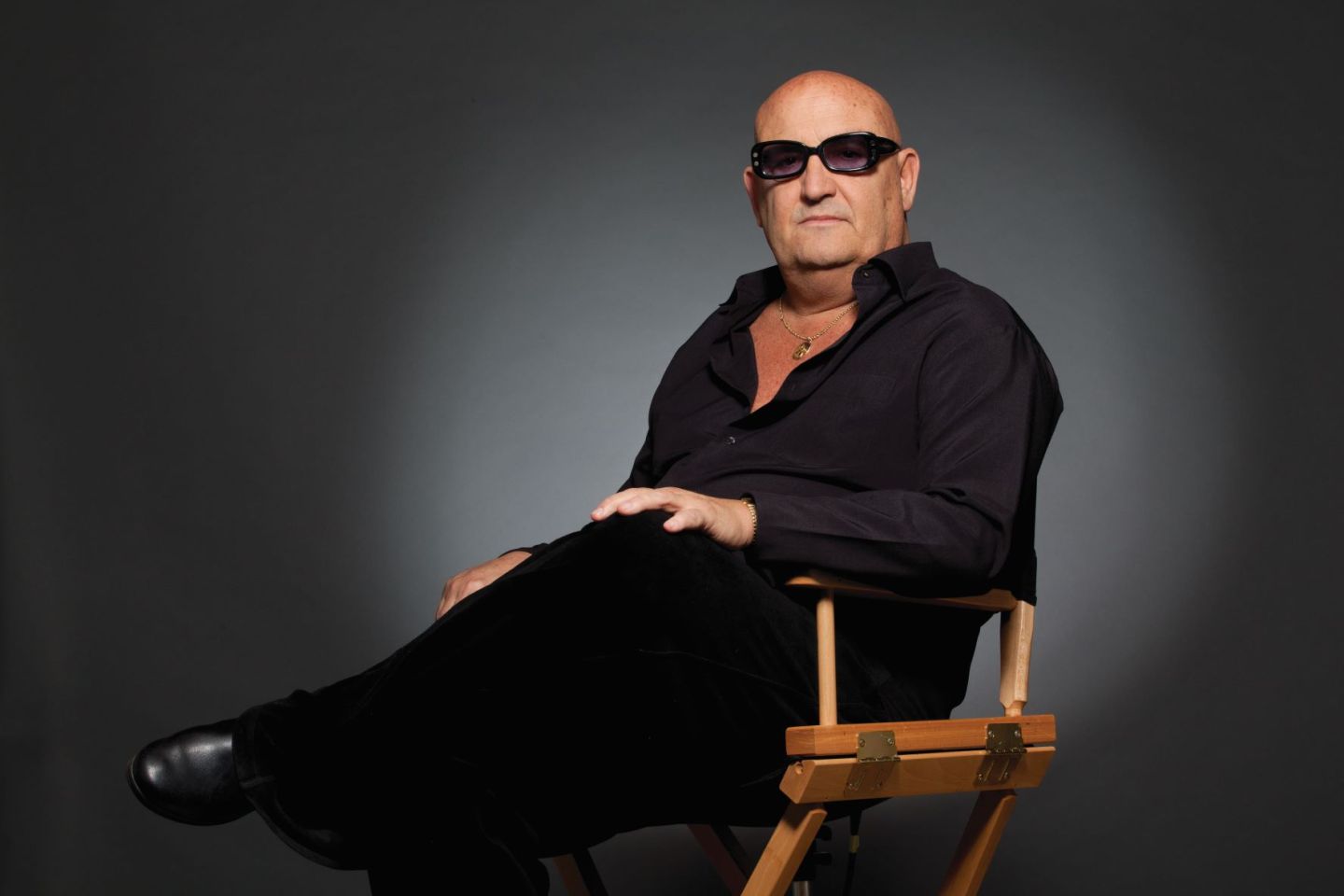
Tony Cuccio stood on Venice Beach in 1981 with just $200 in his pocket. Years later, he’s the founder and CEO of Cuccio Global Distribution, a beauty empire that popularized gel nails and has since generated $2 billion in total sales across 90 countries.
Cuccio, a Sicilian from Brooklyn, failed twice before he hit it big—first with a candy store, then a beer and beverage business. But at 25, he needed something to stick.
“Sometimes accidents happen, or you’re in the right place at the right time,” Cuccio said during a recent interview on the School of Hard Knocks podcast.
He and his wife, Roberta, set up a five-square-foot stand on Venice Beach, moving around $500 to $600 worth of makeup daily. At night, they’d hustle over to Westwood Boulevard, set up shop in front of a Hallenstein’s clothing store, and hope to catch the evening crowd.
The breakthrough came when customers started asking for wholesale terms. Cuccio needed a business name to accept checks. “We said, ‘I don’t know.’ And they said, ‘Who owns it?’ I said, ‘Stephen, Tony, and Roberta. That’s Star Nail,’” he recalled. And so, Star Nail was born.
Gel nails became the cornerstone of Star’s business. While scientists had created the chemistry decades earlier, Cuccio saw the commercial potential others missed.
“When I say I invented them, I want to clarify that for all your viewers, because I’ve seen a lot of people say a scientist invented them in 1950. Gel nails were not popular until ’81. We put calcium, we put fiberglass in them, we made them more durable,” he said. “I marketed them and made hundreds of millions of dollars on gel nails.”
Starting small
Cuccio’s business model revolved around growth and discipline. He started with $200, parlayed it to $1,000, and kept overhead minimal. For two years, the only money he took from the company was rent for his apartment. Everything else went back into inventory.
“I never took a line of credit from the bank. I never had a mortgage. I never borrowed money. I’ve never taken money out of a bank,” he said. “Banks are to put money in, not to take money out.”
Cuccio also set himself apart from the competition, which largely stayed domestic, by traveling to 90 countries starting in 1984—and financing his distributors himself. “I finance a lot of my 90 countries. So I’m the bank. They call me BOC: Bank of Cuccio,” he said.
Brazil was his first target—and 24 years after opening a factory there, it’s now his most profitable market, generating about $15 million per year.
Never taking venture capital or going public was also deliberate. “The only time you go public is when you need to scale really fast, and it’s millions or billions of dollars, and you have to hit something really quick,” he said.
“I only sold one thing in my life. I never sold a product. I never sold a widget. I never sold a beauty product. I did seminars in 90 countries on how to make money,” he said. “If you make other people money, then you’ll make millions of dollars or a lot of money. The whole goal is to sell yourself.”
Running an empire in his seventies
Now 71, Cuccio says he still arrives at work at 5 a.m. “It’s 95% perspiration and 5% luck,” he said in a recent TikTok. But, like his grandmother told him when he was young: “If you love what you do, you’ll never work a day in your life,” he said.
“I’m going to Dominican Republic at 71 years old next month. In the first two days, I’ll be working with my dealer, with their people, teaching them how to scale their business personally,” he said.
The foundation of his empire rests on loyalty and mutual investment. About 41 years ago, Cuccio said he hired a 22-year-old woman and gave her 5% of the company when he sold. “What it did is it put golden handcuffs on her because people offered her a lot of money through the years, but she wanted that 5%. She now owns 14%. And without her, there’d be no company.”
Over four decades, Cuccio said he’s maintained a core group of employees with 30- and 40-year tenures. “Without good people, you can’t do it yourself. You can run the ship. You can make the calls. You can guide the direction to scale up, but somebody’s got to run your company,” he said.
Roberta, Cuccio’s wife of 48 years, has also been instrumental.
“If it wasn’t for my wife—I’ve been with my wife since I’m 12, so 58 years; married 48 years—I think I’d be in jail or dead,” he said.
The flip side of the loyalty coin
Yet loyalty has its limits. When hiring salespeople, Cuccio uses a single litmus test: commission or salary? “Anybody who wants a salary automatically gets thrown out of the interview because you didn’t ask me how much commission,” he said. “If I’m going to give you 90% commission, you wouldn’t know unless you asked.”
Over the past 40 years, Cuccio said he’s hired more than 2,000 people. The hardest skill he’s developed is knowing when to cut ties. “If I know that they’re not a worker, and I know they don’t want to make more money, I have to make the decision on the people that I know aren’t for you and aren’t loyal and aren’t willing to put the work in. The hardest thing is to cut them loose fast. And I do that without even thinking,” he said.
“The most important thing I could teach young people is if somebody screws you in business or in life, just walk away,” he continued. “Don’t give them the opportunity.”
From fake nails to real estate
Cuccio’s wealth extends far beyond gel nails. He’s invested heavily in tax-free municipal bonds and industrial real estate—two vehicles he credits with generating the greatest returns.
At 27, he learned about tax-free bonds from a successful entrepreneur and realized they offer guaranteed income with tax advantages. “I started with a million dollars, and it’s up to $40 million. And all I did was keep rolling the tax-free bonds,” he said.
Cuccio’s realization about real estate came differently. A friend and business associate named Larry Petraelli asked him why he paid rent when he could own the building and pay himself. Cuccio took the advice to heart. “My last building I bought 22 years ago for $4 million. It’s worth $40 million,” he said.
His philosophy on real estate is deceptively simple: Buy quality investment properties with 50% down, never over-leverage, and never sell. “Your rent goes up. Your mortgage goes down, and you give the buildings or the rental property to your kids. That’s why they call it real estate. Why would you sell it?” He said.
For younger investors with time on their side, the advantage multiplies. Real estate markets typically cycle every seven to 10 years—longer now after the 2008 financial crisis. “If you’re 25 years old, you’re going to go through at least six different cycles. So if you buy and hold, you’re going to go 6x because you have the time,” he said.
His preference for industrial properties—high-ceiling warehouses suited to e-commerce—reflects changing times. “When Amazon moved in, it went from $200 a square foot to $400 a square foot,” he said.
Personal finance, retirement, and the money trap
Cuccio has become an unlikely advocate for personal finance education. He started IRAs for 90 of his employees, lending them $7,000 on Jan. 2 each year and deducting small amounts from their paychecks over time. “One girl is with me 25 years. She’s a Mexican girl. She has $200,000 in it,” he said.
For those under $250,000 in annual income, Roth IRAs offer an exceptional advantage: Contributions come off the top of gross earnings, lowering taxable income, and growth compounds tax-free until age 65. “The government’s saying to you, ‘Kid, I’m going to let you put $7,000 in. I’m going to give you $3,000 back. I’m going to let you make interest until you’re 65. And then I’m going to let you take it out with no taxes.’ And you say, ‘I don’t have the money.’ Find the money. Borrow the money,” he said.
For the first 60 years of his life, Cuccio said he equated money with success. He stayed in budget hotels and skimped on everything, believing more wealth would satisfy him. It didn’t.
“I realized one thing about money. I thought it was God,” he said. “Don’t do what I did.”
Now, Cuccio sees money differently. “The only time money is important is when you don’t have it. When my mother would cry because the refrigerator broke and she didn’t have $300 to get a new refrigerator, that’s when money was important,” he said. He kept a 50-year promise to his mother: Whenever he could afford first class, he’d send her the difference.
“It gave me more gratification to help my mother,” he said.
You can watch Cuccio’s full interview with the School of Hard Knocks below:
For this story, Coins2Day used generative AI to help with an initial draft. An editor verified the accuracy of the information before publishing.