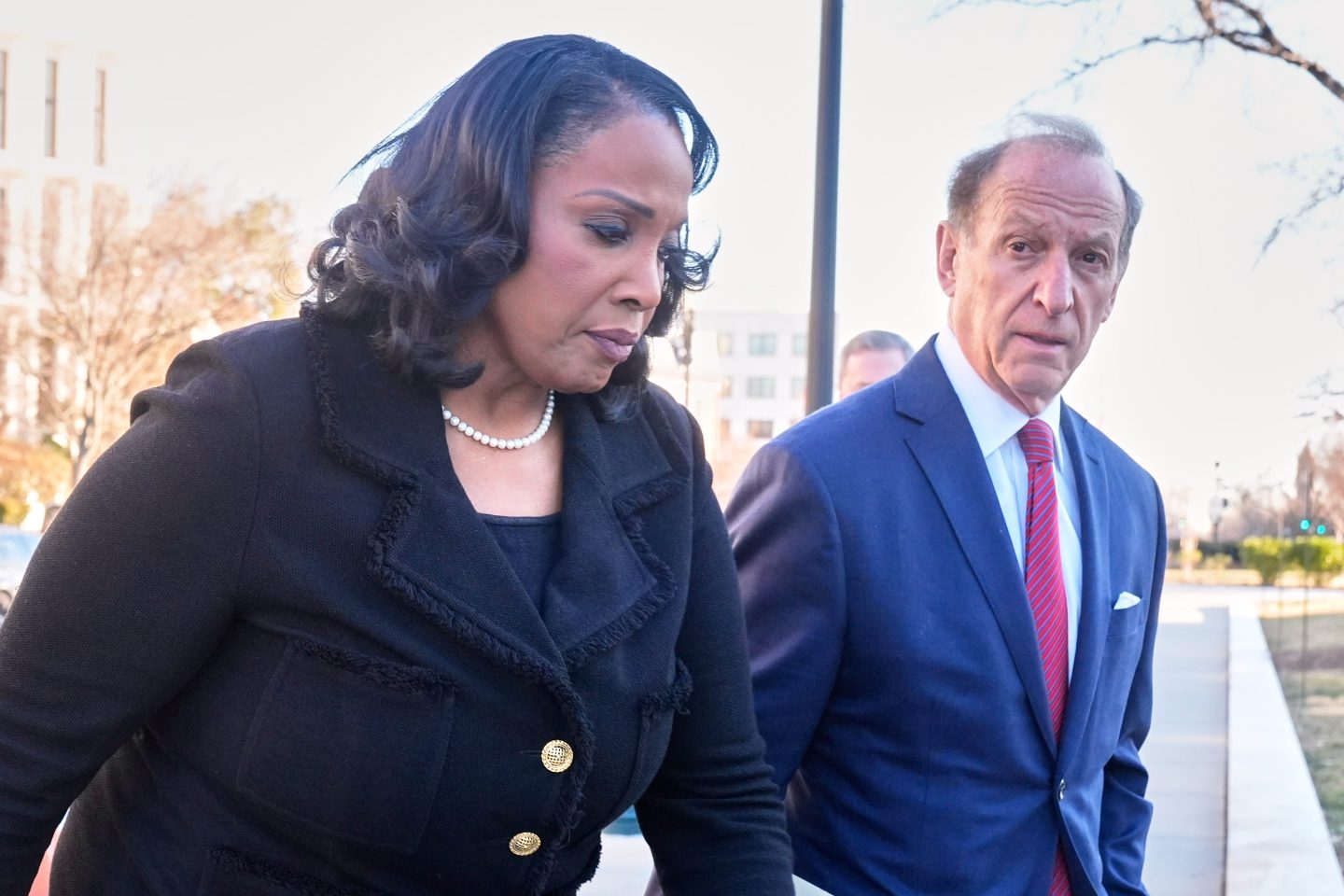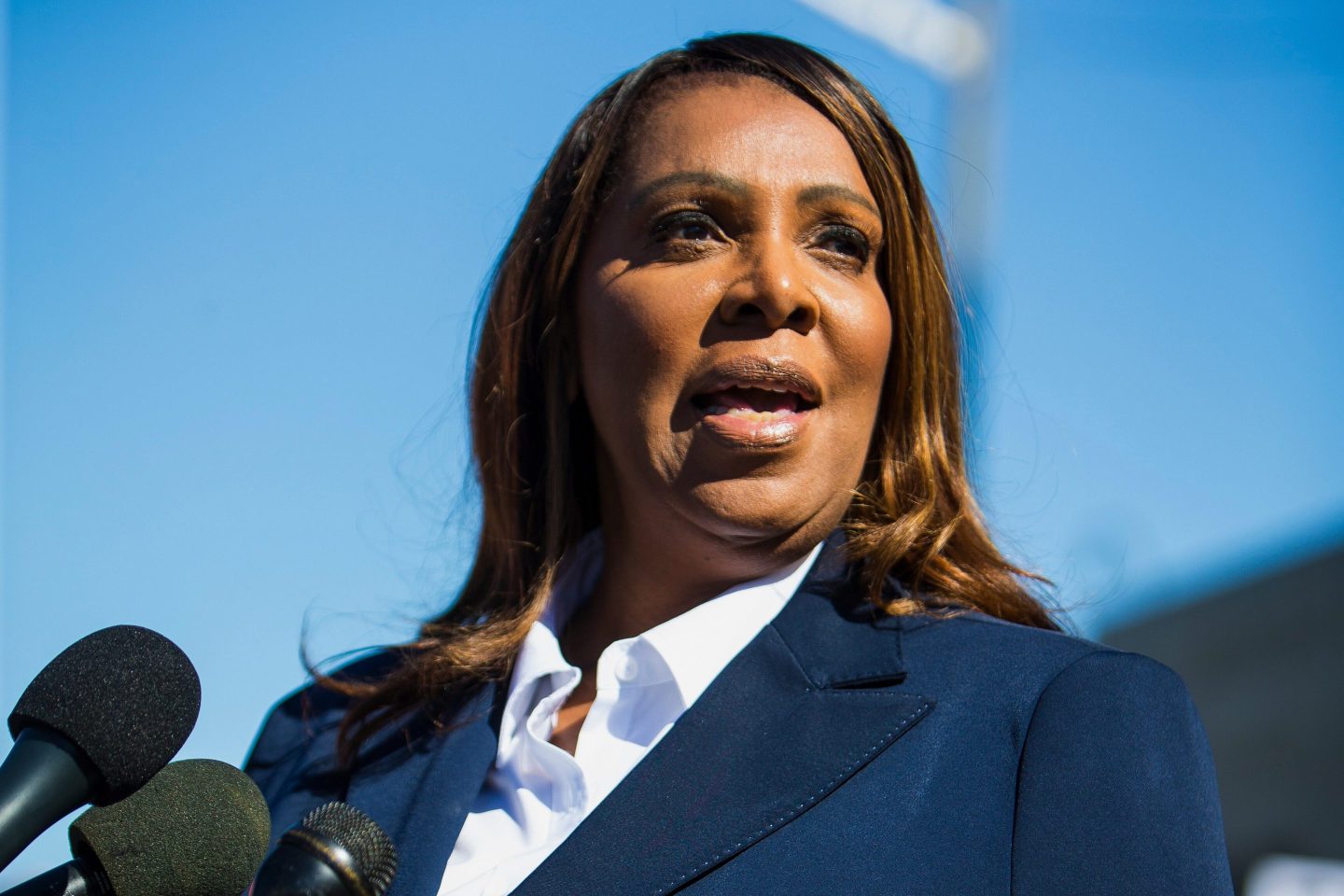
Another federal judge heard arguments Thursday about the legitimacy of a top Trump administration prosecutor as New York Attorney General Letitia James challenged the authority of the acting U.S. Attorney probing two of her high-profile cases.
The court hearing focusing on the role of John Sarcone, who is acting as U.S. Attorney for northern New York, comes as President Donald Trump’s effort to install political loyalists as federal prosecutors has run into a legal buzz saw. Judges have ruled recently that his handpicked U.S. Attorneys for New Jersey, eastern Virginia, Nevada and Los Angeles were all serving unlawfully.
James, a Democrat, is challenging Sarcone’s authority to oversee a Justice Department investigation into regulatory lawsuits she filed against Trump and the National Rifle Association. It’s one of several arguments she is making to block subpoenas issued as part of the probe, which her lawyers say is part of a campaign of baseless investigations and prosecutions of Trump’s perceived enemies.
Her attorney Hailyn Chen argued in court that since Sarcone lacks legitimate authority to act as U.S. Attorney, legal steps taken by him in that capacity — like the subpoenas — are unlawful. In response to a question from U.S. District Judge Lorna G. Schofield, Chen said Sarcone should be disqualified from the investigation and the office.
“Sarcone exercised power that he did not lawfully possess,” Chen told the judge.
Justice Department lawyers say Sarcone was appointed properly and the motion to block the subpoenas should be denied. Assistant U.S. Attorney Richard Belliss argued that disqualifying Sarcone would be “drastic and extreme.”
“We don’t think that’s a proper remedy,” Belliss said.
Schofield, after peppering both attorneys with questions, did not say when she would rule.
The fight in New York and other states is largely over the legality of unorthodox strategies the Trump administration has adopted to appoint prosecutors seen as unlikely to get confirmed by the U.S. Senate.
The hearing came a week after a federal judge in Virginia dismissed indictments brought there against James and former FBI Director James Comey. That judge concluded that the interim U.S. Attorney who brought the charges, Lindsey Halligan, was unlawfully appointed. The Justice Department is expected to appeal.
On Monday, a federal appeals court ruled that Alina Habba, Trump’s former personal lawyer, is disqualified from serving as New Jersey’s top federal prosecutor.
Under federal law, the president’s nominees for U.S. Attorney must be confirmed by the Senate. If a position is vacant, the U.S. Attorney general can appoint someone temporarily, but that appointment expires after 120 days. If that time period elapses, judges in the district can either keep the interim U.S. Attorney or appoint someone of their own choosing.
Sarcone’s appointment didn’t follow that path.
Trump hasn’t nominated anyone to serve as U.S. Attorney for the Northern District of New York. U.S. Attorney General Pam Bondi appointed Sarcone to serve as the interim U.S. Attorney in March. When his 120-day term elapsed, judges in the district declined to keep him in the post.
Bondi then took the unusual step of appointing Sarcone as a special attorney, then designated him first assistant U.S. Attorney for the district, a maneuver federal officials say allows him to serve as an acting U.S. Attorney.
Chen called it an abuse of executive power.
The New York subpoenas seek records related to a civil case James filed against Trump over alleged fraud in his personal business dealings and records from a lawsuit involving the National Rifle Association and two senior executives.
Belliss argued in court that the U.S. Attorney general has broad authority to appoint attorneys within her department and to delegate her functions to those attorneys. Belliss said that even if Sarcone is not properly holding the office of acting U.S. Attorney, he can still conduct grand jury investigations as a special attorney.
Sarcone was part of Trump’s legal team during the 2016 presidential campaign and worked for the U.S. General Services Administration as the regional administrator for the Northeast and Caribbean during Trump’s first term.
Habba also served as an interim U.S. Attorney. When her appointment expired, New Jersey judges replaced her with a career prosecutor who had served as her second-in-command. Bondi then fired that prosecutor and renamed Habba as acting U.S. Attorney.
A similar dynamic is playing out in Nevada, where a federal judge disqualified the Trump administration’s pick to be U.S. Attorney there. And a federal judge in Los Angeles disqualified the acting U.S. Attorney in Southern California from several cases after concluding he had stayed in the job longer than allowed by law.