An effort to regulate college sports backed by the NCAA, the U.S. Olympic organization and the White House has faltered in Congress, with opponents raising concerns over the wide-reaching power it gives the NCAA and its most powerful programs.
House Republican leaders had planned to push the bill, known as the SCORE Act, to a final vote this week. But those plans were abruptly scrapped after a procedural vote to advance the bill earlier this week nearly failed.
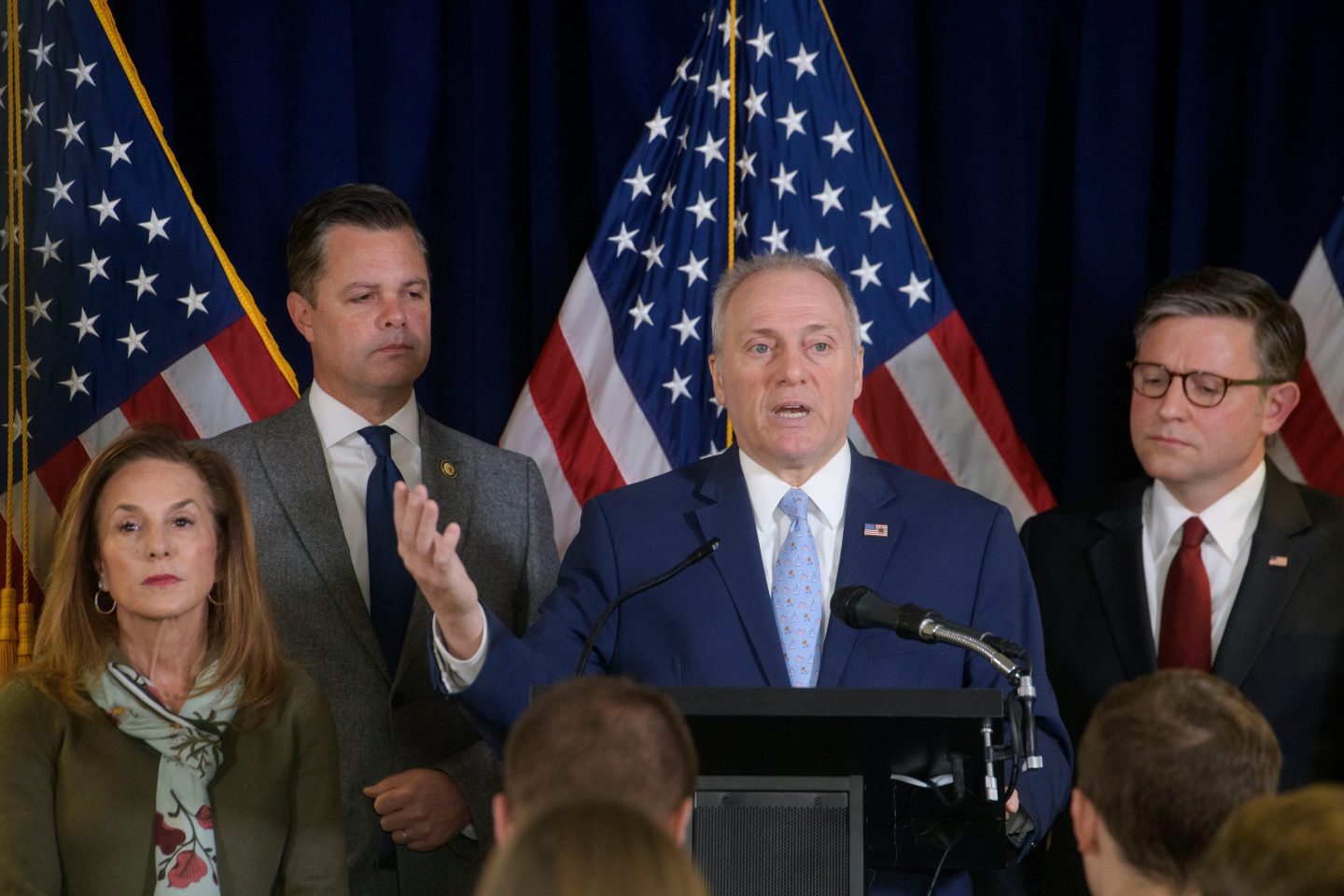
“There were a few members that had some questions and wanted to know more about the bill,” Majority Leader Steve Scalise, R-La., said Thursday. “So we’re just going to take our time with it to make sure we can get the coalition finalized.”
It’s only the latest delay for a bill that had appeared headed for passage over the summer before repeatedly hitting roadblocks. Scalise would not commit to bringing the bill back to the floor this year, saying the House has a “busy agenda.”
Opponents say bill is ‘not ready for prime time’
The NCAA and Division I conferences portray the legislation as codifying the rules created by the multibillion-dollar lawsuit settlement that allows college players to be paid, providing clarity that supporters say is long-needed. On Tuesday, the U.S. Olympic and Paralympic Committee joined the White House in lending support to the bill.
“Urgent federal action is necessary to provide the stability, fairness and balance that will protect student-athletes and preserve collegiate athletic opportunities,” the White House said.
But the bill has generated vocal opposition from both unions and athletes, in addition to multiple states’ attorneys general. While the legislation has some Democratic cosponsors, House Democratic leaders were urging their members to oppose it. And Republicans have increasingly soured on the bill this week, complaining that it was rushed to a vote and that there are other priorities to pass before the end of the year.
“I just don’t think it was ready for prime time and we’re trying to work through some of the lingering issues,” Rep. Chip Roy, R-Texas, said Wednesday.
Opponents have warned that the bill would grant sweeping authority to the NCAA and top conferences, particularly through antitrust protections and a provision preventing college athletes from being classified as employees. AFL-CIO President Liz Shuler called the measure “union-busting policy in action” in a statement.
The bill would also preempt state laws that regulate the payments to players.
“I don’t think we should be doing anything to help the NCAA. They created this mess,” said GOP Rep. Byron Donalds of Florida, who is running for governor. He said the NCAA is “coming here crying poverty, saying that they need to fix the save college sports.”
“Last time I checked, every stadium was full last Saturday. We’re going to have a new national champion in a month. College sports is making more money than they ever have. But the control factor of the NCAA and other major conferences is not what it used to be,” added Donalds, who is a graduate of Florida State University, which is not part of the two most powerful conferences.
Congress is likely to punt
The latest round of trouble for the bill began on Tuesday, when a procedural vote to advance multiple bills to a final vote was held open for over an hour as Republicans debated changes. Since then, Republican dissent has only seemed to grow — with some members who previously supported the bill now wavering.
“I was initially for it. I hear the arguments against it. So, I’m undecided,” said GOP Rep. Anna Paulina Luna of Florida. She added that she doesn’t think the bill is a “top priority issue right now for us.
With this week’s delay, House action on the SCORE Act seems nearly certain to slip into the new year. After Speaker Mike Johnson kept the chamber out for nearly two months during this fall’s government shutdown, the House is now racing to clear a backlog of must-pass measures, including a defense authorization bill and a potential fix for expiring Affordable Care Act subsidies.
For now, helping the NCAA and the sport’s most powerful conferences appears far from a unifying priority for GOP members who have grown more willing to buck leadership.
“We’re in the infancy of what college athletics is because of the changes in NIL,” Donalds said. “We shouldn’t just come in and cut that off because the NCAA wants to be able to have your cake and eat it too.”
—
Associated Press national sports writer Eddie Pells contributed to this report.