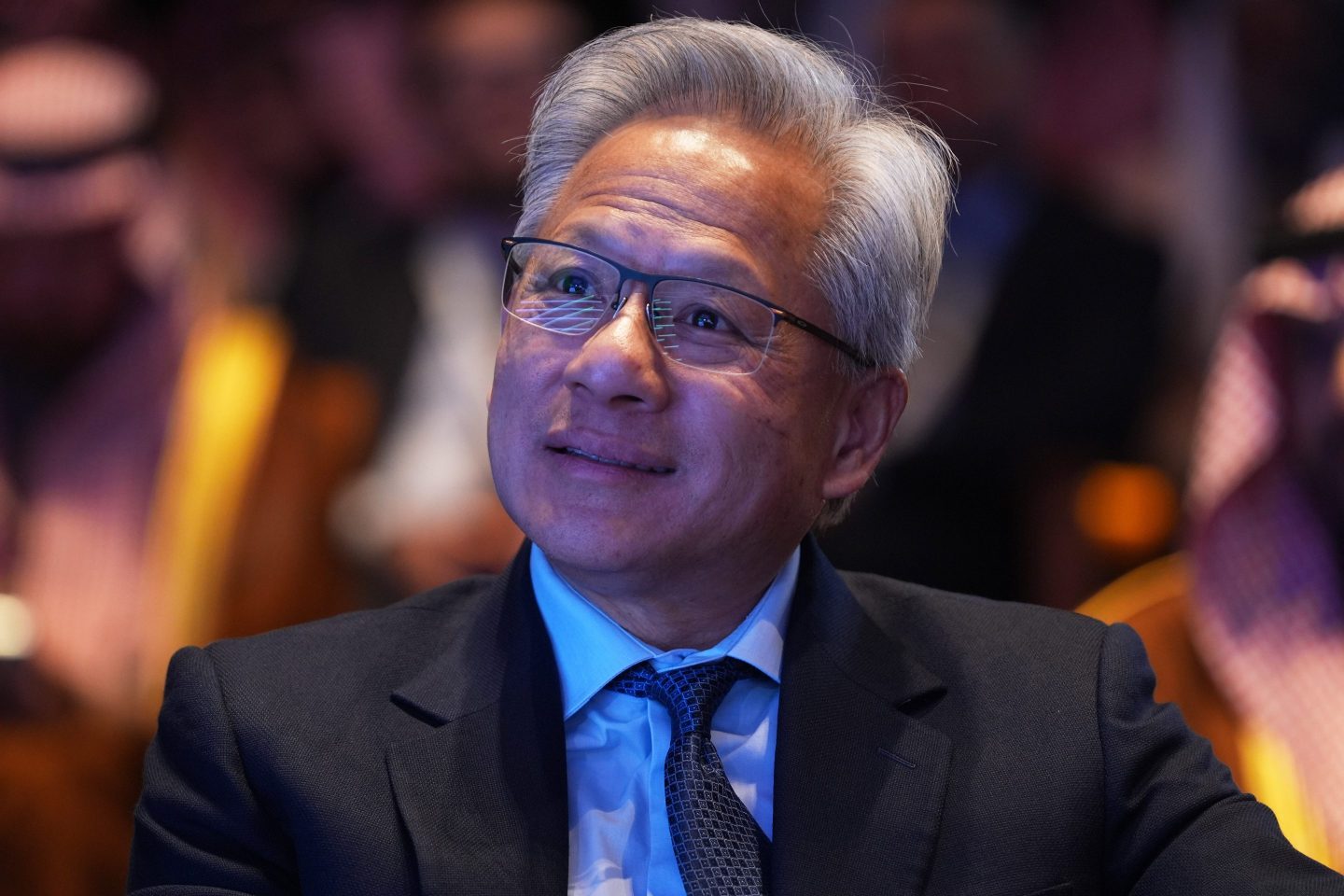
Nvidia CEO Jensen Huang met separately with President Donald Trump and Republican senators Wednesday as tech executives work to secure favorable federal policies for the artificial intelligence industry, including the limited sale of Nvidia’s highly valued computer chips to U.S. Rivals like China.
Huang’s closed-door meeting with Republicans on the Senate Banking Committee came at a moment of intensifying lobbying, soaring investments and audacious forecasts by major tech companies about AI’s potential transformative effects.
Huang is among the Silicon Valley executives who warn that any restrictions on the technology will halt its advancement despite mounting concerns among policymakers and the public about AI’s potential pitfalls or the ways foreign rivals like China may use American hardware.
“I’ve said repeatedly that we support export control, that we should ensure that American companies have the best and the most and first,” Huang told reporters before his meeting on Capitol Hill.
He added that he shared concerns about selling AI chips to China but believed that restrictions haven’t slowed Chinese advancement in the AI race.
“We need to be able to compete around the world. The one thing we can’t do is we can’t degrade the chips that we sell to China. They won’t accept that. There’s a reason why they wouldn’t accept that, and so we should offer the most competitive chips we can to the Chinese market,” Huang said.
Huang also said he’d met with Trump earlier Wednesday and discussed export controls for Nvidia’s chips. Huang added that he wished the president “a happy holidays.”
The Trump administration in May reversed Biden-era restrictions that had prevented Nvidia and other chipmakers from exporting their chips to a wide range of countries. The White House in August also announced an unusual deal that would allow Nvidia and another U.S. Chipmaker, Advanced Micro Devices, to sell their chips in the Chinese market but would require the U.S. Government to take a 15% cut of the sales.
The deal divided lawmakers on Capitol Hill, where there is broad support for controls on AI exports.
A growing battle in Congress
Members of Congress have generally considered the sale of high-end AI chips to China to be a national security risk. China is the main competitor to the U.S. In the race to develop artificial superintelligence. Lawmakers have also proposed a flurry of bills this year to regulate AI’s impact on dozens of industries, though none have become law.
Most Republican senators who attended the meeting with Huang declined to discuss their conversations. But a handful described the meeting as positive and productive.
“For me, this is a very healthy discussion to have,” said Sen. Mike Rounds, a South Dakota Republican. Rounds said lawmakers had a “general discussion” with Huang about the state of AI and said senators were still open to a wide range of policies.
Asked whether he believed Nvidia’s interests and goals were fully aligned with U.S. National security, Rounds replied: “They currently do not sell chips in China. And they understand that they’re an American company. They want to be able to compete around the rest of the world. They’d love to some time be able to compete in China again, but they recognize that export controls are important as well for our own national security.”
Other Republicans were more skeptical of Huang’s message.
Sen. John Kennedy, a Louisiana Republican who sits on the upper chamber’s Banking Committee, said he skipped the meeting entirely.
“I don’t consider him to be an objective, credible source about whether we should be selling chips to China,” Kennedy told reporters. “He’s got more money than the Father, the Son and the Holy Ghost, and he wants even more. I don’t blame you for that, but if I’m looking for someone to give me objective advice about whether we should make our technology available to China, he’s not it.”
Some Democrats, shut out from the meeting altogether, expressed frustration at Huang’s presence on Capitol Hill.
“Evidently, he wants to go lobby Republicans in secret rather than explain himself,” said Massachusetts Sen. Elizabeth Warren, the top Democrat on the Senate Banking Committee.
Warren added that she wanted Huang to testify in a public congressional hearing and answer “questions about why his company wants to favor Chinese manufacturers over American companies that need access to those high-quality chips.”