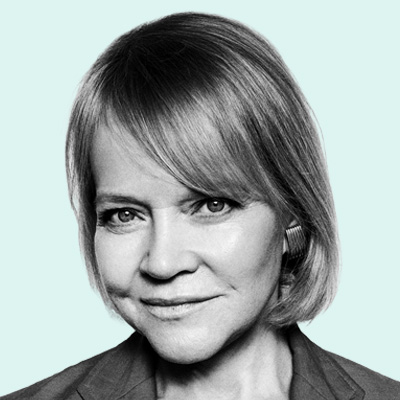
- In today’s CEO Daily: Diane Brady reports on what CEOs were saying at the DealBook Summit.
- The big story: Trump rolls back car efficiency standards.
- The markets: Mostly up.
- Plus: All the news and watercooler chat from Coins2Day.
Good morning. I spent yesterday hearing from dozens of business leaders onstage and off at the New York Times DealBook Summit, deftly moderated by Andrew Ross Sorkin. I was invited to moderate a thought-provoking breakfast conversation on the topic of mission as a driver of growth, with Vanguard President and Chief Investment Officer Greg Davis, Nike Chief Communications Officer Michael Gonda and author Simon Sinek. The takeaway for me: If leaders don’t internalize and institutionalize a company’s mission, it’s just rhetoric.
With that in mind, a few themes emerged for me:
Acceptance of a new normal. Opinions may change—fast. Treasury Secretary Scott Bessent dismissed his earlier concerns about President Trump’s “maximalist” approach to trade wars, and inflation in blue states, saying his thinking on tariffs “had evolved.” But hearing Coinbase CEO Brian Armstrong talk about a “golden age” in one of the worst weeks for crypto or GM CEO Mary Barra shrug off 180-degree policy shifts makes you realize that we’ve gotten used to it.
With the notable exception of California Governor Gavin Newsom, nobody had a negative word to say about Trump, tariffs or much of what’s happening on the federal policy front. “It’s amazing what feels normalized,” one foreign business leader told me.
The need for leaders to build trust. PR guru Richard Edelman told me to stay tuned for some daunting data on the mass-class divide in the upcoming Edelman Trust Barometer. A finance CEO pointed to a row of bodyguards, reminding me that Dec. 4 is the anniversary of UnitedHealthcare CEO Brian Thompson being shot to death a few blocks away, with his alleged murderer in a downtown courthouse as we spoke.
On stage, Alex Karp of Palantir said leaders are losing credibility because they fail to give real opinions or face consequences for “completely stupid decisions.” He added that dyslexia made him learn to think freely, he creates friction by blowing things up, and believes being authentically transparent to the point of rude has paid dividends with employees who know he’s going to tell the truth about products and the rest of the business, too. Not speaking up means you’re “underestimating your audience,” he said, and likely to lose access to smart people who’ll work elsewhere.
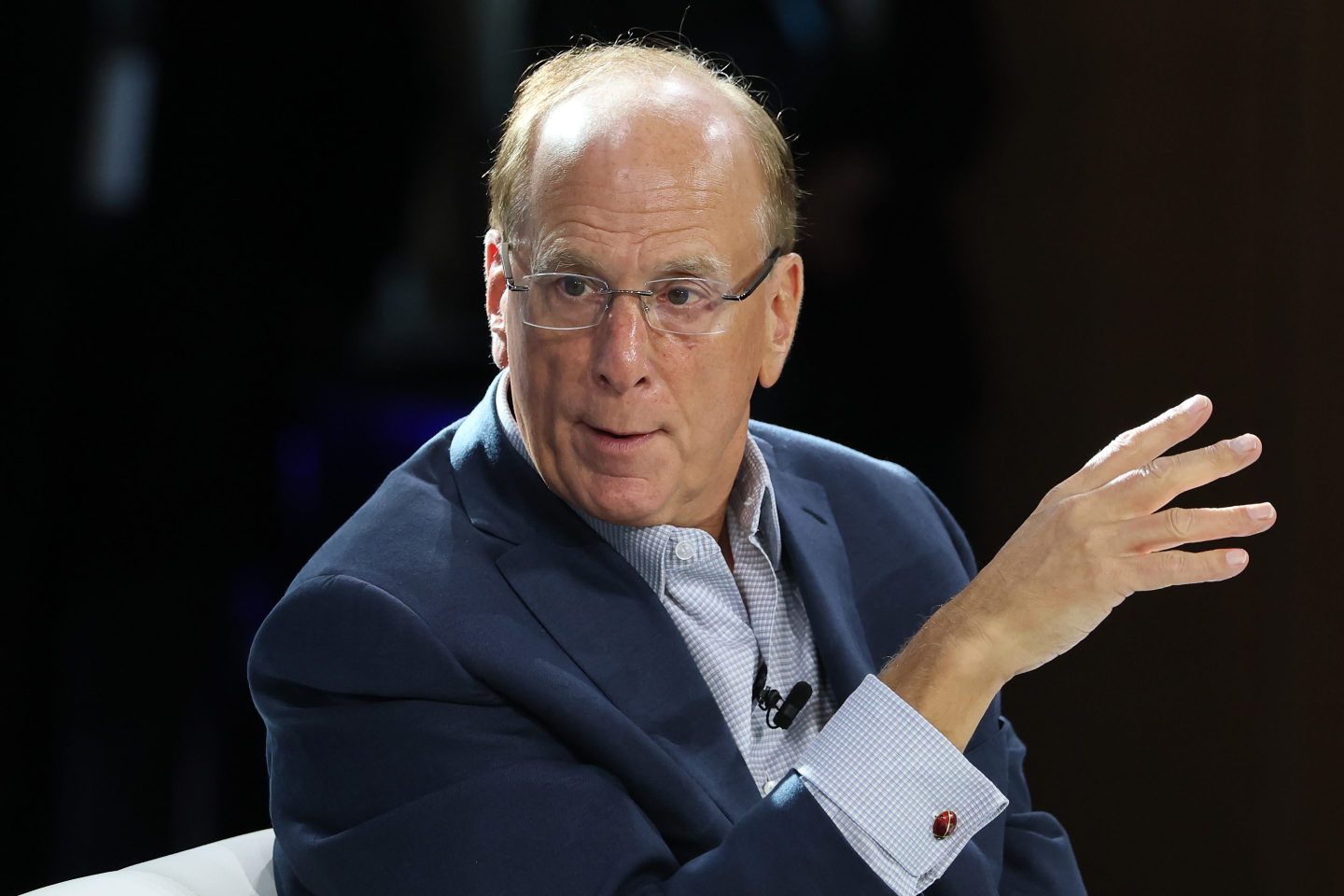
Stop talking about AI bubbles. Asset prices may be high and some investment dollars may be dumb, but the business case for AI is compelling. BlackRock CEO Larry Fink talked about revenue rising much faster than headcount. At my table conversation led by AOL cofounder and startup investor Steve Case, we talked about the opportunities to scale innovation and even spawn one-person unicorns.
Anthropic CEO Dario Amodei made a compelling case that policymakers and leaders have to contend with the job loss and societal shift. But the benefits are clear. As attendee and noted CEO coach Marc Feigen told me: “The only bubble may be all this talk about AI bubbles.”
Contact CEO Daily via Diane Brady at [email protected]
Top news
Trump rolls back car efficiency standards
U.S. President Donald Trump on Wednesday weakened Biden-era fuel efficiency standards for new cars and light trucks that had sought to address climate change by encouraging Americans to buy electric vehicles. Flanked by auto industry executives, Trump called the standards a “scam” that were costing Americans too much money. Trump’s tariffs are expected to increase the cost of cars built overseas.
Stocks rally on job news
Bad news for workers was good news for stocks on Wednesday. Payrolls processor ADP reported that private payrolls shrank by 32,000 in November; economists had expected a 40,000 increase. Investors interpreted the surprise decline as more proof that the Fed will cut interest rates next month, with major indices ending the day up.
The most billionaires ever
The world now has 2,900 billionaires, up from 2,700 last year, who control $15.8 trillion, according to a new study by UBS. Soaring tech valuations and a robust stock market are minting billionaires at a near-record rate.
More child deaths
The number of child deaths in 2025 is expected to rise for the first time in decades, according to the Gates Foundation. Many of the additional deaths—estimated at 243,000—have or will occur in countries like Democratic Republic of Congo, Somalia and Uganda that are plagued by conflict and fragile health systems. Bill Gates attributed the rise in deaths to the 27% drop in global health aid from wealthy countries, including the U.S.
IBM CEO’s AI doubts
IBM CEO Arvind Krishna doubts that hyperscalers like Google and Amazon will be able to turn a profit at the rate of their AI data center spending. “It’s my view that there’s no way you’re going to get a return on that, because $8 trillion of capex [capital expenditure] means you need roughly $800 billion of profit just to pay for the interest,” he said.
Billionaire Michael Saylor stares down potential $8 billion collapse
Billionaire Michael Saylor is in a rough spot as the crypto market continues to prove bearish and Strategy, his firm, appears likely to be delisted from a group of popular indexes. If Strategy moves to sell some of its 650,000 bitcoin, which Saylor and Strategy’s CEO have indicated the company is willing to do, Strategy could be the first crypto domino to fall.
BofA predicts ‘air pocket,’ not bubble, in AI
Savita Subramanian, Bank of America’s head of U.S. Equity and quantitative strategy, wrote this week that an AI bubble is unlikely. Instead, she predicted that an “air pocket” is forming as companies spend aggressively on data centers, often relying on debt.
Companies turn to soup wars for AI talent
In a conversation with tech podcaster Ashlee Vance, OpenAI Chief Research Officer Mark Chen described that the company’s war for talent with Meta now includes delivering soup to recruits. Meta’s offerings are “hand-cooked” by CEO Mark Zuckerberg, while OpenAI orders soup from a fancy Korean restaurant.
The markets
S&P 500 futures are flat this morning. The last session closed up 0.3%. STOXX Europe 600 was up 0.3% in early trading. The U.K.’s FTSE 100 was up 0.14% in early trading. Japan’s Nikkei 225 was up 2.33%. China’s CSI 300 was up 0.34%. The South Korea KOSPI was down 0.19%. India’s NIFTY 50 is up 0.18%. Bitcoin was flat at $93K.
Around the watercooler
The wealthy 1% are turning to new status symbols that can’t be bought—and it’s hurting Dior, Versace, and Burberry by Emma Burleigh
Alex Karp credits his dyslexia for Palantir’s $415 billion success: ‘There is no playbook a dyslexic can master … therefore we learn to think freely’ by Lily Mae Lazarus
Scott Bessent calls the Giving Pledge well-intentioned but ‘very amorphous,’ growing from ‘a panic among the billionaire class’ by Nick Lichtenberg
CEO Daily is compiled and edited by Joey Abrams, Claire Zillman and Lee Clifford.