• Home
  • Latest
  • Coins2Day 500
  • Finance
  • Tech
  • Leadership
  • Lifestyle
  • Rankings
  • Multimedia
CommentaryCorporate Governance

Turning public companies into private companies: the SEC’s retreat from transparency and accountability

By
Andrew Behar
Andrew Behar
Down Arrow Button Icon
By
Andrew Behar
Andrew Behar
Down Arrow Button Icon
December 5, 2025, 9:00 AM ET
Paul Atkins
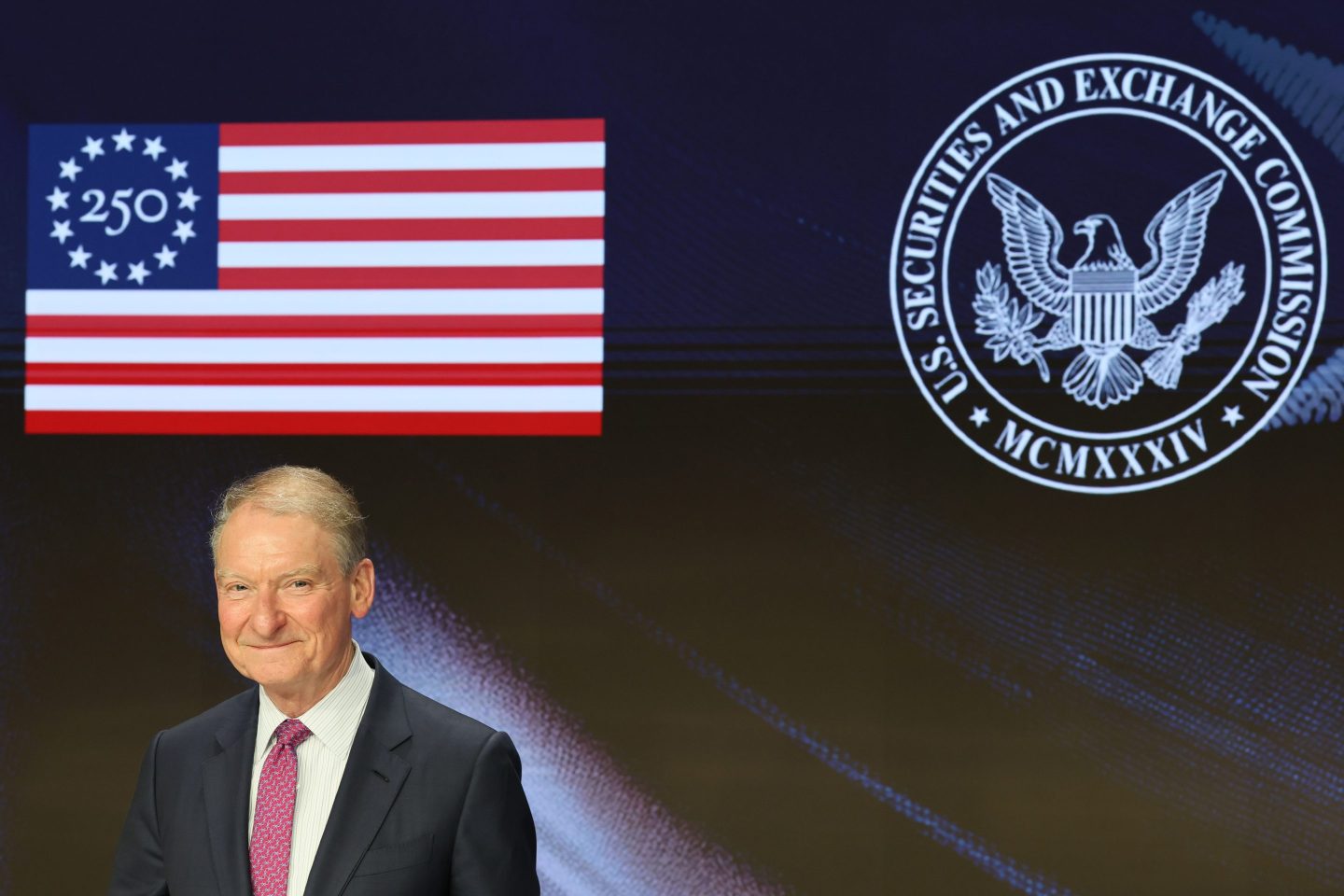
Securities and Exchange Commission Chairman Paul S. Atkins poses for pohotos before ringing the closing bell at the Nasdaq Marketsite on December 02, 2025 in New York City. Michael M. Santiago/Getty Images

In recent remarks at the “Revitalizing America’s Markets” event, SEC Chair Paul Atkins laid out a plan that would fundamentally redefine what it means to be a public company in the United States. He framed it as a plan to “make IPOs great again,” but beneath the rhetoric lies something far more consequential: a shift toward a marketplace where public companies behave like private ones — shielded from disclosure, insulated from shareholder input, and increasingly detached from the long-term health of the broader economy. In essence, it is a move toward absolute control by CEOs and their boards of directors, with little to no accountability to shareholders or regulators. What could go wrong?

Recommended Video

Atkins described three pillars of his new plan: rolling back disclosure requirements, “de-politicizing” shareholder meetings, and significantly curtailing securities litigation. Each of these changes, taken individually, merits serious debate. Taken together, they represent a dramatic shrinking of the public market’s core accountability mechanisms, which made the U.S. The financial capital of the world. This new plan would hollow out the very structures that distinguish public ownership from private capital. Structures that have been in place since the 1934 creation of the SEC to protected investors, markets, and the public interest.

Disclosure: The Foundation of Public Markets

Atkins’ first pillar — rewriting disclosure rules — is framed as modernization. In practice, it amounts to reducing the information investors receive about how public companies operate, assess risk, manage social and environmental issues, treat stakeholders, and position themselves for long-term value creation — or not.

Disclosure is not a bureaucratic burden. It is the price of accessing public capital. It acknowledges the property rights each investor purchases with a share of stock. If companies are allowed to reveal only what they choose, when they choose, and to disclose only what they believe is material, investors cannot make informed capital allocation decisions. Impeding disclosure thwarts the very premise of public markets — that transparency fuels efficiency, competition, innovation, and trust.

Calling for fewer disclosures at a time when global markets require more information about supply-chain resilience, climate risk, artificial intelligence governance, political spending, cybersecurity, and human capital — is a step backward. It privileges short-term corporate flexibility over long-term stability. It moves us toward a world where sophisticated insiders have more information than everyday investors and are allowed to take risk without constraint; where systemic risks grow unseen until they erupt. We’ve seen it many times before.

Reducing disclosure also pushes the U.S. Out of alignment with international standards, making American markets less attractive in a world where transparency is a competitive advantage.

Shareholders: Owners or Spectators?

The second pillar — “de-politicizing” shareholder meetings — is framed as restoring focus on director elections and “significant corporate matters.” But shareholder proposals are significant corporate matters. They address risks that are material to investors: energy transitions, climate risk, labor practices, supply-chain disruptions, human rights, data privacy, and political influence spending. These are not fringe issues, they define risk and allow a company to compete effectively – or not. That is why global investors routinely identify shareholder resolutions as central to maintaining long-term financial value.

The push to remove these topics from annual meetings is not a call for “neutrality.” It is an effort to narrow the bounds of shareholder concern and wall off the boardroom from owners who raise uncomfortable but necessary questions. Public companies are not private clubs; they are enterprises owned by millions of Americans through pension funds, 401(k)s, retirement accounts, and mutual funds. This corporate marketplace, where shareholders have the ability to raise issues of financial risk and return, is fundamental to long-term market growth and stability.

De-politicization is a euphemism for de-democratization.

The danger is clear: when shareholders lose meaningful avenues to raise concerns, risks go unaddressed until they become crises — legal, financial, or reputational. Today’s corporate governance system works precisely because shareholders can surface emerging risks early, well before they metastasize. This may inhibit management to a degree, but the tradeoff has worked incredibly well, as our thriving stock market demonstrates.

Litigation: The Last Line of Defense

The third pillar — limiting securities litigation — further weakens the mechanisms that hold public companies accountable. Atkins insists shareholders will retain the ability to bring “meritorious claims,” but such language is cover for weakening standards, shortening deadlines, or raising barriers to class actions. By doing so, the SEC risks making justice inaccessible to the very investors it is meant to protect.

For many Americans, class actions are the only realistic recourse when corporate misconduct wipes out savings. If disclosure declines, shareholder engagement is restricted, and litigation is limited, a perfect storm emerges: fewer warnings, fewer questions, fewer consequences.

A Vision of Public Companies That Replicate Private Company Standards

Atkins’ plan echoes a broader ideological project: to reduce the obligations of public companies until they resemble large private entities — opaque, insulated, and unaccountable except to insiders. The irony is that this will not make IPOs “great again.” It will make them rarer. Investors are already cautious about entering markets where information is incomplete, governance structures are weakened, and legal protections are uncertain.

Capital naturally flows to markets that are transparent, fair, and predictable. Undermining those qualities lowers confidence, increases risk premiums, and ultimately drives well-managed companies and investors elsewhere.

America’s Markets Need Strengthening — Not Shrinking

We should absolutely modernize and enhance the efficiency of our disclosure and governance systems. But modernization should enhance transparency, not diminish it. It should strengthen shareholder voices, not silence them. It should protect investors, not weaken their ability to hold companies accountable.

America’s public markets are a strategic national asset. While diluting transparency, muting shareholders, and limiting recourse might make life easier for executives in the short term — it will make markets more fragile, companies less resilient, and the economy more vulnerable in the long term.

If we want public markets worthy of the 21st century, we need more sunlight, not less.

The opinions expressed in Coins2Day.com commentary pieces are solely the views of their authors and do not necessarily reflect the opinions and beliefs of  Coins2Day .

Join us at the Coins2Day Workplace Innovation Summit May 19–20, 2026, in Atlanta. The next era of workplace innovation is here—and the old playbook is being rewritten. At this exclusive, high-energy event, the world’s most innovative leaders will convene to explore how AI, humanity, and strategy converge to redefine, again, the future of work. Register now.
About the Author
By Andrew Behar
See full bioRight Arrow Button Icon

Latest in Commentary

Finance
Lorem ipsum dolor sit amet, consectetur adipiscing elit, sed do eiusmod tempor incididunt ut labore et dolore magna aliqua. Ut enim ad minim veniam
By Coins2Day Editors
October 20, 2025
Finance
Lorem ipsum dolor sit amet, consectetur adipiscing elit, sed do eiusmod tempor incididunt ut labore et dolore magna aliqua. Ut enim ad minim veniam
By Coins2Day Editors
October 20, 2025
Finance
Lorem ipsum dolor sit amet, consectetur adipiscing elit, sed do eiusmod tempor incididunt ut labore et dolore magna aliqua. Ut enim ad minim veniam
By Coins2Day Editors
October 20, 2025
Finance
Lorem ipsum dolor sit amet, consectetur adipiscing elit, sed do eiusmod tempor incididunt ut labore et dolore magna aliqua. Ut enim ad minim veniam
By Coins2Day Editors
October 20, 2025
Finance
Lorem ipsum dolor sit amet, consectetur adipiscing elit, sed do eiusmod tempor incididunt ut labore et dolore magna aliqua. Ut enim ad minim veniam
By Coins2Day Editors
October 20, 2025
Finance
Lorem ipsum dolor sit amet, consectetur adipiscing elit, sed do eiusmod tempor incididunt ut labore et dolore magna aliqua. Ut enim ad minim veniam
By Coins2Day Editors
October 20, 2025

Most Popular

Finance
Lorem ipsum dolor sit amet, consectetur adipiscing elit, sed do eiusmod tempor incididunt ut labore et dolore magna aliqua. Ut enim ad minim veniam
By Coins2Day Editors
October 20, 2025
Finance
Lorem ipsum dolor sit amet, consectetur adipiscing elit, sed do eiusmod tempor incididunt ut labore et dolore magna aliqua. Ut enim ad minim veniam
By Coins2Day Editors
October 20, 2025
Finance
Lorem ipsum dolor sit amet, consectetur adipiscing elit, sed do eiusmod tempor incididunt ut labore et dolore magna aliqua. Ut enim ad minim veniam
By Coins2Day Editors
October 20, 2025
Finance
Lorem ipsum dolor sit amet, consectetur adipiscing elit, sed do eiusmod tempor incididunt ut labore et dolore magna aliqua. Ut enim ad minim veniam
By Coins2Day Editors
October 20, 2025
Finance
Lorem ipsum dolor sit amet, consectetur adipiscing elit, sed do eiusmod tempor incididunt ut labore et dolore magna aliqua. Ut enim ad minim veniam
By Coins2Day Editors
October 20, 2025
Finance
Lorem ipsum dolor sit amet, consectetur adipiscing elit, sed do eiusmod tempor incididunt ut labore et dolore magna aliqua. Ut enim ad minim veniam
By Coins2Day Editors
October 20, 2025
Rankings
  • 100 Best Companies
  • Coins2Day 500
  • Global 500
  • Coins2Day 500 Europe
  • Most Powerful Women
  • Future 50
  • World’s Most Admired Companies
  • See All Rankings
Sections
  • Finance
  • Leadership
  • Success
  • Tech
  • Asia
  • Europe
  • Environment
  • Coins2Day Crypto
  • Health
  • Retail
  • Lifestyle
  • Politics
  • Newsletters
  • Magazine
  • Features
  • Commentary
  • Mpw
  • CEO Initiative
  • Conferences
  • Personal Finance
  • Education
Customer Support
  • Frequently Asked Questions
  • Customer Service Portal
  • Privacy Policy
  • Terms Of Use
  • Single Issues For Purchase
  • International Print
Commercial Services
  • Advertising
  • Coins2Day Brand Studio
  • Coins2Day Analytics
  • Coins2Day Conferences
  • Business Development
About Us
  • About Us
  • Editorial Calendar
  • Press Center
  • Work At Coins2Day
  • Diversity And Inclusion
  • Terms And Conditions
  • Site Map
  • Facebook icon
  • Twitter icon
  • LinkedIn icon
  • Instagram icon
  • Pinterest icon
Andrew Behar is the Board Chair and President of As You Know and the CEO of As You Sow, the nation’s leading non-profit practitioner of shareholder advocacy and engagement. He is on the board of the Responsible Sourcing Network and a member of the XPrize Brain-Trust for Abundant Energy. His book, The Shareholders Action Guide: Unleash Your Hidden Powers to Hold Corporations Accountable, was published in November 2016 by Berrett-Koehler.

Most Popular

placeholder alt text
Europe
Denmark offered to trade Greenland to the U.S. in 1910—and America thought it was crazy
By Steven Lamy and The ConversationJanuary 22, 2026
2 days ago
placeholder alt text
Economy
'Some form of crisis is almost inevitable': The $38 trillion national debt will soon be growing faster than the U.S. economy itself, watchdog warns
By Nick LichtenbergJanuary 22, 2026
2 days ago
placeholder alt text
Personal Finance
Sweden abolished its wealth tax 20 years ago. Then it became a 'paradise for the super-rich'
By Miranda Sheild Johansson and The ConversationJanuary 22, 2026
2 days ago
placeholder alt text
North America
Gates Foundation plans to give away $9 billion in 2026 to prepare for the 2045 closure while slashing hundreds of jobs
By Sydney LakeJanuary 23, 2026
20 hours ago
placeholder alt text
Success
McDonald’s CEO shares tough love career advice he’d give Gen Z and young millennial workers: ‘No one cares about your career’
By Orianna Rosa RoyleJanuary 22, 2026
2 days ago
placeholder alt text
Energy
Elon Musk warns the U.S. could soon be producing more chips than we can turn on. And China doesn’t have the same issue
By Sasha RogelbergJanuary 22, 2026
2 days ago

© 2026 Coins2Day Media IP Limited. All Rights Reserved. Use of this site constitutes acceptance of our Terms of Use and Privacy Policy | CA Notice at Collection and Privacy Notice | Do Not Sell/Share My Personal Information
FORTUNE is a trademark of Coins2Day Media IP Limited, registered in the U.S. and other countries. FORTUNE may receive compensation for some links to products and services on this website. Offers may be subject to change without notice.


Latest in Commentary

dewar
CommentaryLeadership
When companies take off like a rocket, how can founders steer the ship?
By Carolyn DewarJanuary 24, 2026
28 minutes ago
shubham
CommentaryConsulting
When AI meets healthcare, how should payers react? 
By Shubham SinghalJanuary 23, 2026
24 hours ago
sternfels
CommentaryConsulting
AI makes human intelligence more important, not less 
By Bob Sternfels and Lucy PerezJanuary 22, 2026
2 days ago
wendy
CommentarySmall Business
Built to last: governance for multigenerational family businesses 
By Wendy StewartJanuary 22, 2026
2 days ago
acunto
CommentaryLeadership
I’m the Napster CEO and I agree with Pinterest: the Napster phase of AI needs to end
By John AcuntoJanuary 22, 2026
2 days ago
target
CommentaryImmigration
Slipping on ICE: innocent retailers are the latest collateral damage from Trump’s perpetual noise machine
By Jeffrey Sonnenfeld and Steven TianJanuary 21, 2026
3 days ago