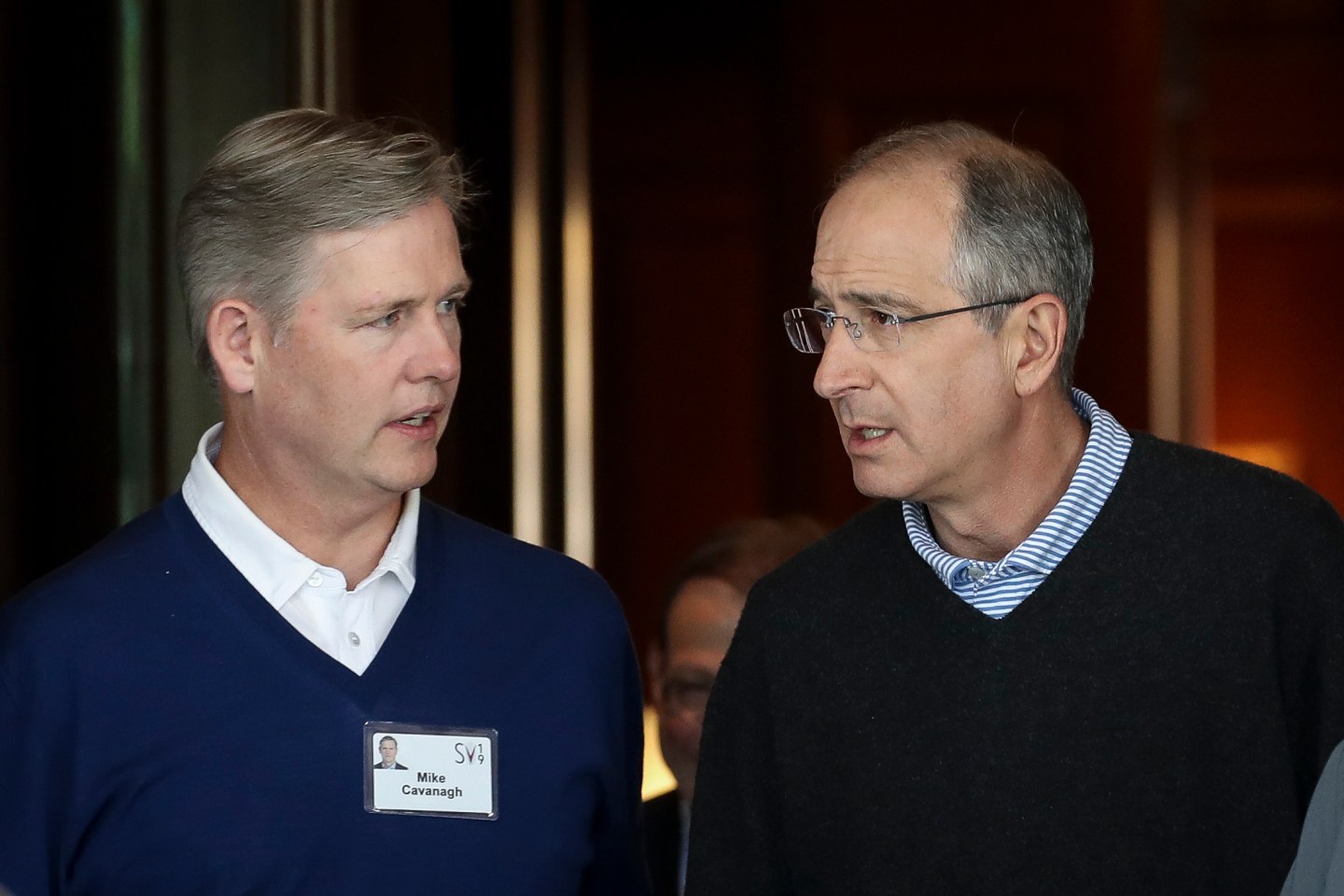
Minutes after Paramount launched a hostile bid to wrestle control of Warner Bros. Discovery away from streaming giant Netflix, the third party rowing in the race appeared to keep going in its own lane. Comcast President Mike Cavanagh, speaking onstage at the UBS Global Media and Communications Conference on Monday, alluded to his past as a college athlete: “I think being focused as a former rower, eyes in our own boat, and get the job done is going to be what the next couple of years give us an opportunity to do.”
Cavanagh, who is due to become Comcast’s co-CEO soon, said the company put its offer for WBD together from a commitment not to “stress the Comcast balance sheet to any stressful level.” He added Comcast has debated internally whether to engage at all, questioning the potential disruption or distraction. Ultimately, they decided it was their job to explore the opportunity.
“I respect and understand the decision of the Warner Brothers board to obviously prefer the certainty of high levels of cash or collared stock and not what we were willing to go to to make it happen,” Cavanagh said. “So good news is that we like what we were doing, as I just described, and we roll on with a lot of focus. But I think we’re better for having taken a look.”
Comcast’s resulting proposal was acknowledged to be “light relative to the other proposals” in terms of cash. Instead, the offer centered on a significant chunk of equity in a proposed combined entertainment company that would have merged NBCUniversal’s Parks, Media, and Studios segments with Warner Bros.’ Studio streaming segment. WBD shareholders would have received a “substantial percentage” of this company, which would have operated as a publicly traded controlled subsidiary of Comcast.
Cavanagh argued Comcast did not really see itself as a key bidder for these assets: “We didn’t expect that we had a high likelihood of being prevailing with a deal that made sense to us.”
He added the combined WBD/Comcast “would have been an interesting play” and probably would have changed its streaming strategy to be more global. He stressed Comcast was “better for having taken a look” at the opportunity and, after the exercise of reverse due diligence, “walked away feeling great about our business and our strategies.”
Cavanagh, a Yale graduate, told Yale News in 2020 “the demands of being a rower prepared me extremely well for the professional challenges that came later in my career.”
Eyes in the boat
With the WBD saga concluded, NBCUniversal is rolling on with a deep sense of focus, secure in the belief they “like what we’re doing” and “don’t need to do anything else.” The remaining NBCUniversal businesses are entering 2026 with great momentum and leadership, and “good solid business strategies,” he said. Cavanagh argued the overall strategy is unique in media, encompassing a global parks business, a leading studio (ranked No. 2 in film over recent years), and a robust media segment combining broadcast and streaming.
The media segment itself generates $40 billion in global revenues, he pointed out. This segment is positioned strategically with linear assets like NBC, Telemundo, and the leading reality player Bravo, which are integral to the strategy driving the streaming arm, Peacock. Peacock’s strategy is decidedly domestic, fitting alongside the broader corporate focus. The company does not view global aspiration as necessary right now, noting there are “plenty of buyers” for their studio content in other international markets.
Peacock has shown meaningful improvement, cutting its losses by $900 million in the last 12 months, and currently boasts 41 million high-average-revenue-per-user subscribers. Sports content, including the Olympics, NFL, and NBA, is a key driver for both acquisition and engagement, allowing Peacock to serve its league partners effectively. The expectation is Peacock will “continue to meaningfully improve its even dollar losses” in 2026 versus 2025. In October, Comcast reported Peacock’s streaming losses had narrowed to $217 million, down from $436 million year-over-year, although subscriber growth appeared to plateau at 41 million.
Universal Studios maintains its strength through strong relationships with top creators like Steven Spielberg and Christopher Nolan. The studio aims to continue investing behind its team and acquiring more intellectual property, such as through partnerships with Nintendo, which led to Super Mario. Outside of media, the Parks business, now Universal Destinations and Experiences, is a global force with locations in Los Angeles, Orlando, Beijing, and Osaka. Future growth includes the development of a UK park expected to open around 2030 or 2031.
Cavanagh concluded he welcomes consolidation in the wider industry, even though Comcast apparently won’t be participating in this particular opportunity with Warner Bros. Discover. He said he thinks, “generally speaking, consolidation hopefully leads to market healing as players start to figure out how they really want to make money over the long term.” For his part, he said NBCUniversal is confident in its own sound strategy, ready to execute and capitalize on the opportunities the next couple of years provide. The boat is being rowed onward.
[Disclosure: the author worked at Netflix from June 2024 through July 2025.]