In the space of less than a week, the bidding war for Warner Bros. Discovery Inc. Has unleashed two multi-billion debt deals that rank among the largest in the past decade.
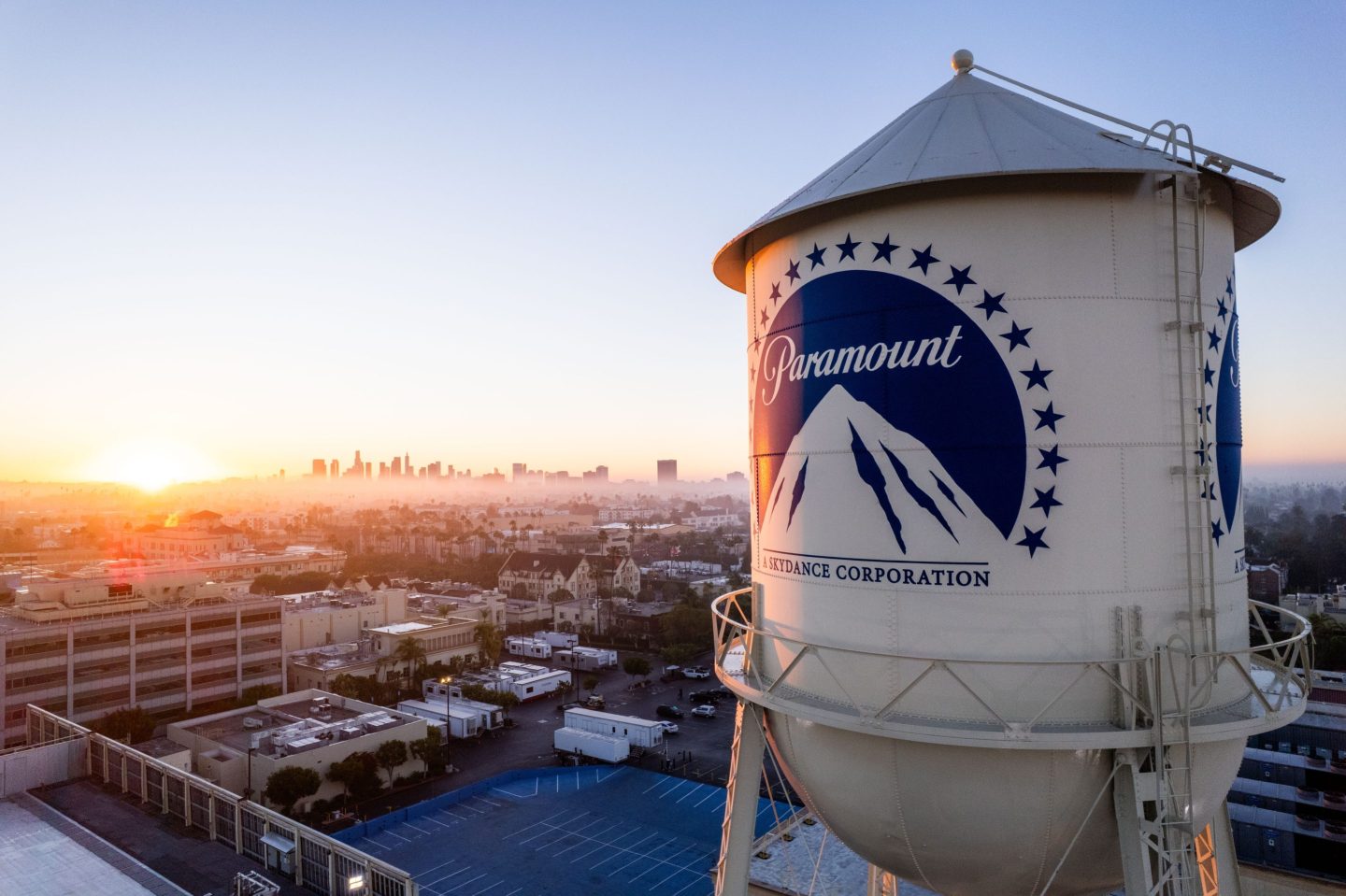
The latest came from Paramount Skydance Corp. As it lined up as much as $54 billion of financing from Wall Street’s biggest firms to help support its $108 billion hostile bid for Warner Bros., just days after the company agreed to a deal with Netflix Inc.
Loans of this size have been few and far between over the past couple of years amid subdued acquisition activity. But that’s all changed recently amid a frenzy to fund data-center build outs in the race for artificial intelligence expansion, as well as a pick up in M&A.
Bank of America Corp., Citigroup Inc. And Apollo Global Management Inc. Are providing the debt commitment to Paramount, according to a statement Monday. Each one of the trio has signed up for about $18 billion, or a third, of the total commitment, according to a filing.
Just late last week, Netflix lined up $59 billion of unsecured financing from Wells Fargo & Co., BNP Paribas SA and HSBC Plc in another bridge loan for its own bid for part of Warner Bros. Such bridge loans, a type of facility that’s usually replaced with permanent financing like bonds, are a crucial step for banks in building relationships with companies to win higher-paying mandates down the road.
Paramount’s bid at $30 a share in cash comes after Netflix agreed to buy Warner Bros. For $27.75 in cash and stock in a $72 billion deal. Paramount’s bid is for the entirety of Warner Bros., while Netflix is only interested in the Hollywood studios and streaming business. Paramount — which is backed by Larry Ellison, one of the world’s richest people — said its offer gives shareholders $18 billion more in cash than the Netflix bid would.
The Ellison family and RedBird Capital Partners are backstopping the $40.7 billion equity financing for the Paramount bid. Affinity Partners, the private equity firm founded by President Donald Trump’s son-in-law Jared Kushner, Saudi Arabia’s Public Investment Fund, Abu Dhabi’s L’imad Holding Company PJSC and the Qatar Investment Authority are also financing partners. China’s Tencent Holdings Ltd., which had originally been listed as providing a $1 billion commitment, is no longer involved as a financing partner, according to the filing.
Ratings Game
While sizable, the financings for Netflix and Paramount don’t quite match the $75 billion of loans Anheuser-Busch InBev SA obtained to back its acquisition of SABMiller Plc in 2015, which amounted to the largest ever bridge loan, according to data compiled by Bloomberg.
Even so, Wall Street is looking to earn lucrative fees tied to a long-awaited revival in acquisitions. One or a small group of banks typically provide the initial bridge loan, and then bring in other banks to spread the risk once the acquisition is publicly announced. After a time, those loans are replaced with bonds sold to institutional investors.
One key difference with Paramount’s bridge loan is that it will be secured by the company’s assets. Netflix’s bridge is unsecured, meaning it’s not backed by specific collateral. That’s likely due to the different credit ratings each company has.
Netflix, which is rated investment grade, is expected to replace its bridge loan with up to $25 billion of bonds, plus $20 billion of delayed-draw term loans and a $5 billion revolving credit facility, both of which are typically held by banks. Paramount has lower credit scores of a BB+ rating by S&P Global Ratings, which is one level below investment grade, and BBB- by Fitch Ratings, or on the cusp of junk.
The high-grade market typically has a deeper pool of investors and offers cheaper financing, and would be more easily able to absorb a large financing of this size.