Just hours before Paramount Skydance Corp. Chief Executive Officer David Ellison launched a hostile bid for Warner Bros. Discovery Inc., he hobnobbed in Washington with some of the federal government’s heaviest hitters.
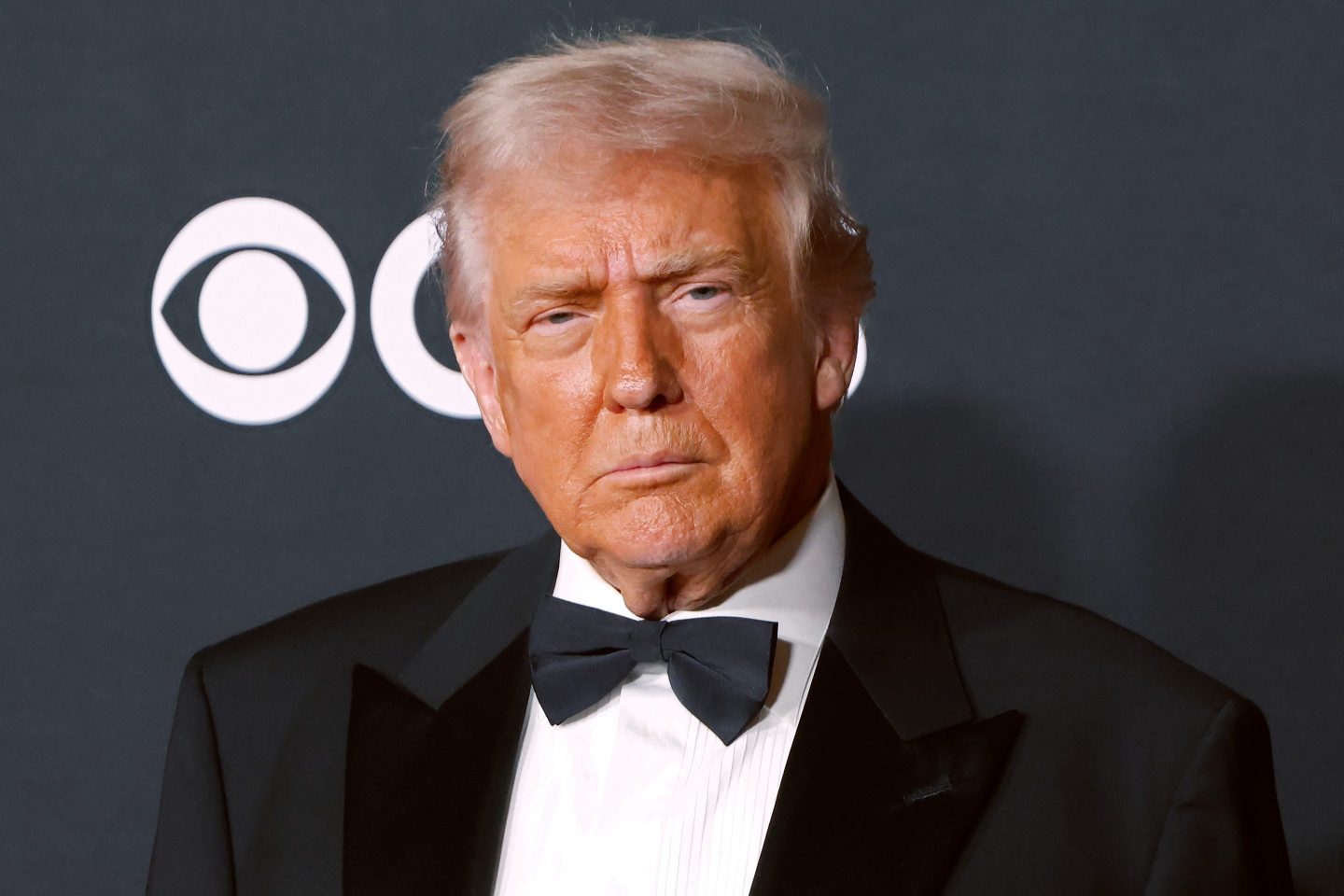
At the Kennedy Center Honors Sunday night, Ellison chatted with President Donald Trump, according to people familiar with the events. Federal Communications Commission Chair Brendan Carr and his wife sat with Ellison in his box, next to Paramount board member Justin Hamill and CBS CEO George Cheeks, said the people, who asked not to be identified discussing a confidential matter.
If Paramount prevails in its $108 billion hostile bid for Warner Bros., it wouldn’t need approval from the FCC or Congress, but the contact reflects a broad-based Washington campaign to shore up support for a deal.
A Paramount-Warner Bros. Tie-up would still face an extended antitrust review around the world. And it would likely have an easier time than Netflix Inc., at least with the federal government in Washington, analysts said.
The US Justice Department, state attorneys general and authorities in the European Union and beyond can all be expected to weigh in if Paramount clinches the Warner Bros. Deal.
Paramount, the parent of CBS, MTV and other media businesses, is offering to buy all of Warner Bros., including its stable of TV networks that include CNN, TNT and the Discovery Channel. A combination would also marry their two film and TV studios.
“Paramount would likely have an easier and faster path to antitrust clearance than Netflix, in our view, not only because of more limited antitrust issues, but also due to the apparent backing of the administration,” said Bloomberg Intelligence antitrust analyst Jennifer Rie. The combined market shares of Paramount and Warner in the streaming market would be lower than in the Netflix deal, she said.
That may not be applicable to reviews in Europe and by Democratic state attorneys general, the analysts said.
Paramount is led by David Ellison and backed by his father, Larry Ellison, the world’s second-richest man. The company has touted their longstanding close ties to President Donald Trump. Their acquisition of Paramount, which closed in August, has won public praise from Trump.
Antitrust Concerns
On Sunday, Trump raised potential antitrust concerns around Netflix’s planned $83 billion acquisition of Warner Bros., noting that the market share of the combined entity may pose problems. Trump also said that he would be personally involved in the decision-making process.
“We have to see the Netflix percentage of market, Paramount, the percentage of market,” Trump said, speaking to reporters at the White House Monday. “None of them are particularly great friends of mine. You know, just I want to, I want to do what’s right.”
Trump said he hadn’t spoken to his son-in-law, Jared Kushner, about his participation in Paramount’s hostile bid through his company Affinity Partners.
“If the market share on streaming is well above 30%, you’ve got to be concerned about it,” said Jon Leibowitz, a former chair of the US Federal Trade Commission. “It may lessen competition and raise prices.”
Paramount has argued in letters to Warner Bros. And publicly that its deal is far more likely to win approval from regulators. The Justice Department declined to comment on how it would view a Paramount deal.
‘Extremely Confident’
Netflix co-Chief Executive Officers Ted Sarandos and Greg Peters told investors at a conference in New York on Monday that they’re “extremely confident” that their deal with Warner Bros. Will be approved. While that deal would create a streaming colossus from the marriage of Netflix with HBO MAX, a Paramount deal wouldn’t result in the same concentration in the streaming market.
A Paramount deal would put together Max and Discovery+ with Paramount+. Together, Warner and Paramount’s streaming services would amount to less than 3.5% of TV consumption, according to Nielsen data. That’s far below YouTube, which commands about 13% of viewing, and Netflix, at 8%.
“There’s probably a positive, ‘consumers win’ story with Paramount given it could scale up in streaming to challenge Netflix,” said Paul Gallant, a regulatory risk analyst with TD Securities.
Gallant noted that there is still a “non-trivial antitrust risk for Paramount. That stems from consolidating studios and TV programming, risking higher movie ticket prices and pay-TV prices for consumers.”
Netflix could also argue that the US market is made more competitive by the widespread popularity of ByteDance Ltd.’s TikTok, which has some 170 million active users in the US.
Attorneys general in Democratic states are also likely go on the offensive if they feel concerned about the White House putting its thumb on the scale for Paramount, Gallant said.
Democratic States
Democratic-led states like New York and California could throw up roadblocks for Paramount, said Harold Feld, senior vice president for consumer advocacy group Public Knowledge.
“Whether or not DOJ steps up, I think the states will look at this very carefully,” Feld said in an interview after Paramount’s initial offer in October. “What they’ll be looking at is overlap in program production and streaming to see where there’s likely to be anticompetitive harm.”
Feld also noted that a deal would also have to secure consent in Europe and the UK, where he said antitrust authorities tend to define relevant markets more broadly.
The combination of two iconic movie studios out of the industry’s five total could also raise concerns over the possibility of job cuts, said Eric Schiffer, CEO of the Patriarch Organization, which invests in digital and media industries. “The battleground will be the unions, but at a certain point they lose leverage.”
Lawmakers are also watching a potential Paramount deal closely. Senate Majority Leader John Thune, a South Dakota Republican, said the Justice Department would have to take a “hard look” at a Paramount-Warner tie-up if the companies agree to a deal, saying the combination would “seem to create a pretty heavy” antitrust issue from knowing “about those companies and what they bring at the table.”