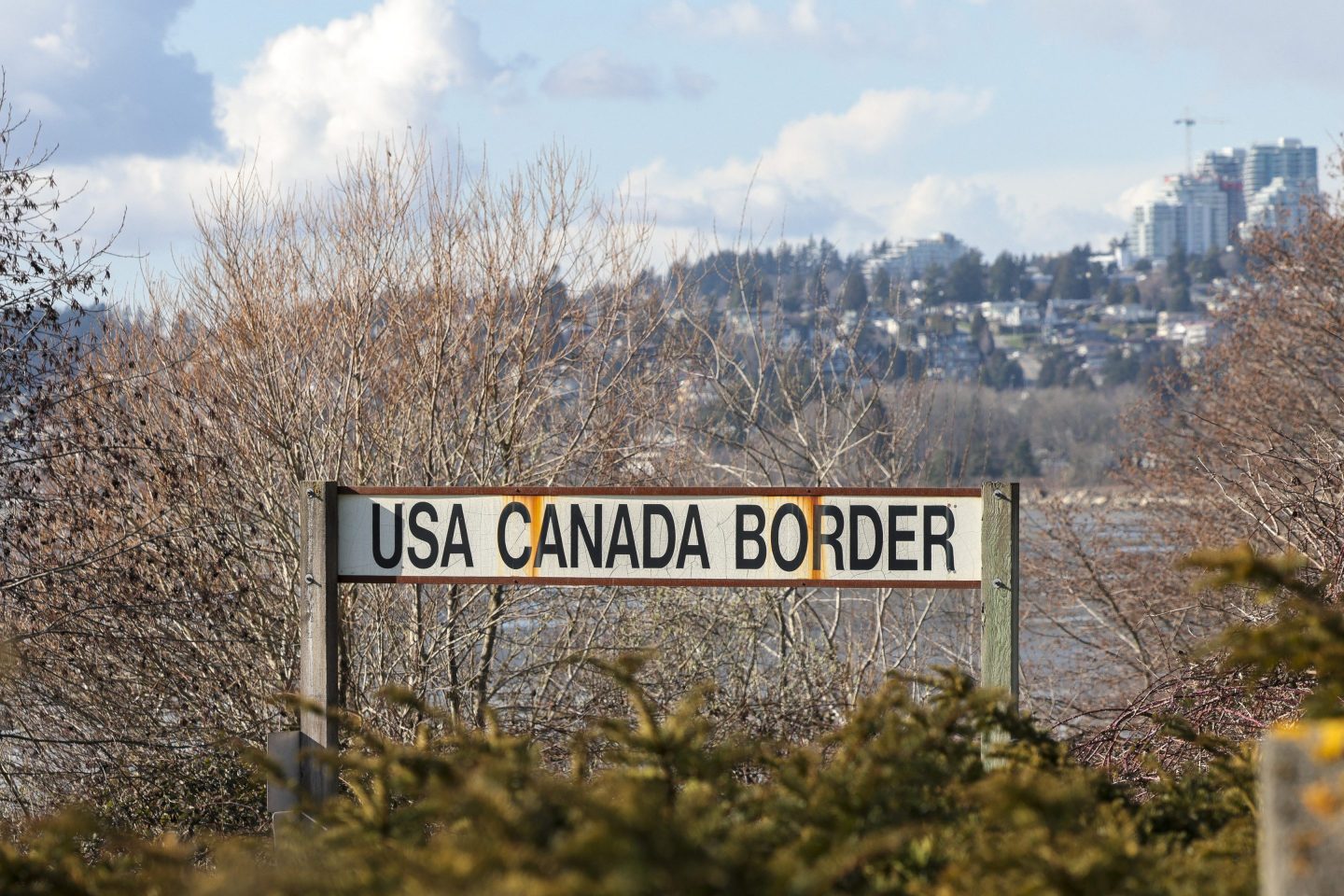
From Washington State to northern New England, American businesses that have long depended on Canadian visitors are seeing traffic dry up—and with it, a crucial source of revenue.
A new report shared exclusively with Coins2Day by the Joint Economic Committee (JEC)–Minority, a congressional standing committee dating back to 1946 that’s responsible for documenting economic conditions in the U.S., details how a sharp drop in Canadian tourism is hitting every U.S. State along the northern border. The findings come as President Trump has proposed annexing Canada, imposed several rounds of tariffs on Canadian goods, and repeatedly broken off trade talks with Ottawa, contributing to a chill in cross-border travel and spending.
From January to October of 2025, the number of passenger vehicles crossing the U.S.-Canada border fell by nearly 20% compared with the same period in 2024, according to the JEC analysis, which draws on U.S. Customs and Border Protection travel statistics. In some border states, the decline reached 27%, a shift that local tourism agencies say is showing up in fewer tourists, more hotel vacancies, and weaker sales.
“Going back for generations, Canadians have visited New Hampshire and many other states along the U.S.-Canada border to see family or friends, stay in our hotels, share a meal at our restaurants, and shop at our stores,” said U.S. Sen. Maggie Hassan (D-N.H.), ranking member of the Joint Economic Committee. “However, in the wake of President Trump’s reckless tariffs and needless provocations, fewer and fewer Canadians are making trips to the United States, putting many American businesses in jeopardy and straining the close ties that bind our two nations.”
Canadians have historically been among the most important international visitors to the U.S., both in sheer numbers and in spending. Analysts and tourism officials note that rising prices, a weaker Canadian dollar, and heightened political tensions have nudged many travelers to choose domestic trips within Canada or alternative international destinations instead. For U.S. Border communities, that shift is being felt in real time.
“These are more than numbers; they represent missed revenue for local businesses, reduced hotel demand, and fewer dollars supporting jobs and investment in our community,” said Shirley Hughes, president and CEO of Visit Fargo–Moorhead in Fargo, N.D., and Moorhead, Minn.
In northern New Hampshire, the absence of Canadian license plates is especially stark. “Being only eight miles from the border, normally Canadians make up anywhere from 15% to 25% of visitors. Now, I can probably count the number of Canadian visitors on one hand. I’m just trying to plug along and keep my nose above the waterline,” said Elizabeth Guerin, owner of the Fiddleheads gift shop in Colebrook, N.H.
The impact stretches beyond retail and lodging into wineries and attractions that rely on cross-border regulars.
“The drop in visits from Canadian tourists has had a noticeable impact on our bottom line. With Canadians making up about 10% of our business, fewer cross-border travelers mean fewer tastings, tours, and wine sales—a ripple effect that touches our entire operation, underscoring how important cross-border tourism is to our business model,” said Scott Osborn, president and co-owner of Fox Run Vineyards in Penn Yan, N.Y.
Some operators worry the damage will outlast any eventual thaw in U.S.–Canada trade relations, as Canadian travelers form new habits elsewhere.
“This is long-lasting damage to a relationship, and emotional damage takes time to heal. While people aren’t visiting Vermont, they’ll be finding new places to visit, making new memories, building new family traditions, and we will not recapture all of that,” said Christa Bowdish, owner of the Old Stagecoach Inn in Waterbury, Vt.
On the West Coast, festival organizers are also feeling the pinch.
“Since March of this year, we have not only seen Canadian traffic drop drastically, but we have also seen a drop in our number of attendees at our festival this year in late September. We knew that after March, we could not rely on our Canadian business because of fear at the border and lack of understanding of what is happening with tariffs and Canada drawing a strong line of promoting Canada first,” said Kevin Coleman, executive director of SeaFeast in Bellingham, Wash.
For businesses up and down the northern border, the question now is not just when Canadians will return in force, but how much of that lost business can ever be won back.
For this story, Coins2Day journalists used generative AI as a research tool. An editor verified the accuracy of the information before publishing.