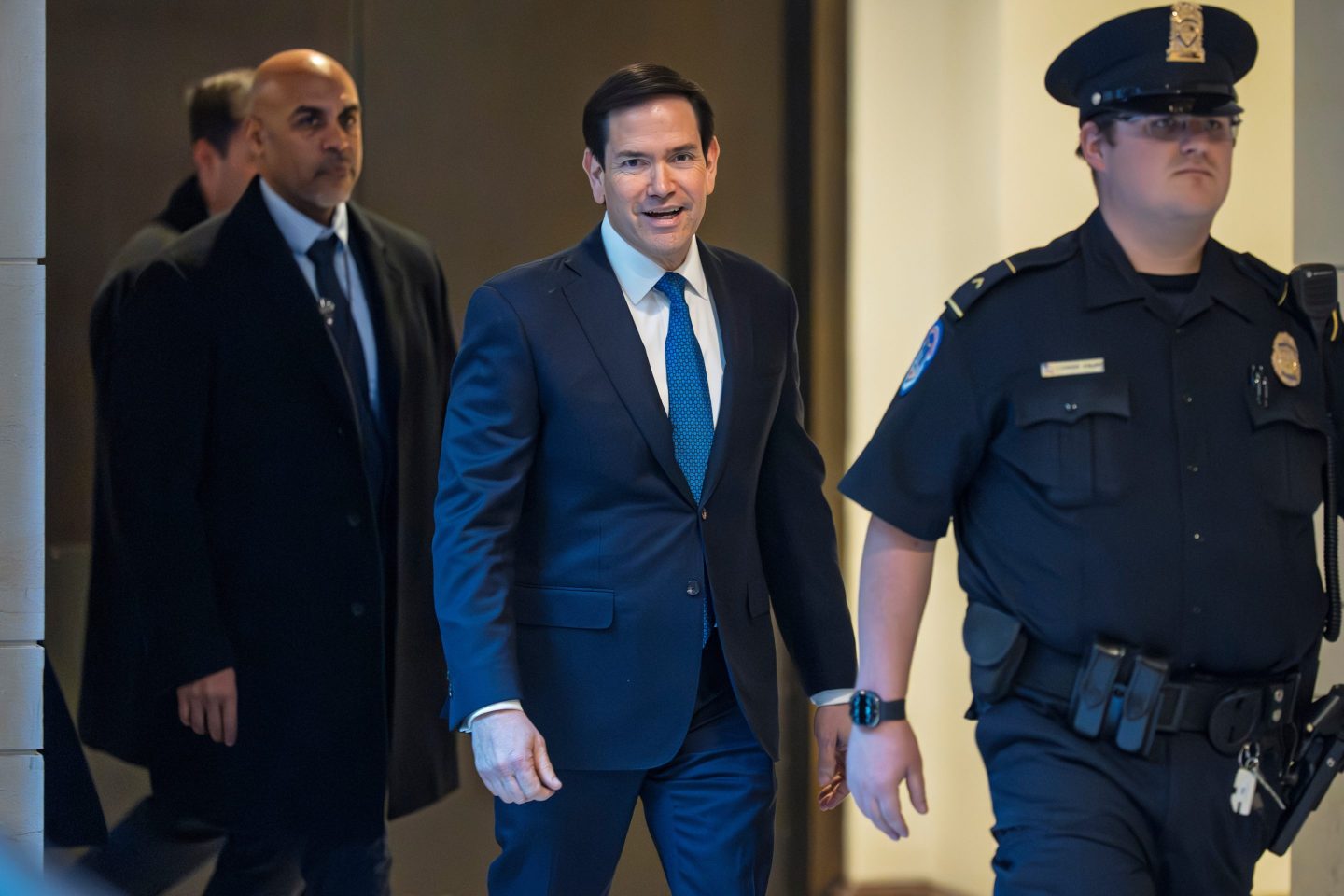
Secretary of State Marco Rubio has ordered diplomatic correspondence to stop using the Calibri font and return to the more traditional Times New Roman effective Wednesday, reversing a Biden administration shift to the less formal typeface that he called wasteful, confusing and unbefitting the dignity of U.S. Government documents.
“Typography shapes how official documents are perceived in terms of cohesion, professionalism and formality,” Rubio said in a cable sent to all U.S. Embassies and consulates abroad Tuesday.
In it, he said the 2023 shift to the sans serif Calibri font emerged from misguided diversity, equity and inclusion policies pursued by his predecessor, Antony Blinken. Rubio ordered an immediate return to Times New Roman, which had been among the standard fonts mandated by previous administrations.
“The switch was promised to mitigate accessibility issues for individuals with disabilities,” the cable said, asserting that it did not achieve that goal and had cost the department $145,000 but did not offer any evidence.
Since taking over the State Department in January, Rubio has systematically dismantled DEI programs in line with President Donald Trump’s broader instructions to all federal agencies. The Trump administration says the goal is to return to purely merit-based standards.
Rubio has abolished offices and initiatives that had been created to promote and foster diversity and inclusion, including in Washington and at overseas embassies and consulates, and also ended foreign assistance funding for DEI projects abroad.
“Although switching to Calibri was not among the department’s most illegal, immoral, radical or wasteful instances of DEI it was nonetheless cosmetic,” according to Rubio’s cable obtained by The Associated Press and first reported by The New York Times.
“Switching to Calibri achieved nothing except the degradation of the department’s correspondence,” he said, adding that it also clashed with the typeface in the State Department letterhead.
According to a separate memo sent to department employees, the return to Times New Roman takes effect Wednesday and all templates for official documents are to be updated to remove the offending Calibri font.
The only exceptions are documents prepared for international treaties and for presidential appointments, which are required to use Courier New 12-point font, the memo said.