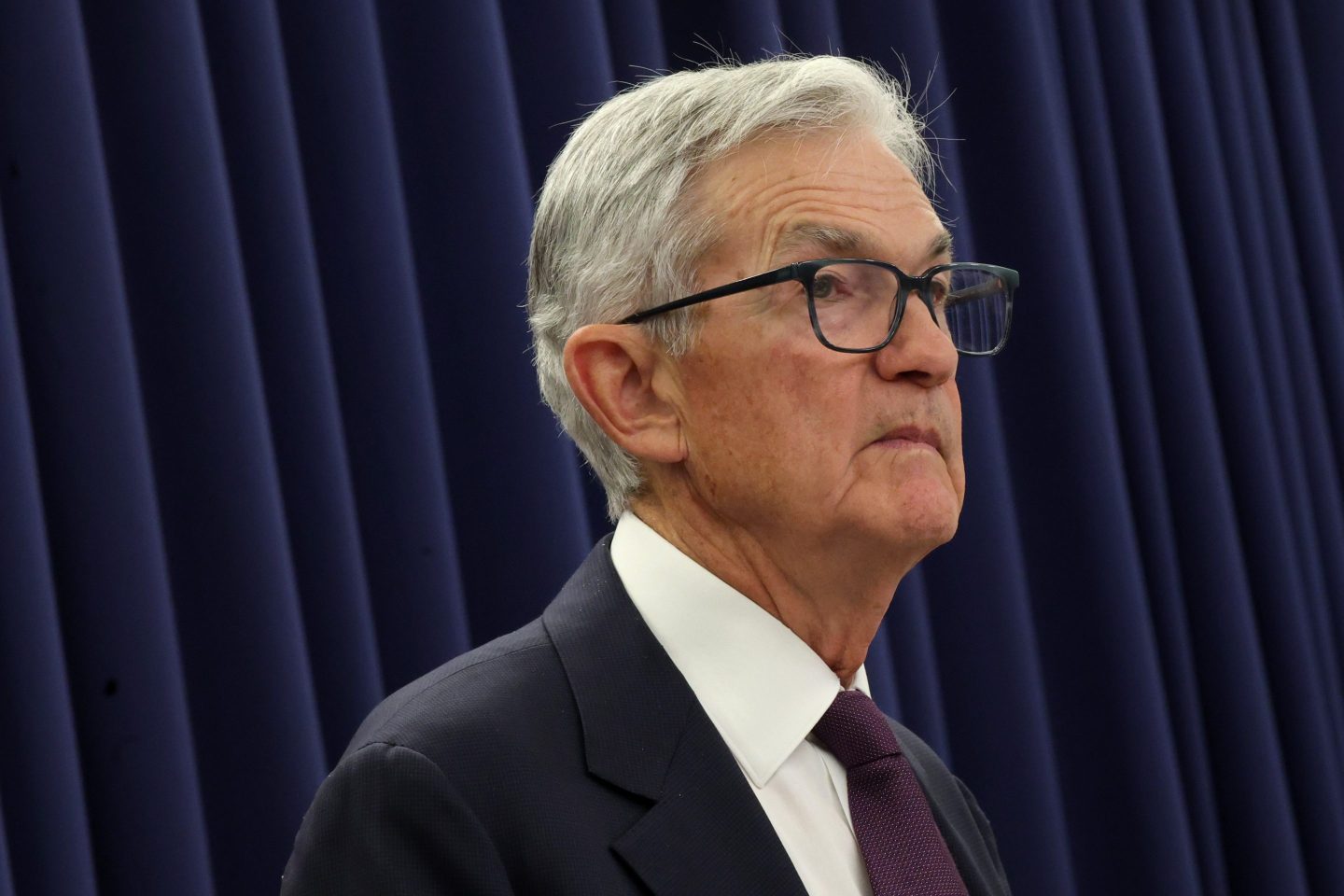
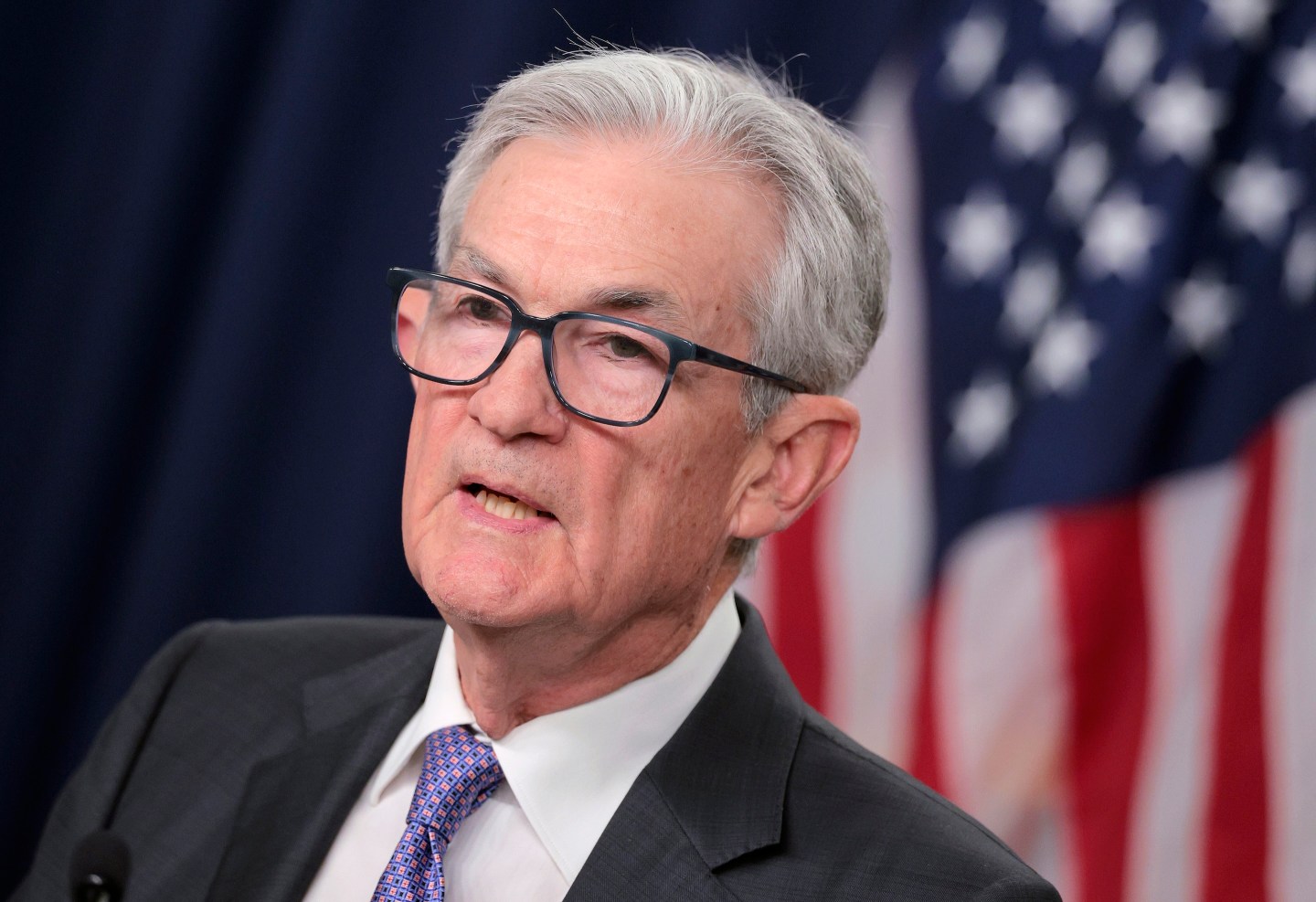
U.S. Federal Reserve Chair Jerome Powell on Wednesday confirmed that a “K-shaped economy” appeared to be developing in the U.S. And questioned whether it was “sustainable.”
The “K-shaped economy” concept expresses the idea that wealthier Americans have enjoyed boom times owing to inflation in their financial and property assets, while poorer Americans are hurt by price inflation in consumer staples such as food and energy. The result can be seen in charts in which a downward curve shows the variables associated with low-income activity and an upward curve charts the fortunes of the wealthy, forming a “K” shape.
At the Fed’s rate-setting meeting on Wednesday, Powell was asked this question by Christine Romans of NBC News: “I wanted to ask you about how the higher-income households are really driving spending right now that are backed by home equity and stock market wealth, but lower-income consumers are really struggling with the accumulation of five years now of rising prices. It’s price levels, not really the inflation rate, holding some of these families back. How sustainable is this so-called K-shaped economy?”
Powell twice said he wasn’t sure it was sustainable. He began by admitting that the K-shaped economy concept was “clearly a thing” that the Fed was seeing in its data:
“We hear about this a lot. If you listen to the earnings reports for consumer-facing companies that tend to deal with low- and moderate-income people, they’ll all say that we’re seeing people tightening their belts, changing products that they buy, buying less, and that sort of thing. And so it’s clearly a thing. It’s also clearly a thing that, asset values—housing values and securities values are high, and they tend to be owned by people more at the higher end of the income and wealth.”
And then he expressed his fears: “So as to how sustainable it is, I don’t know. Most of the consumption does happen by people who have more means. The top third accounts for way more than a third of the consumption, for example. So it’s a good question how sustainable that is.”
Part of the Fed’s fear, Powell said in the context of a separate discussion about the labor market, is that job creation may be lower than the current data suggests. Powell admitted that the Fed had been partially flying blind on jobs data owing to the government shutdown, which prevented the Bureau of Labor Statistics from conducting its surveys in the previous two months.
“So the data may be distorted and not just—not just sort of more volatile, but distorted. And that’s really because data was not collected in October and half of November,” he said.
The result may be that the available data overstates the current level of job creation, and that in fact the economy may be shedding jobs, he said.
“Gradual cooling in the labor market has continued. Unemployment is now up three-tenths from June through September, payroll jobs averaging 40,000 per month since April. We think there’s an overstatement in these numbers by about 60,000, so that would be negative 20,000 per month. And also, just to point at one other thing, surveys of households and businesses both show declining supply and demand for workers,” he said.
Wall Street was happy with Powell’s decision to cut interest rates by 25 basis points to the 3.5% level. The S&P 500 reacted by hitting a new record high in the middle of trading before falling back. It closed up 0.76% at 6,886.
Powell also signaled that there would be no more immediate rate cuts. “We’ve cut now three [times]. We’ve now cut a total of 175 basis points. And, as I mentioned, you know, we feel like we’re well positioned to wait and see how the economy evolves from here.”
This morning, S&P futures were down 0.53%. That’s likely a reflection of three things: Powell’s confirmation that there will be no more rounds of cheaper money for a while; profit-taking from traders whose bets paid off as the S&P rose yesterday; and a poor earnings call from Oracle that missed expectations on revenues while reporting a huge increase in spending on AI. The stock was down 11.5% in overnight trading. Nasdaq 100 futures were also down 0.74% premarket.
Here’s a snapshot of the markets ahead of the opening bell in New York this morning:
- S&P 500 futures were down 0.53% this morning. The last session closed up 0.76%.
- The STOXX Europe 600 was up 0.23% in early trading.
- The U.K.’s FTSE 100 was up 0.20% in early trading.
- Japan’s Nikkei 225 was down 0.9%.
- China’s CSI 300 was down 0.86%.
- The South Korea KOSPI was down 0.59%.
- India’s Nifty 50 was up 0.55%.
- Bitcoin fell to $90K.