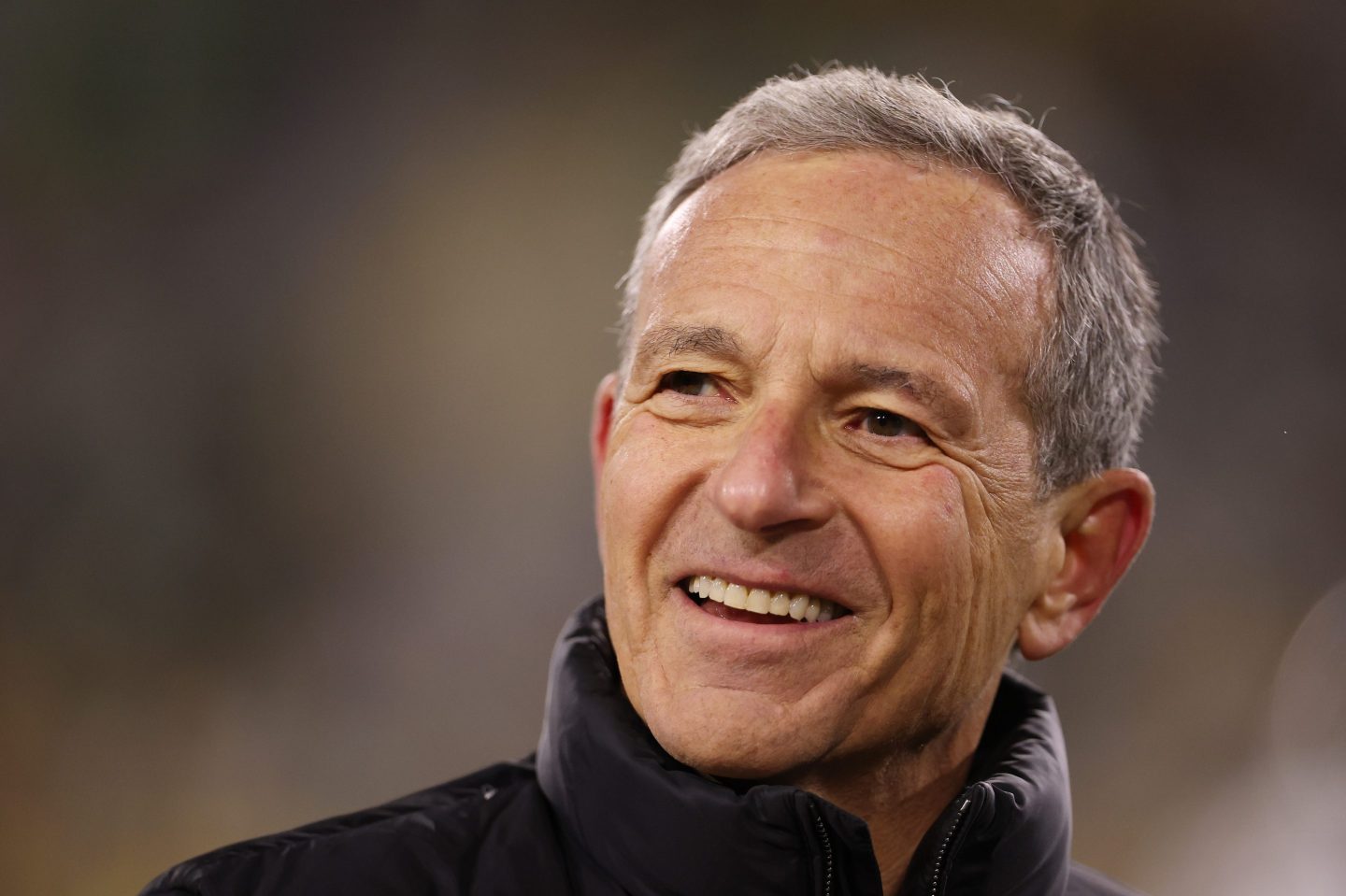
In a landmark move that signals a definitive shift in how major media conglomerates approach artificial intelligence (AI), OpenAI has gone from the company that had unapproved Disney princesses being made from its tools to a $1 billion partnership with the house of mouse itself. Disney CEO Bob Iger unpacked the deal jointly with OpenAI CEO Sam Altman in a TV interview with CNBC’s Squawk on the Street, explaining “we’d rather participate in the rather dramatic growth, rather than just watching it happen and essentially being disrupted by it.” He also reframed the issue of how AI is reshaping entertainment, business, even work itself: “Someone once said to me that creativity is the new productivity, and I think you’re starting to see that more and more.”
The deal, which brings Disney’s intellectual property to OpenAI’s video generation platform Sora, is structured to balance “aggressive” intellectual property protection with a willingness to embrace inevitable technological disruption, Iger said. Under the terms of the three-year agreement, Disney will license approximately 200 characters for use within Sora, allowing users to create short-form videos featuring iconic figures ranging from Mickey Mouse to Star Wars personalities.
Iger framed the partnership not as a concession to AI, but as a necessary evolution—and one that is actually good for human artists. This is because the deal does not include name and likeness, nor does it include character voices. “And so, in reality, this does not in any way represent a threat to the creators at all, in fact, the opposite. I think it honors them and respects them, in part because there’s a license fee associated with it.” Iger stressed repeatedly Disney wants to be on the cutting edge of how technology reinvents entertainment. “No human generation has ever stood in the way of technological advance, and we don’t intend to try.”
The partnership stands in stark contrast to Disney’s relationship with other tech giants. On the same day the OpenAI deal was announced, Disney sent a cease-and-desist letter to Google regarding alleged misuse of IP. Iger explained the divergence in approach by noting that, unlike Google, OpenAI has agreed to “honor and value and respect” Disney’s content through a licensing fee and safety guardrails. “We have been aggressive at protecting our IP, and we have gone after other companies that have not honored our IP,” Iger said, adding conversations with Google had failed to “bear fruit.”
A win-win partnership?
For OpenAI, reportedly under pressure from the aforementioned Google—whose Gemini 3 has been hailed by AI luminaries such as Salesforce billionaire Marc Benioff—the deal represents a validation of its generative video technology. Altman told CNBC user demand for Disney characters was “sort-of off the charts,” and he envisioned a future in which fans can generate custom content, such as a “Buzz Lightyear custom birthday video” or a personalized lightsaber scene. Altman argued the partnership would unlock “latent creativity” in the general public by lowering the skill and effort required to bring ideas to life.
The collaboration will also extend to Disney’s own streaming platform. Iger revealed plans to integrate “user prompted Sora-generated content” directly into Disney+. He said specifically Disney has “wanted for a long time to have what we will call user-generated content on our platform,” suggesting this partnership is a defensive move with regard to streaming giant YouTube and social media epicenter TikTok, which is partially under the control of the Ellison family that also controls entertainment rival Paramount.
The deal includes undisclosed warrants, giving Disney a financial stake in OpenAI’s success. Iger confirmed the warrants and declined to offer more specifics. He compared this forward-thinking approach to Disney’s 2005 decision to license shows to iTunes, viewing the OpenAI partnership as the modern equivalent of boarding a “profound wave” of societal change.
Iger revealed the groundwork for this deal was laid several years ago, saying he had first met Altman in 2022, when he was retired from Disney, before his comeback as CEO. Altman gave Iger a “bit of a road map” about where OpenAI was headed, and Disney has been “extremely impressed” with OpenAI’s growth since then, with all of Altman’s predictions from 2022 coming true a lot faster than either party realized. Iger added Disney sees great opportunities to license other product from OpenAI in the years ahead, which he sees being a huge push in “essentially accomplish[ing] a lot of what we feel we need to accomplish in the years ahead.”