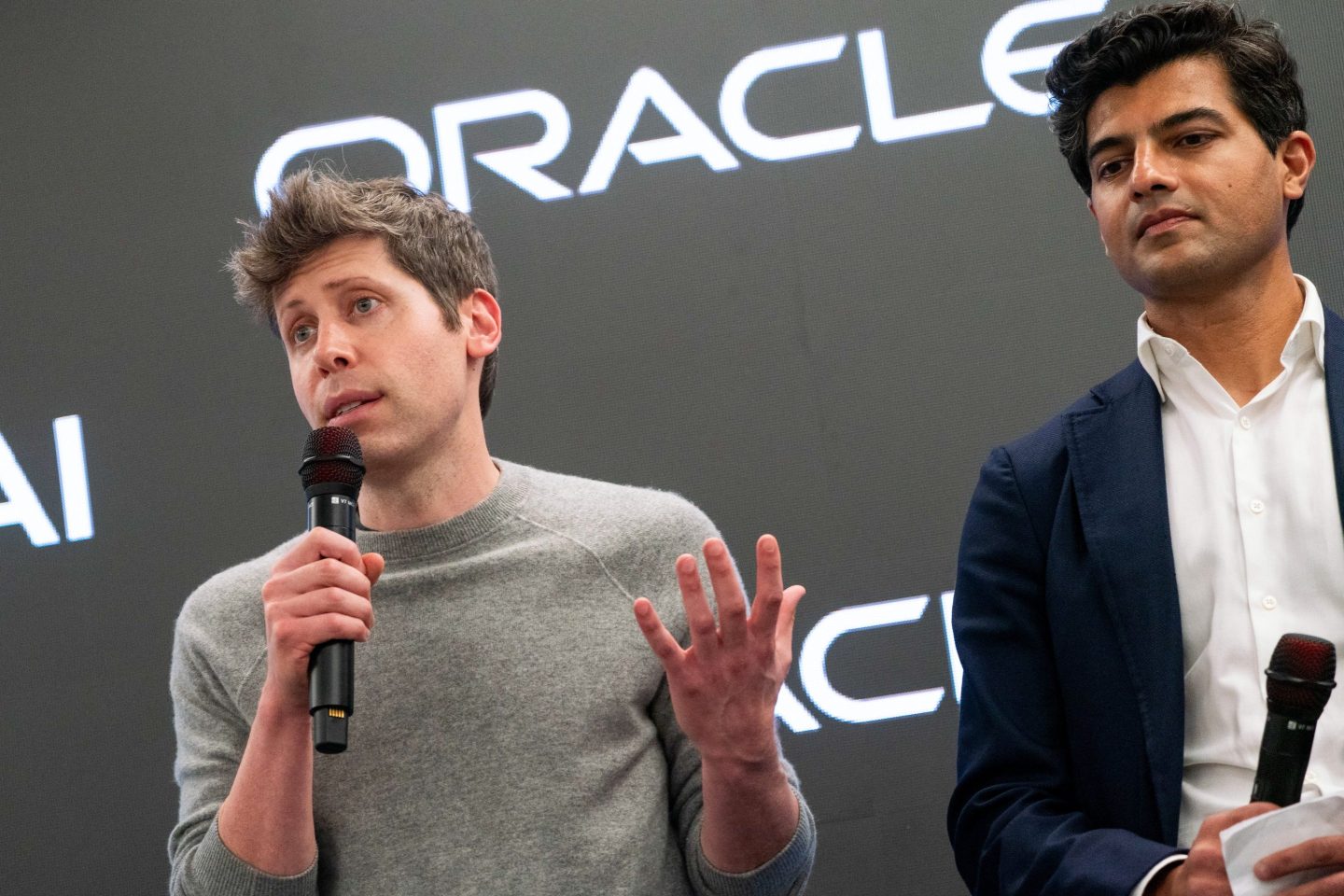
Oracle Corp. Shares plunged the most in almost 11 months after the company escalated its spending on AI data centers and other equipment, rising outlays that are taking longer to translate into cloud revenue than investors want.
Capital expenditures, a metric of data center spending, were about $12 billion in the quarter, an increase from $8.5 billion in the preceding period, the company said Wednesday in a statement. Analysts anticipated $8.25 billion in capital spending in the quarter, according to data compiled by Bloomberg.
Oracle now expects capital expenditures will reach about $50 billion in the fiscal year ending in May 2026—a $15 billion increase from its September forecast—executives said on a conference call after the results were released.
The shares fell 11% to $198.85 at the close Thursday in New York, the biggest single-day decline since Jan. 27. Oracle’s stock had already lost about a third of its value through Wednesday’s close since a record high on Sept. 10. Meanwhile, a measure of Oracle’s credit risk reached a fresh 16-year high.
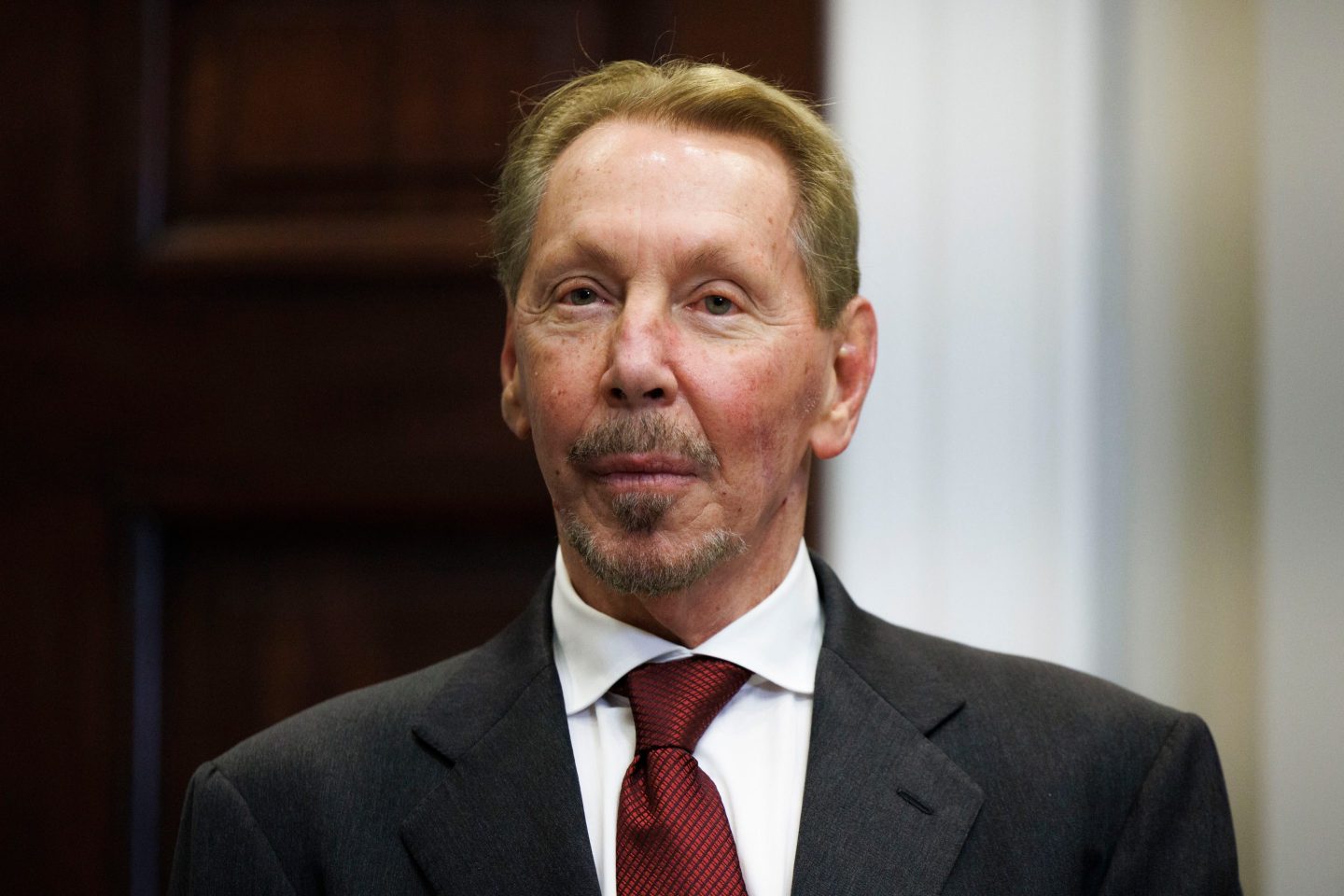
The latest earning report and share slide marks a reversal of fortunes for a company that just a few months ago was enjoying a blistering rally and clinching multibillion-dollar data center deals with the likes of OpenAI. The gains temporarily turned co-founder Larry Ellison into the world’s richest person, with the tech magnate passing Elon Musk for a few hours.
Known for its database software, Oracle has recently found success in the competitive cloud computing market. It’s engaging in a massive data center build-out to power AI work for OpenAI and also counts companies such as ByteDance Ltd.’s TikTok and Meta Platforms Inc. As major cloud customers.
Fiscal second-quarter cloud sales increased 34% to $7.98 billion, while revenue in the company’s closely watched infrastructure business gained 68% to $4.08 billion. Both numbers fell just short of analysts’ estimates.Play Video
Still, Wall Street has raised doubts about the costs and time required to develop AI infrastructure at such a massive scale. Oracle has taken out significant sums of debt and committed to leasing multiple data center sites.
The cost of protecting the company’s debt against default for five years rose as much as 0.17 percentage point to around 1.41 percentage point a year, the highest intraday level since April 2009, according to ICE Data Services. The gauge rises as investor confidence in the company’s credit quality falls. Oracle credit derivatives have become a credit market barometer for AI risk.
“Oracle faces its own mounting scrutiny over a debt-fueled data center build-out and concentration risk amid questions over the outcome of AI spending uncertainty,” said Jacob Bourne, an analyst at Emarketer. “This revenue miss will likely exacerbate concerns among already cautious investors about its OpenAI deal and its aggressive AI spending.”
Remaining performance obligation, a measure of bookings, jumped more than fivefold to $523 billion in the quarter, which ended Nov. 30. Analysts, on average, estimated $519 billion.
Investors want to see Oracle turn its higher spending on infrastructure into revenue as quickly as it has promised.
“The vast majority of our cap ex investments are for revenue generating equipment that is going into our data centers and not for land, buildings or power that collectively are covered via leases,” Principal Financial Officer Doug Kehring said on the call. “Oracle does not pay for these leases until the completed data centers and accompanying utilities are delivered to us.”
“As a foundational principle, we expect and are committed to maintaining our investment grade debt rating,” Kehring added.
Oracle’s cash burn increased in the quarter and its free cash flow reached a negative $10 billion. Overall, the company has about $106 billion in debt, according to data compiled by Bloomberg. “Investors continually seem to expect incremental cap ex to drive incremental revenue faster than the current reality,” wrote Mark Murphy, an analyst at JP Morgan.Play Video
“Oracle is very good at building and running high-performance and cost-efficient cloud data centers,” Clay Magouyrk, one of Oracle’s two chief executive officers, said in the statement. “Because our data centers are highly automated, we can build and run more of them.”
This is Oracle’s first earnings report since longtime Chief Executive Officer Safra Catz was succeeded by Magouyrk and Mike Sicilia, who are sharing the CEO post.
Part of the negative sentiment from investors in recent weeks is tied to increased skepticism about the business prospects of OpenAI, which is seeing more competition from companies like Alphabet Inc.’s Google, wrote Kirk Materne, an analyst at Evercore ISI, in a note ahead of earnings. Investors would like to see Oracle management explain how they could adjust spending plans if demand from OpenAI changes, he added.
In the quarter, total revenue expanded 14% to $16.1 billion. The company’s cloud software application business rose 11% to $3.9 billion. This is the first quarter that Oracle’s cloud infrastructure unit generated more sales than the applications business.
Earnings, excluding some items, were $2.26 a share. The profit was helped by the sale of Oracle’s holdings in chipmaker Ampere Computing, the company said. That generated a pretax gain of $2.7 billion in the period. Ampere, which was backed early in its life by Oracle, was bought by Japan’s SoftBank Group Corp. In a transaction that closed last month.
In the current period, which ends in February, total revenue will increase 19% to 22%, while cloud sales will increase 40% to 44%, Kehring said on the call. Both forecasts were in line with analysts’ estimates.
Annual revenue will be $67 billion, affirming an outlook the company gave in October.