A lack of insurance coverage in Southeast Asia threatens an increasingly important hub for supply chains, as the region is battered by tropical storms, major flooding, and other natural disasters.
Total losses from natural disasters across Asia-Pacific last year totaled $73 billion, yet just $9 billion was insured, according to Germany reinsurance company Munich Re. That makes Asia one of the world’s least insured regions against natural disasters. (By comparison, 70% of North America’s disaster losses of $133 billion were recouped.)
Last year’s second-costliest disaster was in Asia: The March 7.7-magnitude earthquake in central Myanmar. The quake racked up $12 billion in losses, of which just $1.5 billion was insured. It was also 2025’s deadliest disaster, with 4,500 killed.
Insurance coverage can be less than 5% in many of Asia’s lower-income countries, like Myanmar, Laos, Cambodia and the Philippines, according to Munich Re.
The lack of reliable climate data across Asia makes it difficult for insurers to accurately assess risk, explains Benedikt Signer, executive director of the SEADRIF Insurance Company, the first regional catastrophe risk facility in Asia, developed in partnership with the World Bank. In data-scarce environments, international insurers don’t know how to price risk, enter the insurance market, or “deal with the government.”
Governments also sometimes see insurance as a “waste of public funds, because from the public procurement perspective, when you buy something you need to have a good or service in return,” says Signer. “But with insurance, what you’re buying is intangible, and you don’t get anything back unless there’s a payout.”
The lack of insurance coverage in Southeast Asia threatens “an essential hub in global supply chains,” says Janice Chen, Munich Re’s head of property treaty underwriting in Southeast Asia. “Inadequate insurance coverage increases the risk of economic shocks cascading across borders.”
Agriculture and manufacturing dominate Southeast Asia’s economies, with the region producing 30% of the world’s rice, and over 80% of its palm oil.
Climate disasters have a significant impact on the region’s farmers, resulting in reduced yields, crop failure, and increasing numbers of pests due to extreme heat and floods. They also impact logistics and supply chains in the region, damaging critical infrastructure and causing delays in the shipment of goods.
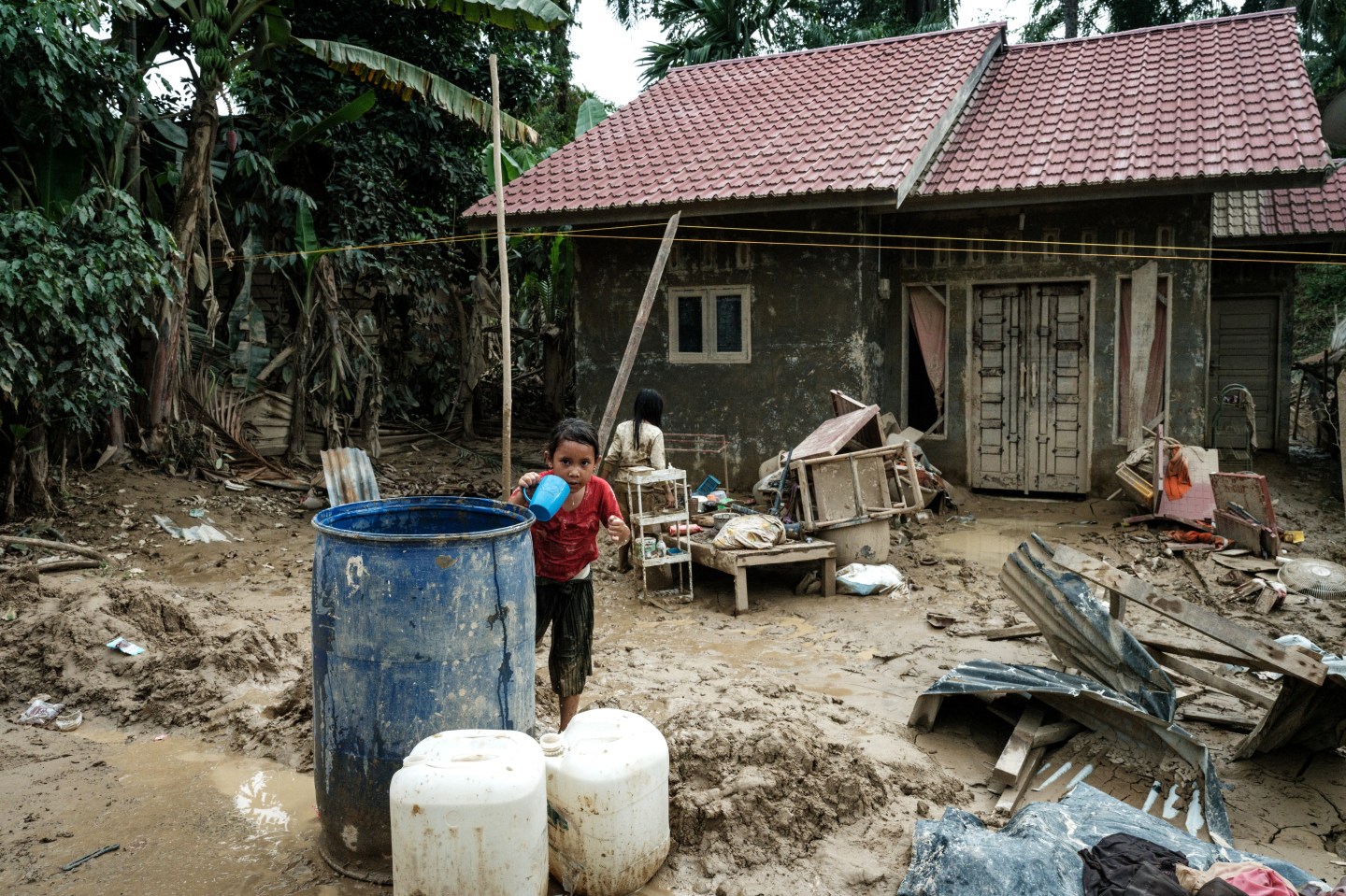
Without insurance, vulnerable populations can be hit even harder by the loss of property and infrastructure.
“If you don’t have the savings to rebuild and it’s not insured, then you can lose your home,” Signer explains, pointing out that disaster losses often also result in consumption losses. “When you don’t have money to respond, you take kids out of schools, or sell the limited assets that you have just to make it through the next three days, months or years.”
SEADRIF, which is based in Singapore, offers a parametric insurance policy that caters to flood risks in Southeast Asia. Their unique model offers rapid, pre-determined payouts when specific weather thresholds—including wind speed, rainfall levels or temperatures—are met or exceeded. SEADRIF was able to deliver $1.5 million in insurance payouts to Laos just one day after floods struck in August 2023.
Aside from insurance, to reduce climate vulnerability, governments can also build out physical defenses like seawalls and flood barriers, while deepening partnerships with multilateral organizations like the Asian Development Bank and World Bank.