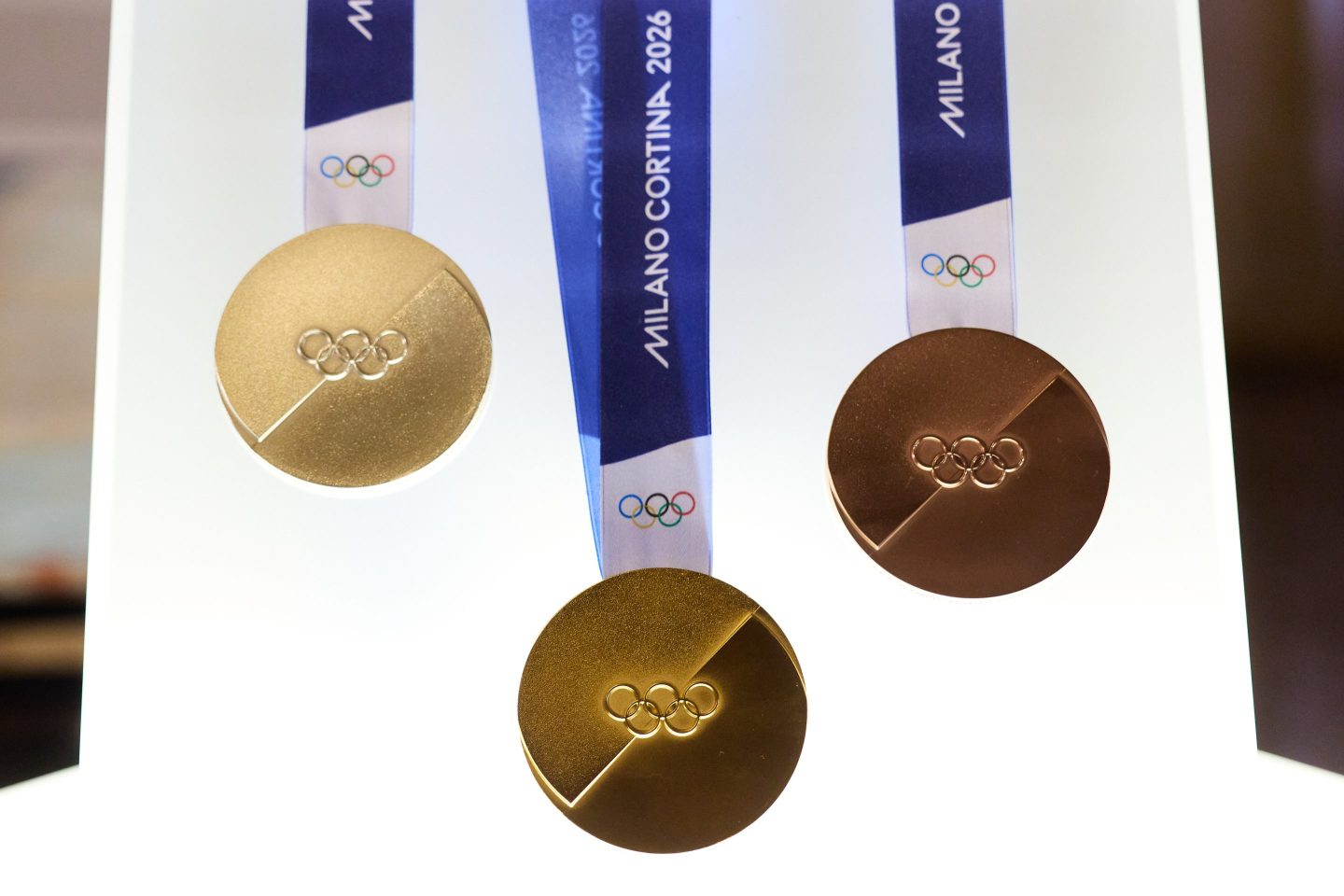
As athletes gear up for the 2026 Winter Olympics in Milan-Cortina, Italy, the financial stakes have climbed to unprecedented heights—and it’s not just because of the sponsorship deals or prize money. Soaring precious-metal prices have pushed the value of Olympic medals to historic highs.
Since early 2025, gold prices have nearly doubled, rising from $2,800 to over $5,000 per ounce—a nearly 80% jump over the past year as wary investors seek a safe haven. The recent rise is unprecedented after decades of modest growth: since 1971, the metal has increased in value by roughly 8% annually. Meanwhile, silver’s price has jumped sharply, trading at nearly $90 per ounce today, a nearly 182% increase from about $32 a year earlier—far outpacing its historical sluggish price increases. Bronze is a relatively abundant resource and carries far less value.
This year, Olympic silver medals will be made of 500 grams of 0.999 silver. Gold medals are made from that base and then plated with six grams of gold. So, as athletes step onto the podium beginning this weekend, they’ll be bringing home thousands of dollars in precious raw earth materials.
Each silver medal will have roughly $1,400 in metal value, and each gold medal about $2,400. By comparison, gold medals awarded at the 2024 Games in Paris were worth only about $900 at the time. A total of 245 gold, 245 silver, and 245 bronze medals will be awarded during this year’s Olympic Games. In the Paralympics, 137 medals will be awarded in each of the three rankings, according to the International Olympic Committee.
While the raw metal value of Olympic medals is small compared with the millions of dollars athletes invest in training, their collective and symbolic value often far exceeds their material worth. Buyers pay top dollar for the history, rarity, and prestige these awards represent, as well as the stories of the athletes who earned them.
“The medals are tangible rewards for intangible efforts,” Michele Sciscioli, the chief executive of the Italian state mint, told Reuters.
Just this year, three of former U.S. Olympic swimmer Ryan Lochte’s gold medals reportedly sold for a combined $385,520—averaging to just over $125,000 each.
“I never swam for the gold medals,” Lochte wrote on Instagram. “Those medals? They were just the cherry on top of an incredible journey.”
And while he’s had many challenges following his time as an athlete—including fallout from a fabricated robbery story, struggles with drug use, and a public divorce—the high auction price reflects the rising market for Olympic metals. He sold six bronze and silver medals for $166,000 in 2022.
Even if U.S. Athletes don’t win a medal—they’ll be coming home $200,000 richer
In addition to the medal, the United States Olympic & Paralympic Committee provides winning athletes with financial awards: $37,500 for gold, $22,500 for silver, and $15,000 for bronze.
And while it’s a major life achievement to win at the Olympics, the rewards alone aren’t lucrative enough to live on. Many athletes rely on sponsorships, which often disappear after they retire, leaving some former Olympians in financial uncertainty. Many of the over 200 U.S. Athletes competing this year juggle jobs—as baristas, brokers, and dentists—just to have the chance at Olympic glory.
One billionaire is stepping in to help. Ross Stevens, the founder and CEO of Stone Ridge Asset Management, is giving each U.S. Olympic and Paralympic athlete $200,000—regardless of whether they win a medal. Half of it will be deferred until age 45 or 20 years after their first Olympic appearance, whichever comes later. The remaining $100,000 is guaranteed to their families upon the athlete’s death. The award can be multiplied for each Olympics an athlete competes in.
In announcing the plan last year, Stevens said: “I do not believe that financial insecurity should stop our nation’s elite athletes from breaking through to new frontiers of excellence.”