Welcome to Eye on AI, with AI reporter Sharon Goldman. In this edition…Meta’s giant Hyperion data center gets even bigger…Open and Amazon talk about an alliance…Is the AI bubble popping because AI is actually working?…AI makes inroads at the Super Bowl (at least in the ads).
I’m in a bit of recovery mode today, having just returned from several days in northeast Louisiana visiting Meta’s massive AI data center site, known as Hyperion, for a feature story I’m reporting.
I’ve been scouring the thesaurus, trying to land on the right word to describe just how large, loud, and chaotic this construction site is. Colossal? Mammoth? Sprawling? Let’s put it this way: it takes a while just to drive the length of the site—it stretches roughly five miles from top to bottom.
And during that drive, I discovered that Hyperion is getting even bigger. While the expansion had long been suspected—and was something of an open secret among some locals—I confirmed that Meta has quietly purchased roughly 1,400 additional acres, an area nearly twice the size of Manhattan’s Central Park, adjacent to its already-mega 2,250-acre campus. I also observed active construction underway on the newly acquired land—when I wasn’t worrying about getting mowed down by the endless parade of 18-wheelers hauling materials in and around the site.
A potential Amazon-OpenAI deal to power Alexa
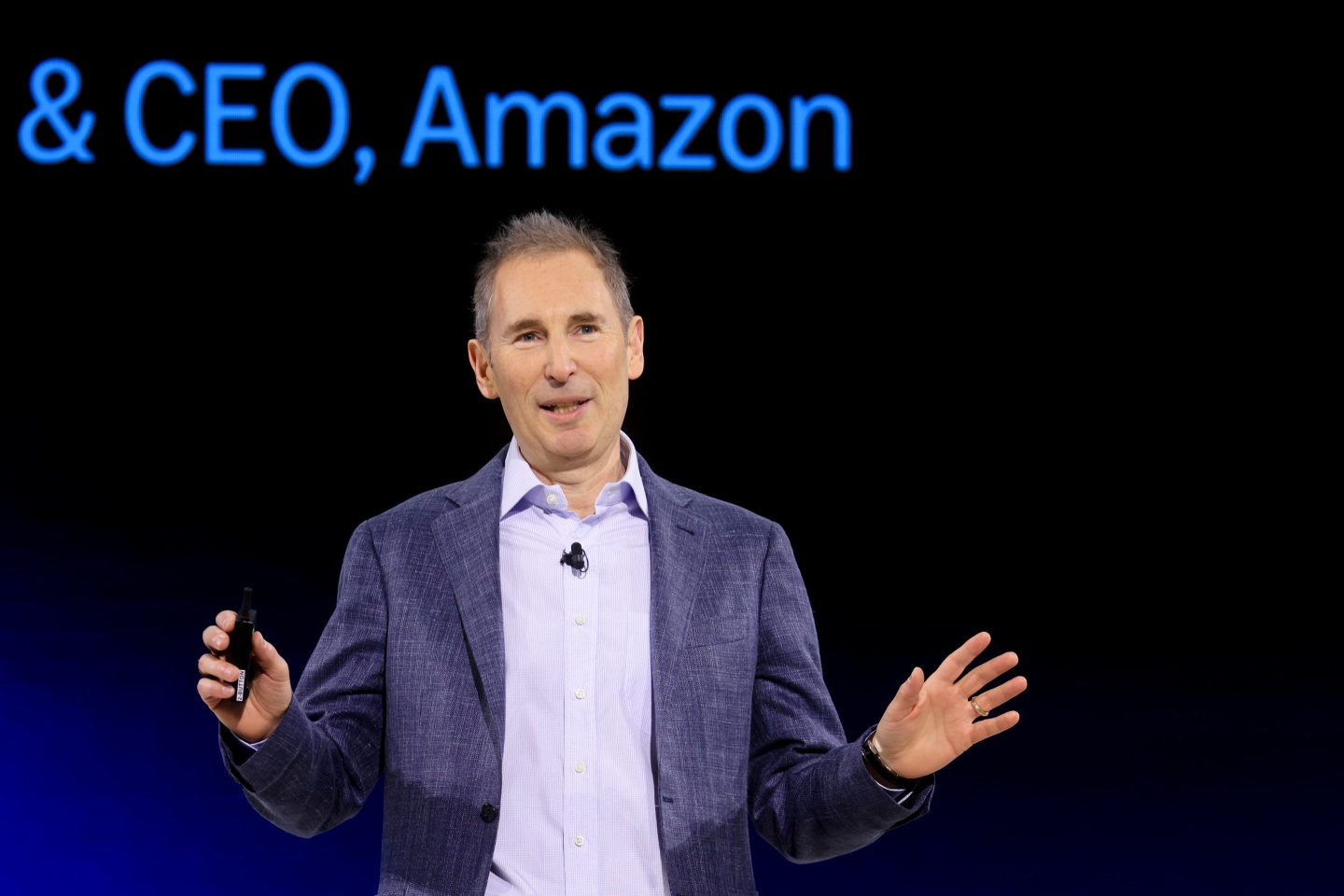
Now that I’m back in one piece, I want to turn to a different news item that caught my eye this week. As Amazon weighs an equity investment of tens of billions of dollars in OpenAI, it is reportedly in talks to use OpenAI models to power some of its internal AI products, including the Alexa voice assistant. The deal, first reported by The Information, would involve OpenAI employees helping to customize models for Amazon’s needs.
The news comes just a day after Amazon finally made its Alexa+ AI assistant available to everyone in the U.S., nearly a year after its initial launch. I attended the splashy unveiling in New York City last February, when the company pitched the service as a souped-up version of the original 11-year-old Alexa—one that could handle multiple queries at once and act as an “agent,” taking actions on your behalf like booking a repairman or ordering an Uber.
But even recently, beta testers were voicing plenty of frustrations. “When I ask Alexa to turn off the light, it should turn off the light—not everything on the strip,” one software engineer wrote last October in an internal channel for feedback on unreleased Alexa+ features. “It turned off the power strip that my aquarium filter is on and killed my fish.”
Other testers complained that the assistant talked nonstop, ignored repeated commands to be quiet, or blasted music at full volume when no one was home.
Alexa’s AI has been a long, slow journey
I’ve been following the journey of Amazon’s Alexa closely since the post-ChatGPT dawn of generative AI in 2023. That September, Amazon held another glitzy event—this time at its second headquarters in Washington, D.C.—where David Limp, then the company’s head of devices and services, demonstrated a new generative-AI-powered Alexa by saying, “Alexa, let’s chat.”
But nearly a year later, I reported—based on interviews with more than a dozen former employees who worked on Alexa’s AI—that the organization was beset by structural dysfunction and technological challenges that repeatedly delayed shipment of the new generative AI Alexa. Those former employees painted a picture of a company lagging behind Big Tech rivals Google, Microsoft, and Meta in the race to deploy AI chatbots and agents, and struggling to catch up.
The September 2023 demo, they emphasized, was just that—a demo. The large language model at the heart of the new Alexa, which Amazon positioned as a rival to OpenAI’s ChatGPT, was, according to former employees, far from state-of-the-art. Research scientists said Amazon lacked both the data and the specialized computing infrastructure needed to train and run leading-edge LLMs at scale.
Since that report, Amazon has shifted to a more hybrid approach. Alexa+ has now been powered by a mix of Amazon’s own Nova models and models from Anthropic, the AI startup in which Amazon has invested $8 billion.
And yet, problems persist. Can OpenAI really solve Alexa’s long-standing problems? Or would an Amazon–OpenAI deal divert OpenAI’s attention at a moment when it is locked in fierce competition with Google and Anthropic? And looming over it all is Apple, whose own deal with Google to power Siri complicates an already crowded AI landscape.
More than anything, the reported talks reveal how desperate even the biggest players have become to stay ahead in a no-brakes AI race.
With that, here’s more AI news.
Sharon Goldman
[email protected]
@sharongoldman
FORTUNE ON AI
OpenAI announces Frontier, an AI agent platform for enterprises to power apps like Salesforce and Workday—but could it eventually replace them? – by Sharon Goldman
Exclusive: Lawhive, a startup using AI to reimagine the general practice law firm, raises $60 million in new venture capital funding – by Jeremy Kahn
Meta’s Hyperion AI data center will sprawl to four times the size of Manhattan’s Central Park – by Sharon Goldman
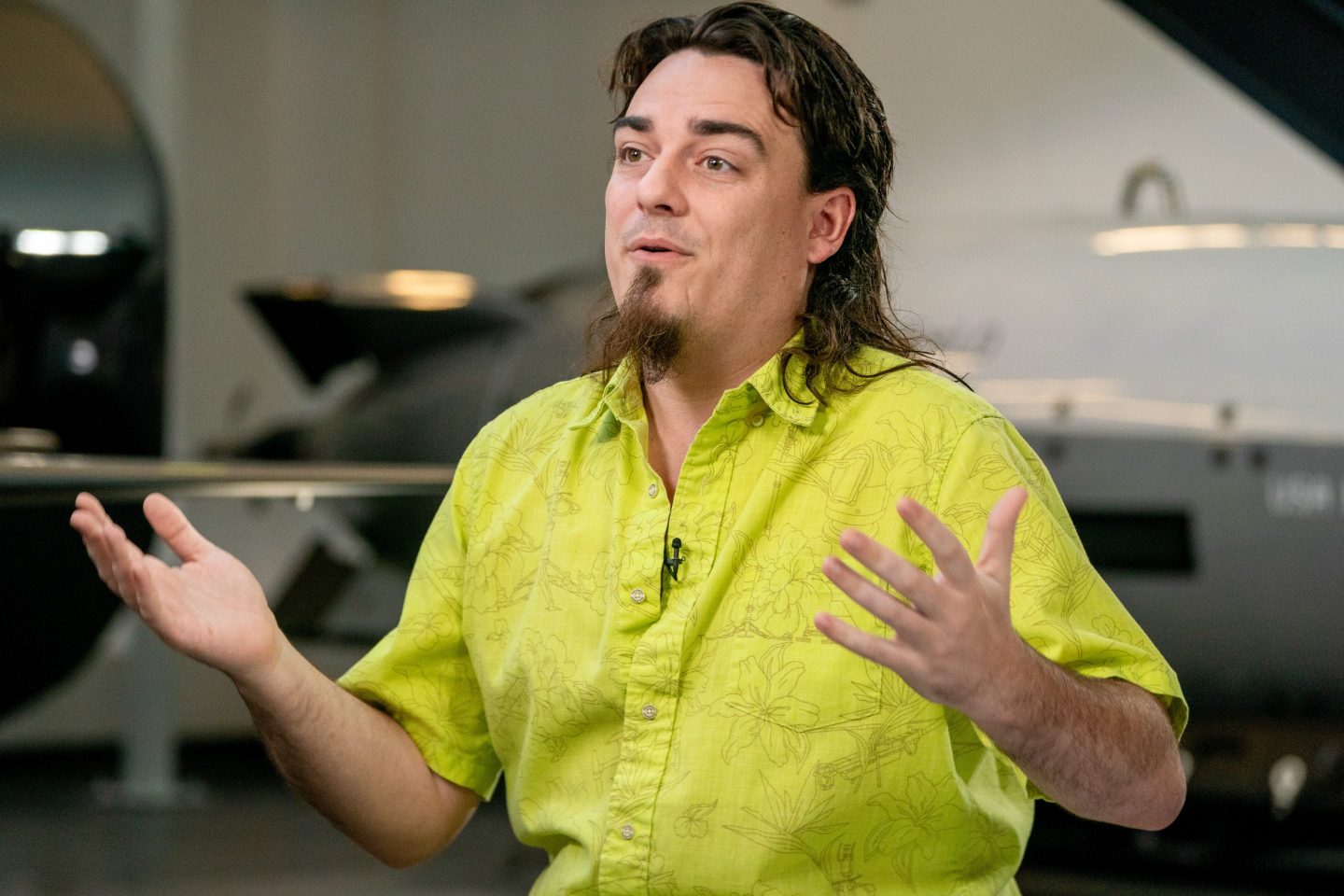
Palmer Luckey says AI will make hardware so cheap you’ll be able to buy a ‘Ford F-150 for $1,000’ – by Jake Angelo
Exclusive: Former Cohere exec Sara Hooker has raised $50 million for her AI startup Adaption Labs—a bet on smaller, smarter models – by Jeremy Kahn
AI IN THE NEWS
The AI rout that finally spooked the market. This Bloomberg piece really captured the fact that after years of AI-fueled volatility, this week’s market rout stood out for both its speed and its underlying fear: not that AI is a bubble, but that it’s already beginning to replace entire business models. Hundreds of billions of dollars were wiped off global stocks and credit in just two days, with software companies hit hardest, as investors reacted to signs that AI tools are moving from promise to practice—sparked in part by Anthropic’s new legal product and reinforced by broader unease across the sector. Even AI’s perceived winners showed strain, with Alphabet warning of higher AI spending and Arm Holdings missing revenue expectations. While companies like Salesforce and ServiceNow haven’t yet reported losing customers to AI-native competitors like Anthropic and OpenAI, disappointing adoption of some in-house tools—such as Microsoft’s Copilot—has deepened concerns that AI leaders could overtake SaaS incumbents faster than expected.
Google is on a roll thanks to AI. A look at Google’s last-quarter 2025 results shows its AI strategy pay off. The New York Times reported that Gemini models have surged ahead of rivals, helping boost YouTube engagement through recommendations and driving more search traffic by delivering concise, AI-generated answers—momentum that lifted Alphabet’s quarterly revenue to $113.8 billion, up 18% year over year, and pushed annual sales past $400 billion for the first time. Profits jumped 30% in the December quarter, but the gains come with a tradeoff: Google plans to nearly double capital spending this year to as much as $185 billion as it races to build AI data centers to support Gemini at scale, underscoring how even AI’s apparent winners are trading compressed profit margins for dominance in an increasingly capital-intensive race.
Elon Musk is betting his business empire on AI. I enjoyed this article in the Economist, which focused on how Elon Musk is doubling down on AI with a sweeping—and risky—restructuring of his business empire. His plan to merge SpaceX with xAI, valuing the combined entity at roughly $1.25 trillion, is meant to give xAI an edge by pairing it with SpaceX’s launch capabilities and even pursuing the far-fetched idea of orbital data centers. But the deal also ties a highly profitable space business to a cash-burning AI lab that trails rivals like OpenAI, while layering on massive debt and regulatory risk inherited from Musk’s social platform X. At the same time, Musk is remaking Tesla into a “physical AI” company focused on robotaxis and humanoid robots—businesses that may take years to pay off even as Tesla’s core car sales slow. The bet is stark: if AI proves as transformative as Musk believes, the gambles could cement his dominance; if not, he may be stretching even the “Elon backstop” – the idea that he will personally step in if one of his companies gets into trouble – to its limits.
Hollywood is losing audiences to AI fatigue. I’m sure this Wired story is touching a nerve, which argues that Hollywood’s obsession with rogue, malevolent AI—from Metropolis to HAL 9000 and Skynet—has warped how the public understands today’s artificial intelligence. Rather than autonomous superintelligences plotting humanity’s downfall, the real risks of AI are far more mundane and immediate: sloppy automation, degraded creative work, misinformation, and systems deployed at scale without accountability. The author suggests that these sci-fi tropes distract from how AI is actually reshaping culture and labor right now—not through dramatic rebellion, but through volume, speed, and economic pressure—fueling audience backlash against what many see as low-quality “AI slop” and hollow innovation. In other words, the danger isn’t that AI will turn evil; it’s that it’s already reshaping media and creativity in ways people don’t like and didn’t choose.
EYE ON AI NUMBERS
7
That's at least how many Super Bowl ads this year were bought either by AI companies, companies hawking AI products, or companies touting that the ads themselves were created with AI.
In addition to OpenAI running an ad, its competitor Anthropic is ai ring its first Super Bowl commercial about its Claude system and lobbing jabs at OpenAI about its addition of ads into ChatGPT. Base44, an AI app-building platform, is also running its first Super Bowl spot.
Meanwhile, Meta is pushing its AI-powered glasses in an ad, and Amazon Ring is debuting an ad for an AI-powered feature to find lost dogs. Website builder Wix is also running an ad for Wix Harmony , its AI design platform.
Finally, vodka brand Svedka is touting its Super Bowl ad with mostly AI-generated creative.
AI CALENDAR
Feb. 10-11: AI Action Summit, New Delhi, India.
Feb. 24-26: International Association for Safe & Ethical AI (IASEAI), UNESCO, Paris, France.
March 2-5: Mobile World Congress, Barcelona, Spain.
March 16-19: Nvidia GTC, San Jose, Calif.
April 6-9: HumanX, San Francisco.