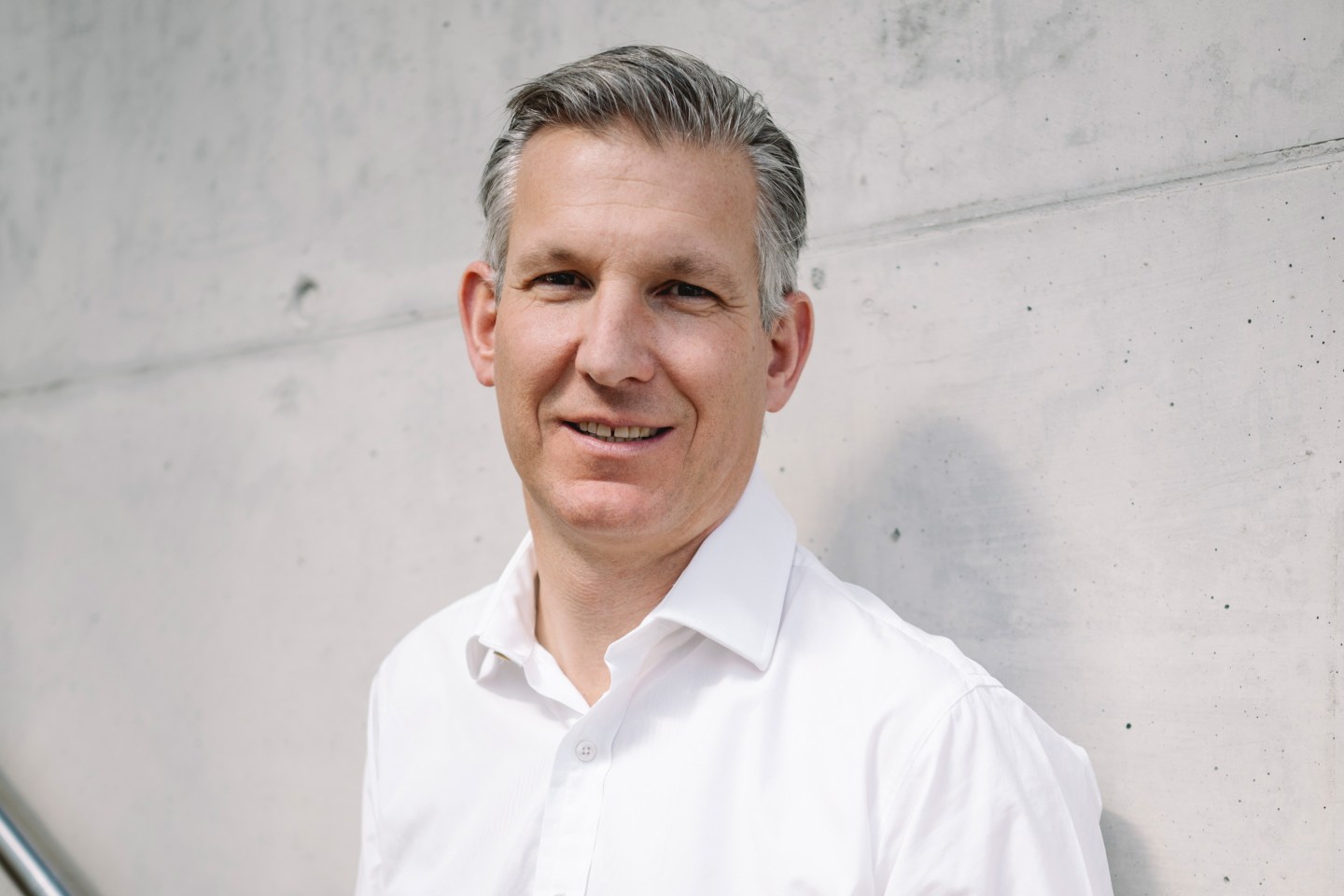
Millions of professionals power through their workday with copious cups of coffee—but most aren’t dropping by the office Nespresso machine more often than Nestlé CEO Philipp Navratil.
The leader of the $259 billion Swiss food giant revealed he drinks seven or eight cups of joe a day.
“Just Black. Sometimes with a KitKat,” Navratil recently told The New York Times. It’s become so routine in his workday that he said an espresso is “a snack for me,” adding he’s set no cutoff hour for his caffeine intake.
And while the Gen Xer is leaning on coffee to fuel his massive company turnaround effort—drinking around three times more than the average American pouring two to three cups a day—Gen Z is really who keeps him on his toes, advising him to constantly grow in his role. Otherwise, he might as well head out the door.
Nestlé’s youngest staffers taught him to “be learning constantly,” Navratil admitted to the NYT. “When you stop learning, then it is the moment to move on to another job.”
Navratil joins a vocal cohort of business leaders, including executives from Colgate-Palmolive and Stripe, who say Gen Z employees are pushing them to be better. Executives are resisting the notion young digital natives are unambitious and too demanding in the workplace. Instead, Gen Zers are stepping into their roles with fresh ideas and an open mindset, while redefining the future of work.
Nestlé didn’t immediately respond to Coins2Day’s request for comment.
Navratil’s rise to the top of the food and beverage world
While the mere thought of downing eight coffees daily might conjure heart palpitations, caffeine has been at the center of Navratil’s career climb.
Navratil stepped into the top role last September after spending his entire two-decade career at the food giant. After earning his MBA in Switzerland in 2001, Navratil joined Nestlé as an auditor. Over the next 23 years, he climbed to several leadership positions in Panama, Honduras, and Mexico before assuming the Nespresso CEO role 2024. Just one year later, he became leader of the entire Nestlé gambit, which includes iconic brands like KitKat, Nescafé, and Gerber.
After years of lackluster sales, the company’s stock price is at nearly half of its 2022 peak. Just last February, the packaged foods company reported its weakest annual organic sales growth in more than 25 years, driven by consumers cutting back. And for the first nine months of 2025, Nestlé’s sales fell 1.9% to around $82.8 billion, compared to the same period in 2024.
This sluggish success drove some tough decisionmaking from Navratil. Just a month under new leadership, Nestlé announced it would cut 12,000 white-collar jobs and 4,000 manufacturing and supply-chain roles, reducing its global workforce by 6% over the next two years. The company said in a statement some office gigs will be automated as Nestlé seeks “operational efficiency.”
“This way of working will obviously require less people, but it will also speed up the company,” Navratil told The New York Times. “It will be a growth story about how we use AI to grow faster, to make decisions better, to plan throughout the supply chain to have less stock and less waste.”
Gen Z employees are pushing their bosses to ‘do things differently’
Navratil isn’t the only business leader recognizing the value of young employees.
The chief human resources officer at $76 billion giant Colgate-Palmolive, Sally Massey, dispelled the myths that Gen Z only brings high standards and chaos to the workplace.
The CHRO credited her young staffers as being ambitious and incredibly tech savvy—critical skills the heritage company is vying for in talent. And to soak in all their new skills, the business’ senior leaders are making a concerted effort to hear out entry-level staffers, exchanging ideas between ranks and generations to create the best action plan possible.
“[Gen Z] have grown up with technology. They’ve grown up in a very different way than some of the other generations in the organization,” Massey recently told Coins2Day. “They bring with them new ideas, new perspectives, curiosity…They’re pushing us to get better and to do things differently—I think it’s great.”
Stripe’s head of data and AI, Emily Glassberg Sands, also revealed she’s invested in hiring recent graduates to work at the $106.7 billion financial services company. The executive singled out Gen Z for being tech savvy and pushing the bar on what can be achieved at the business.
“I’m actually hiring more new grads—now, they’re largely new grad PhDs—but more new grads than ever before,” Glassberg Sands said on the Forward Futurepodcast last year. “Because they have the cutting-edge skills, and they come in with fresh ideas, and they know how to think, and they know how to use the latest tools.”