Known for its personalized sleep solutions, Helix offers a range of hybrid mattresses designed to match different sleep styles, body types, and comfort preferences.
For this 2026 review, our testers rigorously tried and evaluated multiple Helix models to see how they perform in real-world conditions. We’ll break down our findings on comfort, support, cooling, durability, and value so you can decide which Helix mattress is the best fit for your sleep.
Best Helix Mattresses of 2026
- Best Helix Mattress Overall: Helix Midnight Luxe
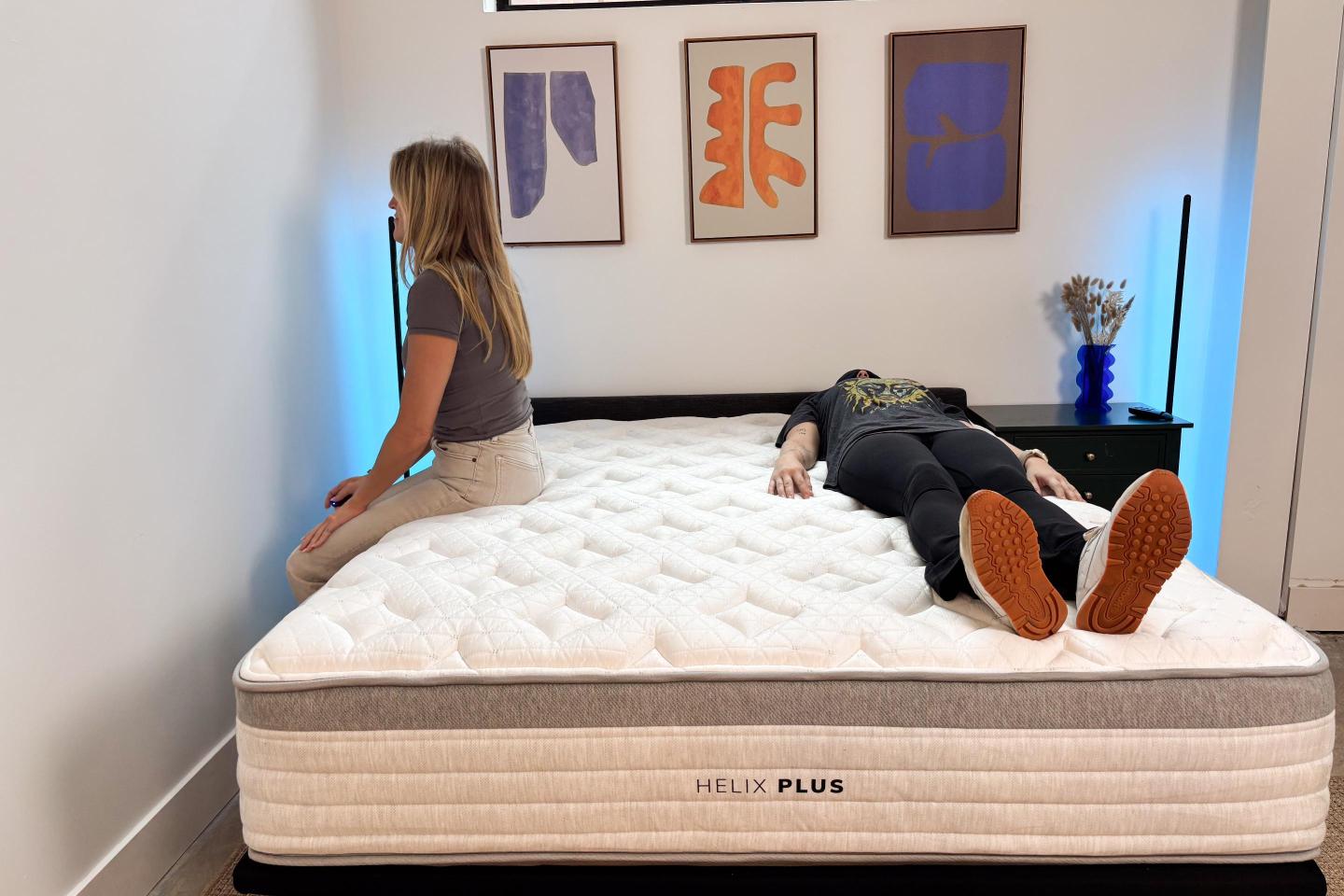
- Best Helix Mattress for Couples: Helix Plus
- Best Helix Mattress for Kids: Helix Kids
Best Helix Mattress Comparison Table
Best Helix Mattress Overall: Helix Midnight Luxe
Helix Midnight Luxe
| Coins2Day score | 4.5/5 |
at Helix
- Our thoughts: A plush-but-supportive hybrid that suits a wide range of sleeper preferences
- What it does: Cushions shoulders and hips while keeping the spine nicely aligned
- Who it’s for: Side and combination sleepers who like a medium-firm, luxurious feel
- What makes it different: Zoned coils, plush pillow top, and balanced “hug” set it apart from other Helix models
Pros
- Strong pressure relief for side sleeping
- Balanced, medium-firm support that works for multiple positions
- Plush, more “luxury” feel than the standard Midnight
Cons
- May feel too soft for some strict stomach sleepers
- Costs more than Helix’s core models
- Not ideal if you prefer a very bouncy, on-top-of-bed feel
Our Thoughts on the Helix Midnight Luxe
The Helix Midnight Luxe is our pick for the best Helix mattress overall because it has both cushioning and support that works for many sleepers, especially side and combo sleepers. Its medium-firm feel, plush pillow top, and zoned coils create a comfortable cradle for the shoulders and hips without letting your midsection sink too far. Compared with other Helix models, the Midnight Luxe adds more sophisticated pressure relief and a more upscale, luxury mattress feel, which helps justify its higher price and makes it a safer pick if you are unsure which Helix is best.
Addie, a 25-year-old side sleeper in the lightweight category (130 pounds or less) rated the Midnight Luxe highly for pressure relief in every position. On her side, Addie rated pressure relief a 5 out of 5, saying she felt even, aligned and balanced, with only slight shoulder pressure despite existing shoulder injuries and that she “could snooze right here.”
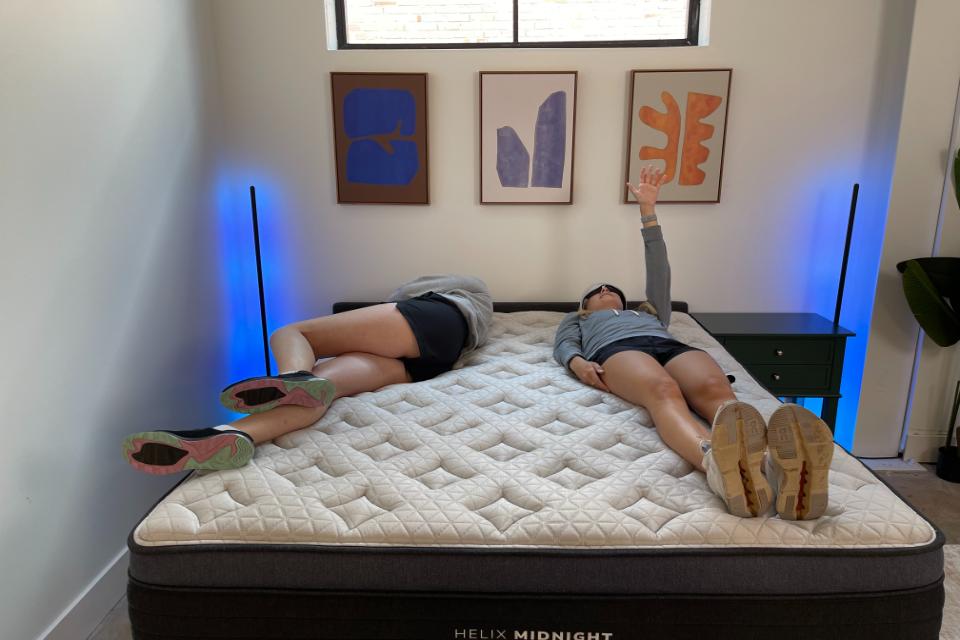
Lying on her back, she again gave pressure relief a 5 out of 5 and said her lower body did not sink more than average. “It felt like floating in a cloud with a soft, gentle hug all around,” she said, adding that it also felt like being held up by “cute little Smurf hands.” This tester gave stomach-sleeping pressure relief a 5 out of 5, too. This bed has an overall firmness rating of a 6 out of 10, which Addie noticed, noting her body felt very even throughout, with no extra pressure and a sensation like “relaxing at a spa or laying on a nice day bed at the beach.”
In the couple’s motion test, Addie rated it a 4 out of 5, saying she felt soft movement when her partner got in bed or fully rotated, but that when they were still, she “felt like I was in the bed alone” and didn’t think she’d notice most movement while asleep.
Addie measured the bounce height at about 10 inches and rated it a 3 out of 5, which suggests a moderate, controlled bounce rather than a springy, ultra-bouncy feel. This level of responsiveness should make it easy enough to change positions without feeling jostled or overly bouncy under partner movement.
Best Helix Mattress for Couples: Helix Plus
Helix Plus
| Coins2Day score | 4/5 |
at Helix
- Our thoughts: A firm, durable option with strong edges and bounce that suits couples
- What it does: Reinforces support across the surface of the bed
- Who it’s for: Couples who want a firmer, ultra-supportive feel
- What makes it different: Plus-size–focused coil system and denser foams that boost support, edge strength, and durability
Pros
- Excellent edge support for using the full surface
- Firm, very supportive feel for heavier sleepers and back/stomach sleepers
- Responsive and bouncy
Cons
- Noticeable motion transfer when one partner changes positions
- Too firm for many lightweight side sleepers
- Runs warmer for very hot sleepers despite cooling cover
Our Thoughts on the Helix Plus
The Helix Plus is our pick for the best Helix mattress for couples because the reinforced coil system and dense foam layers keep the surface lifted and even, so the bed doesn’t sag or cave in the middle when two people lie down. Strong edge support also lets couples comfortably use the entire width of the mattress, while the responsive, medium-firm to firm feel makes it easier to move around and change positions without feeling stuck.
Kate, a 25-year-old lightweight side sleeper (under 130 pounds), tested the Helix Plus and still found it comfortable despite it being clearly on the firmer side compared to the Midnight. She rated side-sleeping pressure relief a 4 out of 5. “This mattress feels pretty good on my side” she said, and also noted that the coils are “super supportive” though she would like to sink in just a bit more. Our tester added that a sleeper of a higher weight would likely feel great on their side. On her back, she gave another 4 out of 5, noting that the mattress offered “nice contouring around my lower back and shoulders” instead of leaving her feeling like she was simply lying on top of a firm surface.
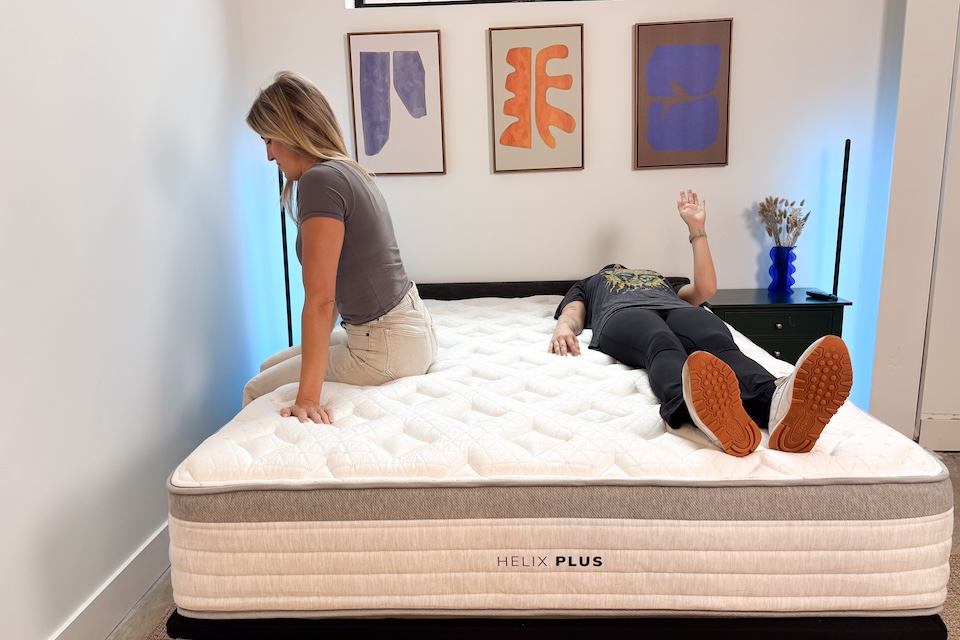
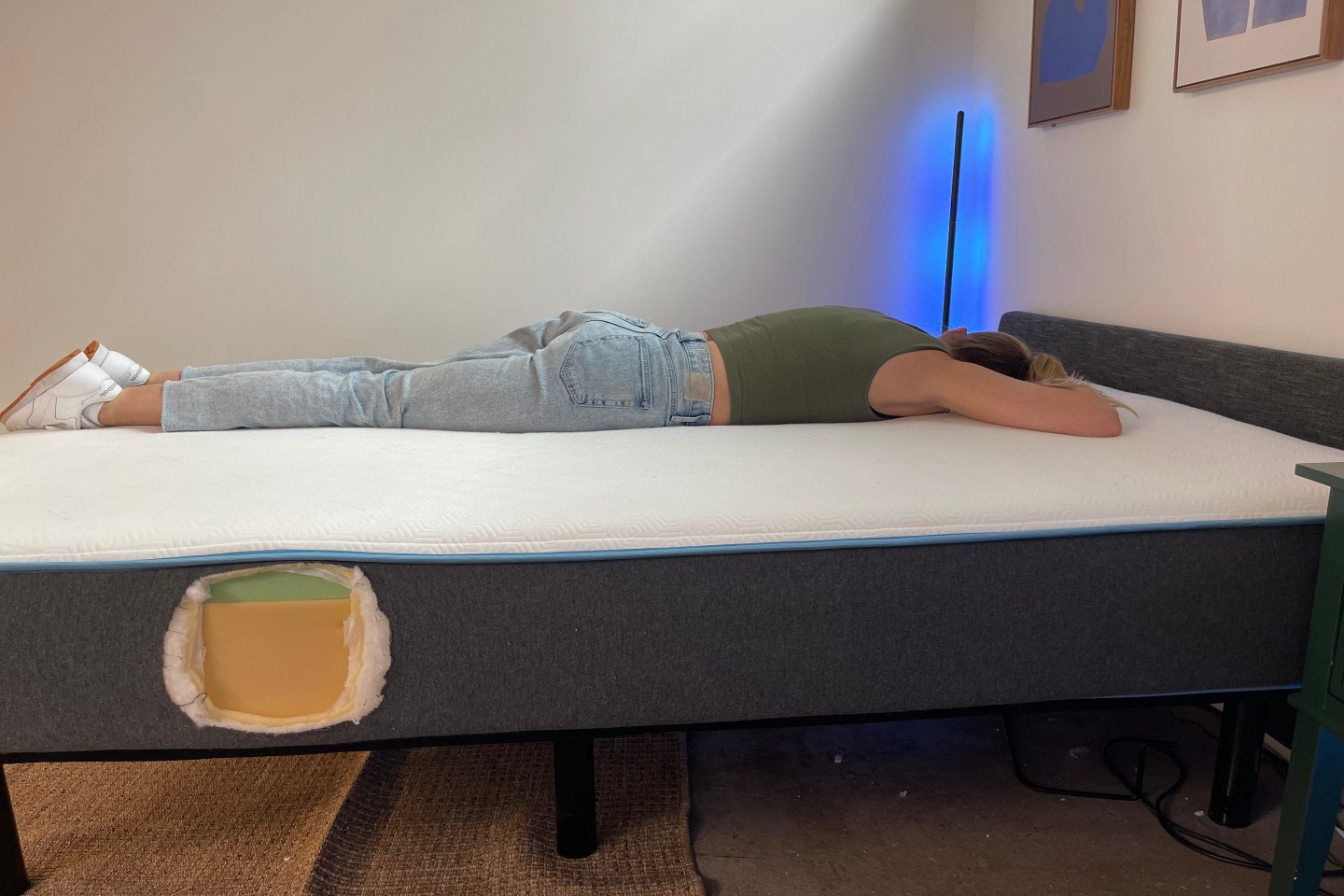
On her stomach, Kate rated pressure relief a 5 out of 5, saying, “I feel great on my stomach,” pointing out that the plush memory foam cushioned her chest and hips so there was “no pressure building in either area.”
For motion isolation, Kate rated the Plus a 3 out of 5, explaining that the mattress is “super responsive, which could be too bouncy for some people.” However, for folks who change positions often, this is a big bonus.
“This bed has amazing edge support! I felt completely lifted off the floor, and that I was not going to slide off when I was sitting,” Kate said, rating this category a 5 out of 5. She said she could “sleep on the edge all night with no fear of falling off,” which is exactly what many couples want when they’re sharing space with a partner who tends to spread out.
Best Helix Mattress for Kids: Helix Kids
Helix Kids
| Coins2Day score | 4.5/5 |
at Helix
- Our thoughts: A supportive, durable kids’ mattress with firm, stable feel and excellent edge support
- What it does: Offers a firmer side for younger kids and a slightly softer side for older kids so you can flip it as they grow
- Who it’s for: Kids roughly ages 3–12 who need a supportive, cool, and easy-to-clean mattress
- What makes it different: Age-specific design, stain- and water-resistant cover, and kid-focused hybrid construction
Pros
- Flippable, age-targeted firmness that can adapt as kids grow
- Strong edge support that helps kids feel secure
- Stain-/water-resistant, breathable cover designed for kid messes and cooler sleep
Cons
- Only comes in kid sizes (twin and full), not ideal for tall teens or adults
- Firmer feel may not suit very pressure-sensitive side sleepers as they get heavier
- Designed specifically for children, so you’ll eventually need to upgrade for older teens
Our Thoughts on the Helix Kids
The Helix Kids is our pick for the best Helix mattress for kids because it is purpose-built for growing bodies. The flippable hybrid design gives you a firmer side for younger children and a slightly softer, more cushioned side for older kids, helping maintain healthy support and comfort over several growth stages without buying multiple mattresses. Add in the stain- and water-resistant, hypoallergenic cover and pocketed coils for airflow and durability, and it checks the major boxes parents usually care about: comfort, support, longevity, and easier cleanup.
Kate tested the Helix Kids and was surprised by how stable it felt during the motion isolation trial. In the motion test, she rated it a 5 out of 5, noting “there was hardly any movement” and that even when she got very close to the water container on the twin mattress, the disturbance was minimal. “If you were in bed with your kid maybe reading a story or helping them fall asleep,” she didn’t think there would be noticeable movement when you got out of bed, which bodes well for parents who share the mattress briefly at bedtime.
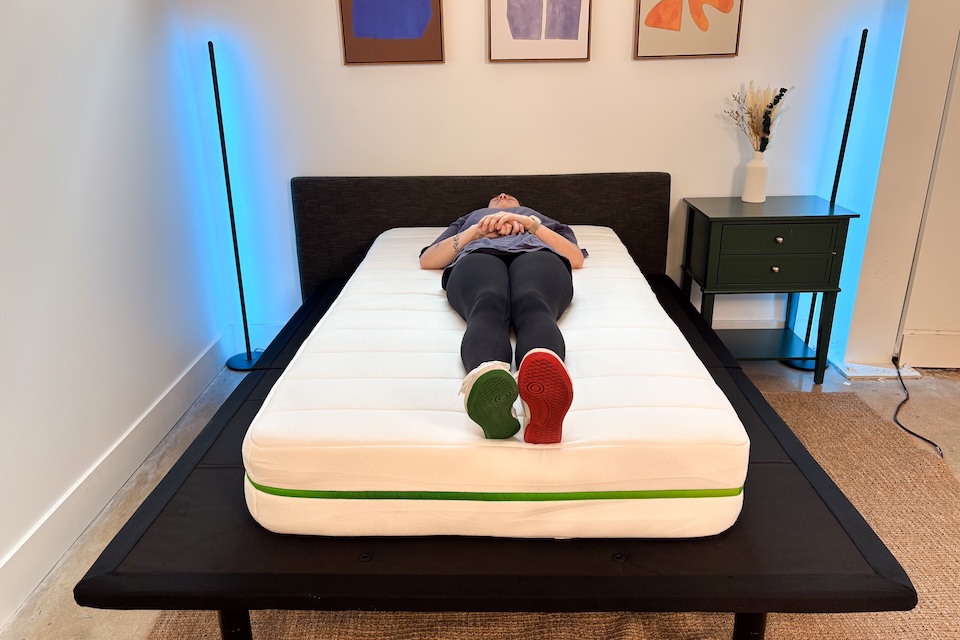
On the bounce test, Kate recorded a bounce height of about 13 inches and rated the bounce a 4 out of 5, indicating a lively but controlled feel. That means kids can move around and change positions easily without the mattress feeling like a trampoline, which is helpful for both sleep quality and safety.
Edge support was another standout for the Helix Kids in Kate’s testing. With a starting mattress depth of 9.5 inches and 8.5 inches of edge sinkage recorded for an average-weight tester, she still rated both the light-sleeper edge sinkage and the overall subjective edge support a 5 out of 5, writing, “This bed has great edge support! I felt very comfortable getting on and off the bed.” This is also a bonus for kids just starting to sleep outside of the crib or without guardrails.
Our tester also said that even though she weighs more than the average child, she still felt like she would have no fear of falling out of bed and noted that “this would be a great mattress on a bunk bed since there is such strong edge support,” which reinforces its appeal for real-world kids’ rooms.
How We Tested and Selected the Best Helix Mattresses
Choosing the best Helix mattress comes down to how well each model performs on the features that matter most to sleepers, like pressure relief, cooling, motion isolation, bounce, edge support, durability, and overall value.
Pressure Relief
For pressure relief, we look at how well a mattress cushions high-pressure areas like shoulders, hips, and lower back in different sleep positions. Testers lie on their side, back, and stomach, then note any pressure build-up or numbness and score comfort on a simple 1–5 scale. This helps us identify which Helix models truly ease tension for side sleepers versus those that feel better for back or stomach sleepers.
We also pay attention to how evenly the mattress distributes weight—whether you feel “jammed” into the surface or gently cradled without sinking too far. Mattresses that combine strong spinal alignment with noticeable cushioning get flagged as top performers for people who struggle with joint or back discomfort.
Cooling
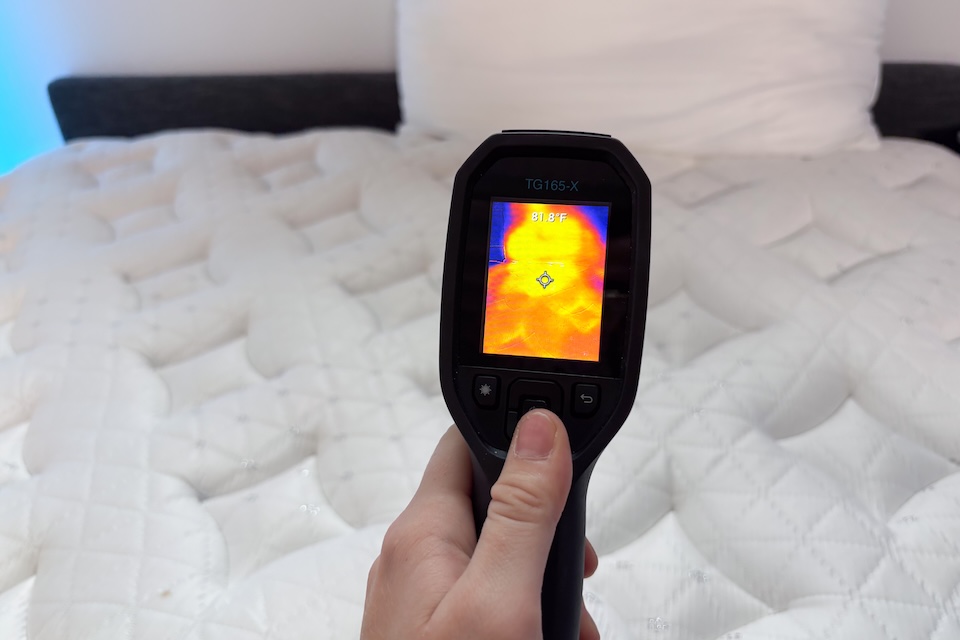
For cooling, we consider both objective and subjective feedback. Testers use a temperature-reading tool to capture how much the surface warms up after several minutes of lying on the bed and how quickly it returns toward baseline once they get off. A smaller temperature increase and faster cooldown generally indicate better thermal performance.
We combine this with body-level impressions—whether the mattress feels cool, neutral, or warm to the touch when used as in a real-world scenario. Hybrid builds with breathable covers and coil cores tend to do well here, and we highlight Helix models that stay comfortably neutral rather than trapping heat around the body.
Motion Isolation
Motion isolation is especially important for couples who don’t want to feel every toss and turn. To assess this, testers perform a movement test (getting in and out of bed and changing positions) while watching how much a nearby object (like a water glass) moves. A second tester then lies on the other side of the bed to gauge what they actually feel when their partner shifts around.
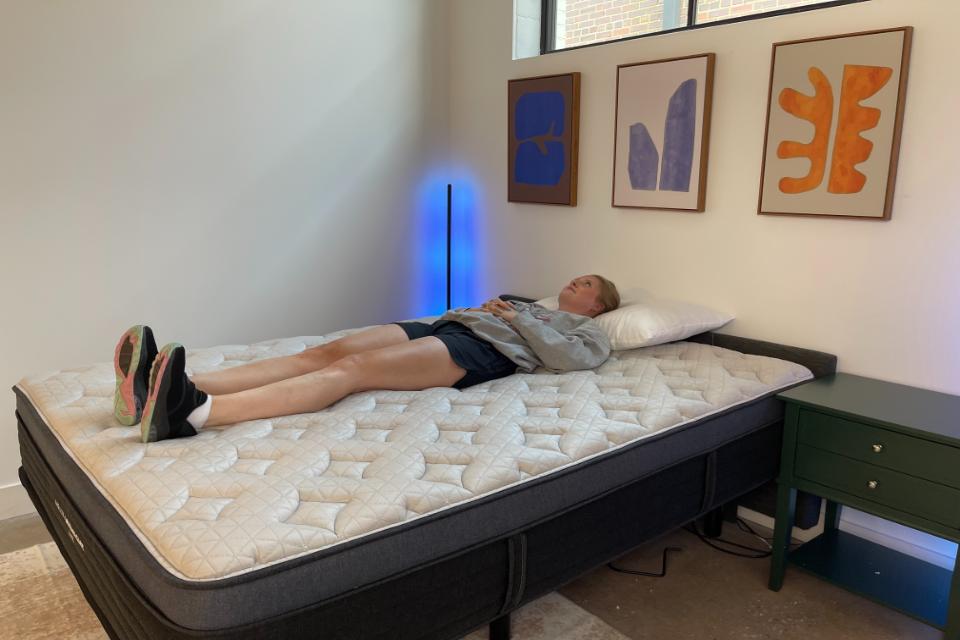
We score each mattress on how much motion travels across the surface, with high marks going to beds that keep movement localized. Models that combine responsive support with good isolation are most likely to earn “best for couples” callouts.
Bounce
Bounce measures how responsive and springy a mattress feels. We look at both the height of a dropped object on the surface and testers’ real-world experience when they change positions, sit up, or get out of bed. A moderate level of bounce can make it easier to move without feeling “stuck,” while extremely low bounce tends to feel more slow-moving and enveloping.
We use these tests to decide which Helix models will appeal to people who like a more buoyant, on-top-of-the-bed feel (often hybrids) versus those who want a deeper hug. This also feeds into our couple-focused recommendations, since bounce affects ease of movement and how active the bed feels.
Edge Support
Edge support testing shows how stable and usable the perimeter of the mattress is. Testers first measure the initial height and then record how much the edge compresses when they sit and lie near the side. They also give a subjective score based on whether they feel secure or like they might slide off.
Strong edge support matters for people who sit on the side of the bed often, sleep near the edge, or share a smaller size mattress. When an Helix model keeps testers lifted and stable around the perimeter, it’s more likely to be recommended for couples and for kids’ rooms or bunk beds where usable surface area really counts.
Durability & Materials
To assess durability, we look closely at the materials and construction details, including coil gauge and density, foam density, and overall build quality. Higher-density foams and robust coil systems tend to resist sagging and body impressions longer, which is especially important for heavier sleepers and couples.
We also consider any sustainability-related details—like certifications, safer-foam standards, and where the materials are sourced—when those are available. While not every mattress will be eco-forward, models that balance robust construction with more thoughtful materials get extra credit in our long-term value assessment.
Value
Value is where performance meets price. We don’t just look at the price tag; instead, we compare what you pay to what you get in comfort, support, durability, and features like cooling covers, zoning, or dual-sided designs. A more expensive mattress can still be a strong value if it performs significantly better and is likely to last longer.
Check out our list of the top cheap mattresses that don’t sacrifice on comfort.
How to Find the Best Helix Mattress for You
Different sleepers have different bodies, routines, and comfort preferences, so there isn’t a single “best” Helix mattress for everyone. Instead, it helps to match a specific Helix model to how you sleep, your body type, along with your space and budget.
Sleep Position
Your main sleep position is one of the biggest drivers of firmness and feel.
- Side sleepers often do best with a medium to medium-soft Helix that offers deeper pressure relief at the shoulders and hips.
- Back sleepers usually want a true medium-firm feel that supports the lower back without feeling too firm.
- Stomach sleepers generally need a firmer, more supportive Helix to keep the hips from sinking and straining the spine.
- Combo sleepers (who switch positions) tend to prefer responsive, medium-firm models that are easy to move around on.
Weight and Height
Your weight affects how far you sink into the mattress, which changes how firm a bed feels.
- Lightweight sleepers (under about 130 pounds) often experience mattresses as firmer and usually benefit from slightly softer Helix options for pressure relief.
- Heavier sleepers (over about 220 pounds) usually need thicker, more supportive Helix models with sturdier coils and foams to avoid sagging and to maintain alignment.
- Very tall sleepers may appreciate larger sizes (like queen or king) and stronger edge support so they can comfortably use the full length and width.
Room Size
Your room dimensions and layout help determine what Helix size is realistic.
- Smaller rooms often work best with a full or queen so you still have space for walking paths and furniture.
- Medium to large rooms can handle a queen, king, or California king, giving couples more room to spread out.
- Also consider doorways, stairwells, and tight corners when choosing size; even though Helix ships compressed, the footprint once opened is permanent.
Mattress Material
Different mattress constructions have distinct feels, pros, and cons. Helix uses hybrids and foam-forward designs, but thinking broadly:
- Foam (memory foam or polyfoam): Very contouring “hug,” great pressure relief, can trap more heat, usually better at motion isolation but less bouncy.
- Hybrid (coils + foam): More support and airflow from coils, plus comfort from foam, often better edge support and bounce, but a bit more motion transfer.
- Latex (in latex or latex-hybrid designs): Naturally bouncy and responsive, sleeps cooler, often more durable, but can feel firmer and is usually pricier.
Matching material to your preferences can help you narrow down to the right Helix mattress.
Prior Aches and Pains
If you have existing aches or pains (like back, hip, or shoulder issues), mattress choice can matter a lot—but it is still highly personal.
- Some people with back pain feel best on a medium-firm, supportive surface that keeps the spine aligned.
- Those with shoulder or hip pain often prefer more cushioning and pressure relief around those joints.
- Because pain conditions vary widely, it’s important not to treat any one mattress as a medical solution.
Mattresses are a matter of personal preference, and if you have chronic pain or any medical condition, it’s wise to talk with your doctor or another healthcare professional before buying a new mattress so you can factor their guidance into your choice.
Certifications
Third-party certifications can help you understand what you’re bringing into your bedroom.
- Independent certifications often address things like harmful chemical content, emissions, or material sourcing.
- Seeing reputable labels can give extra peace of mind about low VOC emissions and safer foam formulations, especially if you’re sensitive to odors or prioritizing a “cleaner” sleep environment.
Cost
Budget is always a factor, and Helix offers a range of prices across its core and Luxe lines. Because you sleep on your mattress every night and keep it for years, it often makes sense to view it as a long-term investment in comfort and rest rather than a short-term expense. Because you sleep on your mattress every night and keep it for years, it often makes sense to view it as a long-term investment in comfort and rest rather than a short-term expense.
Frequently asked questions
Are Helix mattresses worth the money?
Helix mattresses are generally considered good value for the features they pack in—like hybrid construction, multiple firmness options, and designs aimed at specific sleeper types. If you pick a Helix model that genuinely matches your sleep position, body type, and comfort preferences, the daily comfort and support you get over several years often justify the cost.
Is Helix Midnight Luxe better than Nectar Premier?
“Better” depends on what you value. Helix Midnight Luxe is a hybrid with coils and a plush top, giving it more bounce, airflow, and edge support, while Nectar Premier is an all-foam design with deeper contouring and stronger motion isolation. If you want a cooler, more responsive, and more supportive edge, the Midnight Luxe may feel superior; if you prioritize a slow-moving foam “hug” and motion isolation, Nectar Premier may be a better fit.
Which Helix is the best?
There isn’t a single “best” Helix for everyone; the best one for you depends on your sleep position, body type, and feel preferences (plush vs. Firm, contouring vs. Bouncy). Many people land on medium-firm hybrids that balance pressure relief and support for a wide range of sleepers.