• Home
  • Latest
  • Coins2Day 500
  • Finance
  • Tech
  • Leadership
  • Lifestyle
  • Rankings
  • Multimedia
CommentaryAI
Asia

Why going open-source is crucial to ensure competition in AI

By
Alfred Chuang
Alfred Chuang
Down Arrow Button Icon
By
Alfred Chuang
Alfred Chuang
Down Arrow Button Icon
March 27, 2025, 5:00 PM ET

Alfred Chuang is general partner at Race Capital, which invests across the AI spectrum, including both open-source and closed-source solutions.

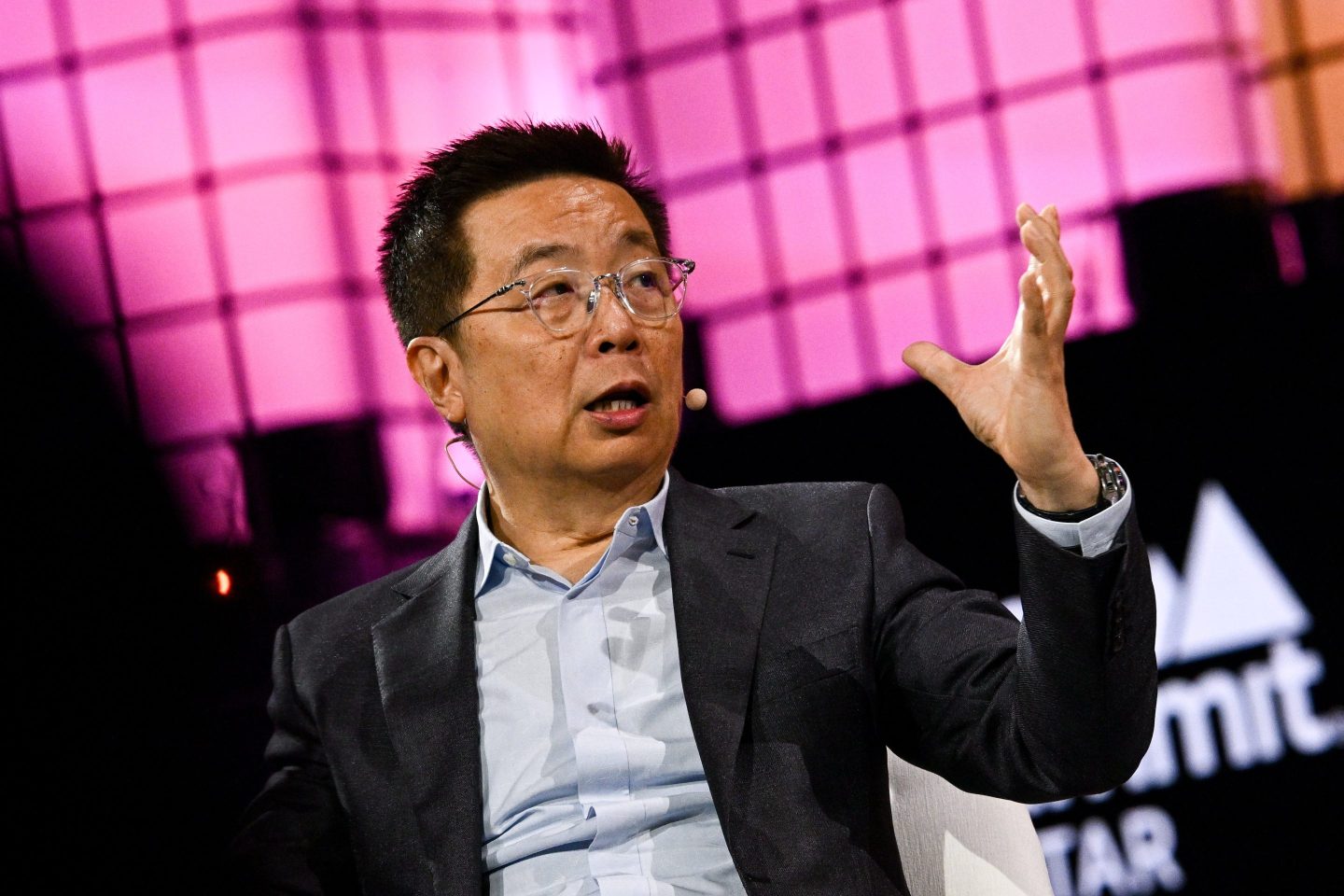
Race Capital's Alfred Chuang calls open vs. closed a fundamental debate about who will control AI's potential as a trillion-dollar industry takes shape.
Race Capital's Alfred Chuang calls open vs. closed a fundamental debate about who will control AI's potential as a trillion-dollar industry takes shape.Ramsey Cardy—Sportsfile for Web Summit Qatar via Getty Images

DeepSeek has made open-source cool again. The Chinese startup’s decision to use open-source frameworks to achieve sophisticated reasoning has shaken up the AI ecosystem: Since then, Baidu has made its ERNIE model open-source, while OpenAI CEO Sam Altman has said he thinks his non-open source company may be on the “wrong side of history.”

There are now two distinct paradigms in the AI sector: the closed ecosystems promoted by giants like OpenAI and Microsoft, versus the open-source platforms championed by companies like Meta and Mistral.

This is more than just a technical debate. Open vs. Closed is a fundamental debate about AI’s future and who will control the new technology’s vast potential as a trillion-dollar industry takes shape.

Lessons from history

Every software revolution has been, at its heart, a struggle between open and closed systems.

In the mainframe era, IBM and its closed system dominated, prompting the aphorism: “Nobody ever got fired for choosing IBM.” But as technology matured, businesses turned to open systems that freed them from vendor constraints.

This cycle happened again and again. Open-source Linux challenged Microsoft Windows. PostgreSQL and MySQL became an alternative to Oracle’s databases.

Vendor lock-in, where switching providers becomes nearly impossible, stifles innovation, limits agility, and creates vulnerability. Those same risks will only increase as AI is increasingly integrated into critical business processes.

Open platforms mitigate those risks, allowing organizations to change vendors or bring solutions in-house without incurring crippling costs.

Why open source matters

Consumers may enjoy the convenience of a closed platform. Yet enterprises have different priorities. Organizations can’t send sensitive data and proprietary information through black box APIs that they don’t control.

Open-source AI models offer three critical advantages.

First, open models keep sensitive information within an organization’s infrastructure, reducing the risk of data breaches from interactions with an external server.

Second, enterprises can tailor open-source models to their unique needs, fine-tuning models with their proprietary data without being constrained by a closed system.

Finally, organizations can avoid scaling fees charged by vendors by deploying open-source models on their own infrastructure.

Closed platforms may be simple, but they don’t provide the safety, flexibility and low costs of an open-source model.

Ironically, OpenAI’s rise was built on open-source foundations. The “Attention Is All You Need” paper released by Google in 2017 provided the blueprint for modern language models. Yet, despite this foundation, OpenAI has shifted from its initial open-source ethos to a more closed model, raising questions about its commitment to ensuring that AI benefits “all of humanity.”

Microsoft’s partnership with OpenAI has rapidly positioned the tech giant at the forefront of the commercial AI landscape. With over $13 billion invested, Microsoft has integrated GPT-4 across its ecosystem—from Azure to Office applications via Copilot, GitHub, and Bing—creating a powerful lock-in effect for businesses that rely on these tools.

Historically, closed AI systems have dominated through brute-force strategies: Scaling data, parameters, and computing power to dominate the market and create barriers to entry.

Yet, a new paradigm is emerging: the reasoning revolution. Models like DeepSeek’s R1 demonstrate that sophisticated reasoning capabilities can rival proprietary systems that depend on sheer scale. Reasoning is a Trojan horse for open-source AI, challenging the competitive landscape by proving that algorithmic advancements can diminish the advantages held by closed platforms.

This opens up a crucial opportunity for smaller labs and startups. Open-source AI fosters collective innovation at a fraction of the cost associated with closed systems, democratizing access and encouraging contributions from a wider range of participants.

Currently, the traditional AI value chain is dominated by a few players in hardware (Nvidia), model development (OpenAI, Anthropic) and infrastructure (Amazon Web Services, Microsoft Azure, Google Cloud Platform). This has created significant barriers to entry, due to high capital and compute requirements.

But new innovations, like optimized inference engines and specialized hardware, are dismantling this monolithic structure.

The AI stack is becoming unbundled in this new ecosystem. Companies like Groq are challenging Nvidia in hardware. (Groq is one of Race Capital’s portfolio companies.) Smaller labs like Mistral have built creative models that can compete with OpenAI and Anthropic. Platforms like Hugging Face are democratizing access to models. Inference services like Fireworks and Together are reducing latency and increasing throughput of requests. Alternative cloud marketplaces, such as Lambda Labs and Fluidstack, offer competitive pricing with the Big Three oligopoly.

Balancing open vs. Closed

Of course, open-source models bring their own risks. Training data could be misappropriated. Malicious actors could develop harmful applications, like malware or deepfakes. Companies, too, may cross ethical boundaries by using personal data without authorization, sacrificing data privacy in pursuit of competitive advantage.

Strategic governance measures can help mitigate these risks. Delaying releases of frontier models could give time for security assessments. Partial weight sharing could also limit the potential for misuse, while still providing research benefits.

The future of AI rests on the ability to balance these competing interests—much like how AI systems themselves balance weights and biases for optimal performance.

The choice between going open or closed represents more than just preference. It’s a pivotal decision that will determine the trajectory of the AI revolution. We must choose frameworks that encourage innovation, inclusivity, and ethical governance. Going open-source will be the way to achieve that.

The opinions expressed in Coins2Day.com commentary pieces are solely the views of their authors and do not necessarily reflect the opinions and beliefs of  Coins2Day.

Join us at the Coins2Day Workplace Innovation Summit May 19–20, 2026, in Atlanta. The next era of workplace innovation is here—and the old playbook is being rewritten. At this exclusive, high-energy event, the world’s most innovative leaders will convene to explore how AI, humanity, and strategy converge to redefine, again, the future of work. Register now.
About the Author
By Alfred Chuang
See full bioRight Arrow Button Icon

Latest in Commentary

Finance
Lorem ipsum dolor sit amet, consectetur adipiscing elit, sed do eiusmod tempor incididunt ut labore et dolore magna aliqua. Ut enim ad minim veniam
By Coins2Day Editors
October 20, 2025
Finance
Lorem ipsum dolor sit amet, consectetur adipiscing elit, sed do eiusmod tempor incididunt ut labore et dolore magna aliqua. Ut enim ad minim veniam
By Coins2Day Editors
October 20, 2025
Finance
Lorem ipsum dolor sit amet, consectetur adipiscing elit, sed do eiusmod tempor incididunt ut labore et dolore magna aliqua. Ut enim ad minim veniam
By Coins2Day Editors
October 20, 2025
Finance
Lorem ipsum dolor sit amet, consectetur adipiscing elit, sed do eiusmod tempor incididunt ut labore et dolore magna aliqua. Ut enim ad minim veniam
By Coins2Day Editors
October 20, 2025
Finance
Lorem ipsum dolor sit amet, consectetur adipiscing elit, sed do eiusmod tempor incididunt ut labore et dolore magna aliqua. Ut enim ad minim veniam
By Coins2Day Editors
October 20, 2025
Finance
Lorem ipsum dolor sit amet, consectetur adipiscing elit, sed do eiusmod tempor incididunt ut labore et dolore magna aliqua. Ut enim ad minim veniam
By Coins2Day Editors
October 20, 2025

Most Popular

Finance
Lorem ipsum dolor sit amet, consectetur adipiscing elit, sed do eiusmod tempor incididunt ut labore et dolore magna aliqua. Ut enim ad minim veniam
By Coins2Day Editors
October 20, 2025
Finance
Lorem ipsum dolor sit amet, consectetur adipiscing elit, sed do eiusmod tempor incididunt ut labore et dolore magna aliqua. Ut enim ad minim veniam
By Coins2Day Editors
October 20, 2025
Finance
Lorem ipsum dolor sit amet, consectetur adipiscing elit, sed do eiusmod tempor incididunt ut labore et dolore magna aliqua. Ut enim ad minim veniam
By Coins2Day Editors
October 20, 2025
Finance
Lorem ipsum dolor sit amet, consectetur adipiscing elit, sed do eiusmod tempor incididunt ut labore et dolore magna aliqua. Ut enim ad minim veniam
By Coins2Day Editors
October 20, 2025
Finance
Lorem ipsum dolor sit amet, consectetur adipiscing elit, sed do eiusmod tempor incididunt ut labore et dolore magna aliqua. Ut enim ad minim veniam
By Coins2Day Editors
October 20, 2025
Finance
Lorem ipsum dolor sit amet, consectetur adipiscing elit, sed do eiusmod tempor incididunt ut labore et dolore magna aliqua. Ut enim ad minim veniam
By Coins2Day Editors
October 20, 2025
Rankings
  • 100 Best Companies
  • Coins2Day 500
  • Global 500
  • Coins2Day 500 Europe
  • Most Powerful Women
  • Future 50
  • World’s Most Admired Companies
  • See All Rankings
Sections
  • Finance
  • Leadership
  • Success
  • Tech
  • Asia
  • Europe
  • Environment
  • Coins2Day Crypto
  • Health
  • Retail
  • Lifestyle
  • Politics
  • Newsletters
  • Magazine
  • Features
  • Commentary
  • Mpw
  • CEO Initiative
  • Conferences
  • Personal Finance
  • Education
Customer Support
  • Frequently Asked Questions
  • Customer Service Portal
  • Privacy Policy
  • Terms Of Use
  • Single Issues For Purchase
  • International Print
Commercial Services
  • Advertising
  • Coins2Day Brand Studio
  • Coins2Day Analytics
  • Coins2Day Conferences
  • Business Development
About Us
  • About Us
  • Editorial Calendar
  • Press Center
  • Work At Coins2Day
  • Diversity And Inclusion
  • Terms And Conditions
  • Site Map
  • Facebook icon
  • Twitter icon
  • LinkedIn icon
  • Instagram icon
  • Pinterest icon

© 2026 Coins2Day Media IP Limited. All Rights Reserved. Use of this site constitutes acceptance of our Terms of Use and Privacy Policy | CA Notice at Collection and Privacy Notice | Do Not Sell/Share My Personal Information
FORTUNE is a trademark of Coins2Day Media IP Limited, registered in the U.S. and other countries. FORTUNE may receive compensation for some links to products and services on this website. Offers may be subject to change without notice.


Most Popular

placeholder alt text
North America
Gates Foundation plans to give away $9 billion in 2026 to prepare for the 2045 closure while slashing hundreds of jobs
By Sydney LakeJanuary 23, 2026
3 days ago
placeholder alt text
Personal Finance
Sweden abolished its wealth tax 20 years ago. Then it became a 'paradise for the super-rich'
By Miranda Sheild Johansson and The ConversationJanuary 22, 2026
4 days ago
placeholder alt text
Success
Apple cofounder Ronald Wayne sold his 10% stake for $800 in 1976—today it’d be worth up to $400 billion
By Preston ForeJanuary 23, 2026
3 days ago
placeholder alt text
Europe
Denmark offered to trade Greenland to the U.S. in 1910—and America thought it was crazy
By Steven Lamy and The ConversationJanuary 22, 2026
4 days ago
placeholder alt text
Success
Nvidia CEO Jensen Huang says ‘a lot’ of six-figure jobs in plumbing and construction are about to be unlocked because someone needs to build all these new AI centers
By Preston ForeJanuary 21, 2026
5 days ago
placeholder alt text
C-Suite
Jamie Dimon’s reality check for ambitious workers: ‘There’s going to be a grunt part to every part of a job. Get over it’
By Jake AngeloJanuary 23, 2026
3 days ago

Latest in Commentary

carolyn
CommentaryLeadership
When companies take off like a rocket, how can founders steer the ship?
By Carolyn DewarJanuary 24, 2026
2 days ago
shubham
CommentaryConsulting
When AI meets healthcare, how should payers react? 
By Shubham SinghalJanuary 23, 2026
3 days ago
sternfels
CommentaryConsulting
AI makes human intelligence more important, not less 
By Bob Sternfels and Lucy PerezJanuary 22, 2026
4 days ago
wendy
CommentarySmall Business
Built to last: governance for multigenerational family businesses 
By Wendy StewartJanuary 22, 2026
4 days ago
acunto
CommentaryLeadership
I’m the Napster CEO and I agree with Pinterest: the Napster phase of AI needs to end
By John AcuntoJanuary 22, 2026
4 days ago
target
CommentaryImmigration
Slipping on ICE: innocent retailers are the latest collateral damage from Trump’s perpetual noise machine
By Jeffrey Sonnenfeld and Steven TianJanuary 21, 2026
5 days ago