What does the Ukraine war have to do with Brazil? On the face of it, perhaps not much.
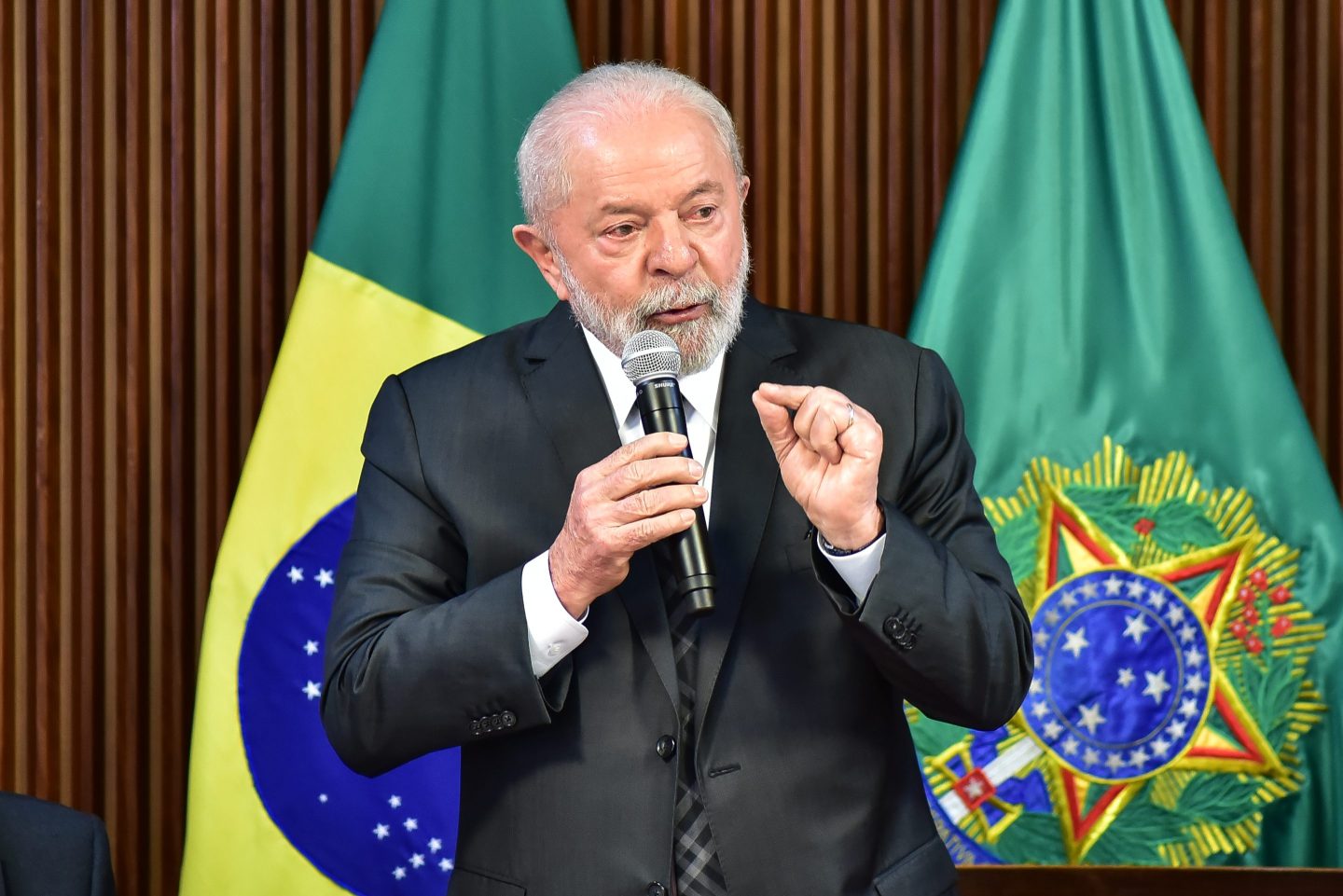
Yet, in his first six months in office, Brazilian President Luiz Inácio Lula da Silva – now in his third nonconsecutive term – has expended much effort trying to bring peace to the conflict in Eastern Europe. This has included conversations with U.S. President Joe Biden in Washington, Chinese President Xi Jinping in Beijing and in a teleconference call with Ukrainian President Volodymyr Zelenskyy. It has also seen “shuttle diplomacy” by Lula’s chief foreign policy adviser – and former foreign minister – Celso Amorim, who has visited Russian President Vladimir Putin in Moscow and welcomed his foreign minister, Sergei Lavrov, in Brasília.
One reason Brazil has been in a position to meet with such an array of parties involved in the conflict is because the nation has made a point of not taking sides in the war. In so doing, Brazil is engaging in what my colleagues Carlos Fortin and Carlos Ominami and I have called “active nonalignment.” By this we mean a foreign policy approach in which countries from the Global South – Africa, Asia and Latin America – refuse to take sides in conflicts between the great powers and focus strictly on their own interests. It is an approach that The Economist has characterized as “how to survive a superpower split.”
The difference between this new “nonalignment” and a similar approach adopted by nations in decades past is that it is happening in an era in which developing nations are in a much stronger position than they once were, with rising powers emerging among them. For example, the gross domestic product in regard to purchasing power of the five BRICS countries – Brazil, Russia, India, China and South Africa – has overtaken that of the G7 group of advanced economic nations. This growing economic power gives active nonaligned nations more international clout, allowing them to forge new initiatives and diplomatic coalition-building in a manner that would have been unthinkable before. Would, for example, João Goulart, who served as Brazil’s president from 1961 to 1964, have attempted to mediate in the Vietnam War, in the same way that Lula is doing with Ukraine? I believe to ask the question is to answer it.
Neither neutral nor disinterested
The growth of active nonalignment has been fueled by the increased competition and what I see as a budding second Cold War between the United States and China. For many countries in the Global South, maintaining good relations with both Washington and Beijing has been crucial for economic development, as well as trade and investment flows.
It is simply not in their interest to take sides in this growing conflict. At the same time, active nonalignment is not to be confused with neutrality – a legal position under international law that entails certain duties and obligations. Being neutral means not taking a stance, which is not the case in active nonalignment.
Nor is active nonalignment about remaining equidistant, politically, from the great powers. On some issues – say, on democracy and human rights – it is perfectly possible for an active nonaligned policy to take a position closer to the United States. While on others – say, international trade – the country may side more with China.
This form of nonalignment requires a highly fine-tuned diplomacy, one that examines each issue on its merits and makes choices steeped in statecraft.
Opting out across the world
As far as the war in Ukraine is concerned, it means not supporting either Russia or NATO. And Brazil isn’t the only country in the Global South taking that position, although it was the first to attempt to broker a peace agreement.
Across Africa, Asia and Latin America, several key countries have refused to side with NATO. Most prominent among them has been India, which despite its closer ties with the United States in recent years and its joining the Quadrilateral Security Dialogue – or the “Quad,” a group sometimes described as an “Asian NATO” – with the U.S., Japan and Australia, refused to condemn Russia’s invasion of Ukraine and has significantly increased its imports of Russian oil.
India’s nonalignment will presumably be on the agenda during Prime Minister Narendra Modi’s talks with Biden in his upcoming visit to Washington.
Indeed, the position of India, the world’s largest democracy, shows how the war in Ukraine, far from reflecting that the main geopolitical cleavage in the world today is between democracy and autocracy, as Biden has argued, reveals that the real divide is between the Global North and the Global South.
Some of the most populous democracies in the world in addition to India – countries like Indonesia, Pakistan, South Africa, Brazil, Mexico and Argentina – have refused to side with NATO. Almost no country in Africa, Asia and Latin America has supported the diplomatic and economic sanctions against Russia.
Although many of these nations have voted to condemn Russia’s invasion of Ukraine in the United Nations General Assembly, where 140-plus member states have repeatedly done so, none wants to make what they consider to be a European war into a global one.
How the ‘great powers’ are reacting
Washington has seemingly been caught by surprise by this reaction, having portrayed the war in Ukraine as a choice between good and evil – one where the future of the “rules-based international order” is at stake. Similarly, during the Cold War with the Soviet Union, U.S. Secretary of State John Foster Dulles referred to nonalignment as “immoral.”
Russia has seen the new nonaligned movement as an opening to bolster its own position, with Foreign Minister Lavrov crisscrossing Africa, Asia and Latin America to buttress Moscow’s opposition to sanctions. China, in turn, has ramped up its campaign to enhance the international role of the yuan, arguing that the weaponization of the U.S. Dollar against Russia only confirms the dangers of relying on it as the main world currency.
But I would argue that active nonalignment depends as much on regional multilateralism and cooperation as it does on these high-profile meetings. A recent South American diplomatic summit in Brasília called by Lula – the first such meeting held in 10 years – reflects Brazil’s awareness of the need to work with neighbors to deploy its international initiatives.
Think local, act global
This need to act jointly is also driven by the region’s economic crisis. In 2020, Latin America was hit by its worst economic downturn in 120 years, with regional GDP falling by an average of 6.6%. The region also suffered the highest COVID-19 death rate anywhere in the world, accounting for close to 30% of global fatalities from the pandemic despite comprising just over 8% of the world’s population. In this context, to be caught in the middle of a great power battle is unappealing, and active nonalignment has resonated.
Beyond the incipient U.S.-China Cold War and the war in Ukraine, the resurrection of nonalignment in its new “active” incarnation reflects a widespread disenchantment in the Global South with what has been known as the “Liberal International Order” in existence since World War II.
This order is seen as increasingly frayed and unresponsive to the needs of developing countries on issues ranging from international indebtedness and food security to migration and climate change. To many nations in the Global South, calls to uphold the “rules-based order” appear to serve only the foreign policy interests of the great powers, rather than the global public good. In such a context, it is perhaps not surprising that so many nations are actively refusing to be caught in an “us versus them” dynamic.
Jorge Heine is Interim Director of the Frederick S. Pardee Center for the Study of the Longer-Range Future, Boston University.
This article is republished from The Conversation under a Creative Commons license. Read the original article.